
Table of Contents
- Why Bamboo Sheets Work So Well for Sensitive Skin
- Bamboo Viscose vs Bamboo Lyocell for Skin: What Actually Differs
-
Best Bamboo Sheets for Sensitive Skin: Top Picks Compared
- 1. Bambusasheets 7-Piece Bamboo Viscose Set, Best Overall
- 2. ettitude Signature Sateen Bamboo Sheet Set, Best for Eczema and Dermatitis
- 3. Nolah Bamboo Sheet Set, Best for Hot Sleepers with Sensitive Skin
- 4. Layla Bamboo Sheets, Best for Year-Round Temperature Control
- 5. PlushBeds Bamboo Sheets, Best Twill Weave for Irritation-Prone Skin
- 6. Brooklyn Bedding Deep Pocket Bamboo Cotton Sheets, Best for Tall Mattresses
- Best Cooling Sheets for Night Sweats: What to Prioritize
- How to Wash Bamboo Sheets for Sensitive Skin Without Damage
- Durability, Wrinkle Resistance, and Long-Term Skin Health
- Which Bamboo Sheet Set Should You Choose?
- Frequently Asked Questions
Last Updated: September 1, 2026
Sensitive skin doesn't forgive bad bedding. If you've woken with redness, itching, or unexplained irritation, your sheets may be the culprit. At Bambusasheets, we offer luxurious 7-piece bamboo viscose sheet sets, crafted with a delicate sateen weave from naturally breathable and hypoallergenic bamboo fiber. This guide covers fabric types, certifications, weave construction, and care practices that matter for sensitive skin.
Quick Picks:
- Best Overall: Bambusasheets 7-Piece Bamboo Viscose Set, sateen weave, full set value, embroidered size indicators
- Best for Eczema/Dermatitis: ettitude Signature Sateen, OEKO-TEX Class 1 certified lyocell
- Best Budget Entry: Brooklyn Bedding Deep Pocket Bamboo Cotton, bamboo-cotton blend at accessible price
- Best for Hot Sleepers: Nolah Bamboo Sheet Set, OEKO-TEX certified viscose with strong moisture management
- Best Twill Weave Option: PlushBeds Bamboo Sheets, odor-resistant twill finish for irritation-prone sleepers
Why Bamboo Sheets Work So Well for Sensitive Skin
Bamboo outperforms conventional cotton for sensitive skin because of fiber structure. Bamboo fibers are naturally smooth and round at the microscopic level, lying flat against skin rather than creating friction points that rougher fibers do.
Hypoallergenic Properties and Contact Dermatitis Risk
Bamboo sheets minimize allergens that trigger immune responses. The fiber naturally resists dust mites, mold, and mildew, three common triggers for contact dermatitis and nighttime allergy flare-ups. For people with eczema or psoriasis, risk also comes from residual dyes, chemical finishes, and fabric softeners that conventional sheets carry. Bamboo's natural breathability reduces the warm, moist environment dust mites thrive in.
The caveat: "hypoallergenic" is unregulated. OEKO-TEX certification matters far more than the label alone.
Weave Types and Skin Friction: Sateen vs. Twill
Weave construction directly affects how fabric contacts skin during sleep.
Sateen weave uses a four-over, one-under thread pattern exposing more fiber surface on top, creating a silky finish with minimal texture. This reduces mechanical irritation, ideal for side sleepers and frequent movers.
Twill weave runs threads diagonally, producing a slightly textured, matte surface. It's more durable and wrinkle-resistant, and distributes pressure more evenly. Some sensitive-skin sleepers prefer it for this reason.
For most sensitive skin concerns, sateen is the better starting point due to friction reduction.
Bamboo Viscose vs Bamboo Lyocell for Skin: What Actually Differs
Bamboo viscose dissolves bamboo pulp using sodium hydroxide and carbon disulfide. The resulting fiber is soft, breathable, and moisture-wicking. The process is less closed-loop than lyocell, releasing more chemical byproducts, though properly certified viscose can be very low in residual chemicals.
Bamboo lyocell uses a closed-loop solvent process recycling water and chemicals, producing minimal waste. The fiber is slightly stronger and more resistant to pilling.
For skin sensitivity, finished fiber quality matters more than production method. A certified bamboo viscose with OEKO-TEX Standard 100 approval has been tested for harmful residues and is safe for sensitive skin.
OEKO-TEX Standard 100 certification overview
Chemical Residue Testing and Dye Sensitivity
Chemical residue is a legitimate concern for sensitive skin. Processing chemicals can leave trace residues if manufacturing quality controls are inadequate. Reactive dyes used to color sheets can cause reactions in people with compromised skin barriers.
What to look for:
- OEKO-TEX Standard 100: Tests for over 100 harmful substances including formaldehyde, pesticide residues, and heavy metals
- GOTS (Global Organic Textile Standard): Covers entire supply chain including dyes and chemical inputs
- USDA Organic certification: Applies to raw fiber but not processing chemistry
If you have dye sensitivity, white or undyed sheets are safest. Nolah's bamboo sheets are available only in white, eliminating reactive dye exposure.
Certifications to Look For: OEKO-TEX and Beyond
OEKO-TEX Standard 100 is the baseline certification worth verifying before purchasing. Class 1 certification, which ettitude holds, is the highest tier and covers products for infant skin, the most stringent standard available.
According to the OEKO-TEX Association's certification standards, Class 1 products must meet stricter limits on harmful substances than Class 2 or Class 3 certified textiles.
GOTS certification governs organic fiber sourcing and restricts chemical inputs throughout the supply chain. If sustainability and chemical-free processing are priorities, GOTS-certified sheets offer comprehensive assurance.
Best Bamboo Sheets for Sensitive Skin: Top Picks Compared
1. Bambusasheets 7-Piece Bamboo Viscose Set, Best Overall
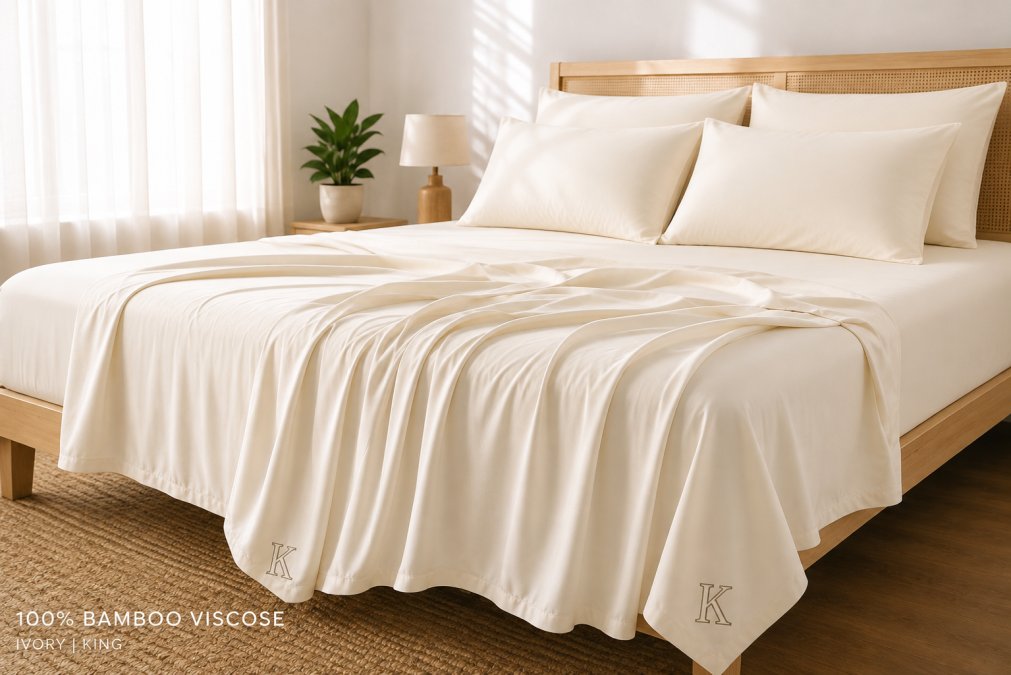
Bambusasheets is our top pick because it delivers a complete 7-piece setup with skin-first design. The delicate sateen weave reduces skin friction, naturally hypoallergenic bamboo viscose resists bacteria without chemical treatments, and long-fiber construction keeps fabric smooth through repeated washing. The set includes flat sheet, fitted sheet, four pillowcases, and storage bag. Embroidered size indicators eliminate the fitted-sheet guessing game.
Best for: Sensitive skin sleepers wanting a complete set, side sleepers, and anyone frustrated by sheet confusion.
Pros:
- Full 7-piece set with storage bag
- Sateen weave minimizes skin friction
- Naturally bacteria-resistant
- Embroidered size indicators
- Long-fiber construction maintains smoothness
2. ettitude Signature Sateen Bamboo Sheet Set, Best for Eczema and Dermatitis
Ettitude's lyocell sheets are the most clinically credible option. OEKO-TEX Standard 100 Class 1 certified and dermatologist recommended, they address chemical residue concerns at the source. CleanBamboo lyocell is naturally antibacterial and moisture-wicking, with sateen weave reducing friction on compromised skin.
Starting price: $179 for a Queen set.
Best for: Severe eczema, psoriasis, or dermatitis; eco-conscious sleepers.
Pros: Highest certification tier; superior breathability; silky surface Cons: Higher price point
3. Nolah Bamboo Sheet Set, Best for Hot Sleepers with Sensitive Skin
Nolah's 100% bamboo viscose sheets solve two problems: skin sensitivity and nighttime overheating. OEKO-TEX certified and dermatologist recommended, they offer strong moisture-wicking and temperature regulation at $149 for a Queen. Envelope-style pillowcase closures keep pillows secure. White is the only color option, eliminating dye sensitivity risk.
Best for: Hot sleepers with sensitive skin or allergies.
Pros: OEKO-TEX certified; excellent cooling; no dye exposure risk Cons: Single color option
4. Layla Bamboo Sheets, Best for Year-Round Temperature Control
Layla's bamboo viscose sheets lead with softness and thermal regulation. At 300-thread count with silky texture, they're among the softer options. Temperature-regulating properties work across seasons. Starting price is $155 for a Queen.
Best for: Hot sleepers and allergy sufferers prioritizing softness.
Pros: Exceptional softness; strong temperature regulation; hypoallergenic Cons: Prone to wrinkling; limited color selection
5. PlushBeds Bamboo Sheets, Best Twill Weave for Irritation-Prone Skin
PlushBeds uses twill finish rather than sateen. The diagonal weave distributes pressure evenly and offers better durability. Hypoallergenic, odor-resistant, and moisture-wicking. Starting price is $179 for a Queen.
Best for: Sensitive skin sleepers preferring matte, structured feel.
Pros: Twill weave for even pressure distribution; odor-resistant; moisture-wicking Cons: Thread count not readily disclosed
6. Brooklyn Bedding Deep Pocket Bamboo Cotton Sheets, Best for Tall Mattresses
Brooklyn Bedding's bamboo-cotton blend is the most accessible entry at $129 for a Queen. The blend combines bamboo's breathability with cotton's durability, fitted for mattresses 11-17 inches tall. Less soft than 100% bamboo but performs well for allergen resistance.
Best for: Sleepers with taller mattresses, allergy sufferers on budget, or those preferring cotton durability.
Pros: Deep pockets fit mattresses up to 17 inches; hypoallergenic blend; accessible price Cons: Less soft than 100% bamboo; prone to wrinkling
Sheet Set |
Fiber Type |
Weave |
Starting Price (Queen) |
Best For |
|---|---|---|---|---|
Bambusasheets |
Bamboo viscose |
Sateen |
See website |
Sensitive skin, full set value |
ettitude Signature Sateen |
Bamboo lyocell |
Sateen |
$179 |
Eczema, dermatitis, chemical-free |
Nolah Bamboo |
Bamboo viscose |
Sateen |
$149 |
Hot sleepers, no dye exposure |
Layla Bamboo |
Bamboo viscose |
Sateen |
$155 |
Year-round temperature control |
PlushBeds Bamboo |
Bamboo rayon |
Twill |
$179 |
Pressure-sensitive, odor-resistant |
Brooklyn Bedding |
Bamboo-cotton blend |
Sateen |
$129 |
Tall mattresses, budget-conscious |
Best Cooling Sheets for Night Sweats: What to Prioritize
The best cooling sheets share three characteristics: moisture-wicking fiber, breathable weave, and bidirectional thermal regulation. Bamboo viscose and lyocell deliver all three.
Thread Count, Fiber Quality, and Temperature Regulation
For bamboo, thread count is less directly related to softness than with cotton. A 300-thread count bamboo sheet can feel comparable to 600-thread count cotton. For cooling, 250-400 thread count offers the best balance of softness and breathability. Higher counts can feel heavier and less air-permeable.
Fiber quality matters more than thread count. Long-fiber bamboo viscose produces smoother yarn that wicks moisture more effectively and maintains structure through washing. Bambusasheets uses long-fiber construction for this advantage.
According to the National Sleep Foundation's guidance on sleep environment temperature, cooler sleep environments support deeper, more restorative sleep stages.
How to Wash Bamboo Sheets for Sensitive Skin Without Damage
Proper washing is as important as choosing the right set. Wrong detergent or cycles can introduce irritants bamboo is designed to minimize.
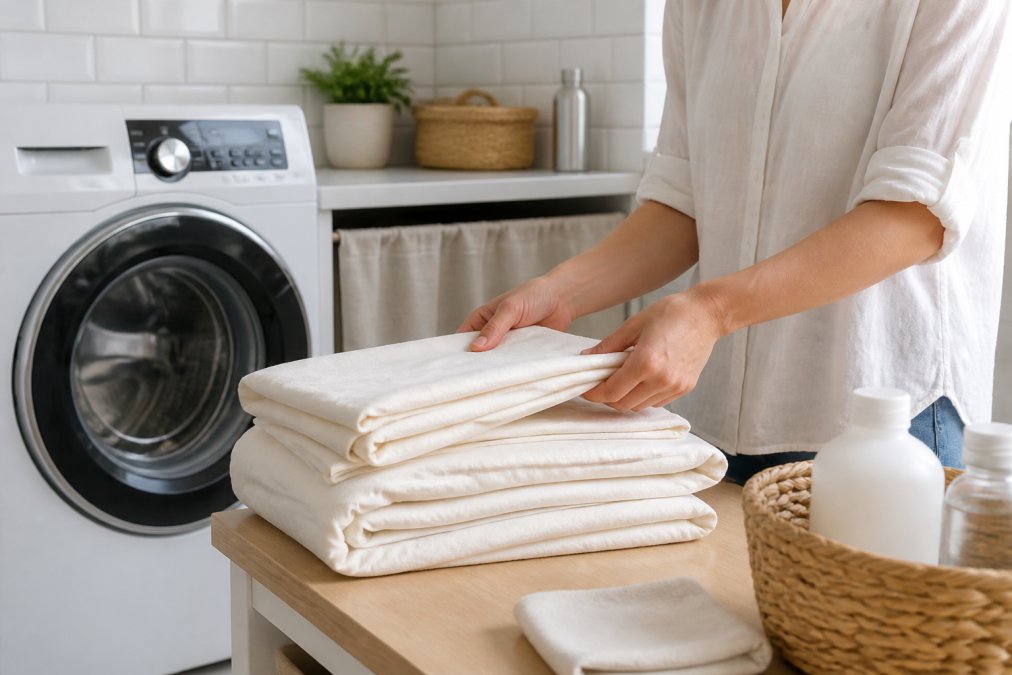
Follow these steps:
- Use cold or warm water (30°C / 86°F maximum). Hot water weakens bamboo fiber and can set residual irritants.
- Choose fragrance-free, dye-free detergent. Fragrance is a common contact allergen. "Free and clear" formulas are safest.
- Select gentle or delicate cycle. High-agitation stresses bamboo and accelerates pilling.
- Skip fabric softener entirely. Softeners coat fibers with chemical residue, reducing moisture-wicking and triggering reactions.
- Tumble dry on low heat or air dry. High heat damages fiber and causes shrinkage.
- Wash before first use. New sheets carry manufacturing residues that should be removed before skin contact.
The American Academy of Dermatology's guidance on laundry and skin sensitivity recommends fragrance-free detergents and double-rinsing for contact dermatitis-prone skin.
Durability, Wrinkle Resistance, and Long-Term Skin Health
High-quality long-fiber bamboo viscose maintains structural integrity for several years with gentle washing. Lower-quality sheets do pill more easily.
Wrinkle resistance varies by weave. Twill resists wrinkles better than sateen. Sateen wrinkles more easily but recovers well when removed from dryer promptly or air dried.
Sheets that pill create microscopic surface irregularities increasing friction against skin. Over time, this contributes to skin barrier disruption, particularly for people with eczema or rosacea. Investing in durable, long-fiber construction maintains the smooth surface that makes bamboo beneficial for sensitive skin.
Which Bamboo Sheet Set Should You Choose?
Your Priority |
Best Pick |
|---|---|
Complete set with practical features |
Bambusasheets 7-Piece Set |
Severe eczema or dermatitis |
ettitude Signature Sateen |
Night sweats and heat sensitivity |
Nolah Bamboo Sheet Set |
Year-round temperature control |
Layla Bamboo Sheets |
Twill weave, odor resistance |
PlushBeds Bamboo Sheets |
Tall mattress, budget-conscious |
Brooklyn Bedding Bamboo Cotton |
A common mistake is choosing based on thread count alone. For sensitive skin, certification status, fiber type, weave construction, and dye content are more predictive of how your skin will respond.
If unsure where to start, the Bambusasheets 7-piece set covers the most ground: sateen weave for friction reduction, naturally hypoallergenic long-fiber viscose, bacteria-resistant properties, and a complete set eliminating need for additional pieces. For severe skin conditions with documented chemical sensitivities, ettitude's Class 1 certified lyocell is the most rigorously tested option available.
Frequently Asked Questions
Are bamboo sheets good for people with sensitive skin?
Bamboo sheets are among the most skin-friendly bedding options available. The fibers are naturally hypoallergenic and free from the rough surface texture that triggers contact dermatitis in conventional cotton. Bamboo fabric is also moisture-wicking, which keeps the skin surface drier throughout the night — a key factor for anyone prone to irritation or eczema flare-ups. Sheets carrying OEKO-TEX Standard 100 certification have been tested to confirm they are free from harmful chemical residues and dyes that commonly aggravate sensitive skin.
Do bamboo sheets help with eczema or skin irritation?
Bamboo sheets can reduce eczema-related discomfort in several ways. The sateen weave produces a smooth surface with minimal friction against inflamed skin, while the fiber's natural breathability prevents the heat buildup that worsens flares. Bamboo also resists dust mites and bacteria without chemical treatments, removing two common environmental allergens from the sleep surface. For best results, choose a set that is OEKO-TEX certified and wash it with a fragrance-free, dye-free detergent to avoid introducing new irritants.
What is the difference between bamboo viscose and bamboo lyocell for sensitive skin?
Both start as bamboo plant material, but the manufacturing process differs significantly. Bamboo viscose uses a chemical-intensive process; finished sheets can still be gentle on skin when properly rinsed and certified, but the process generates more chemical byproduct. Bamboo lyocell uses a closed-loop solvent system that recycles water and chemicals, leaving fewer residues in the final fabric. For highly reactive skin or dye sensitivity, lyocell sheets with OEKO-TEX Class 1 certification offer the most reliably chemical-free sleep surface.
What is the best thread count for bamboo sheets for sensitive skin?
For bamboo sheets, a thread count between 250 and 400 generally delivers the best balance of softness, breathability, and durability. Very high thread counts in bamboo fabric can reduce airflow, which counteracts the moisture-wicking and thermal-regulating properties that make bamboo beneficial for sensitive skin. A 300-thread count sateen weave, like that used in several top-rated sets, provides a silky-smooth surface without trapping heat — an important consideration for hot sleepers and those with night sweats.
How should I wash bamboo sheets to avoid skin irritation?
Machine wash bamboo sheets on a cold or warm gentle cycle — water above 105°F can break down the long fibers that give bamboo its softness. Use a fragrance-free, dye-free detergent and skip fabric softener entirely; softeners coat bamboo fibers and reduce their natural moisture-wicking ability. Tumble dry on low heat or air dry flat. Avoid bleach and dryer sheets, both of which leave chemical residues that can trigger reactions in people with sensitive skin or contact dermatitis.
This article was written using GrandRanker