
Table of Contents
- What Makes Bamboo Viscose Sheets Cooler Than Cotton
- Best Bamboo Sheets for Hot Sleepers: Our Top Picks
- Bambusasheets 7-Piece Set Review: Features and Pricing
- How to Wash Bamboo Viscose Sheets for Longevity
- What to Check Before You Buy Cooling Bamboo Viscose Sheet Sets
- Which Bamboo Sheet Set Should You Pick?
- Final Verdict: Are Cooling Bamboo Viscose Sheets Worth It?
- Frequently Asked Questions
Last Updated: September 6, 2026
If you are a hot sleeper, you know the frustration of waking up drenched in sweat. The solution most sleep experts point to is bamboo viscose, prized for its breathability and moisture-wicking properties. When you decide to buy cooling bamboo viscose sheet sets, you are investing in a material engineered to pull heat away from your body. In this guide from Bambusasheets, we break down what makes these sheets cooler, what to look for before you purchase, and why the weave matters more than thread count.

Bamboo viscose sheets are a practical upgrade for anyone who runs hot at night. Unlike cotton, which holds moisture against your skin, viscose from bamboo is thermo-regulating and naturally breathable. Below, we show you how to evaluate quality, compare top options, and care for your investment.
What Makes Bamboo Viscose Sheets Cooler Than Cotton
Bamboo viscose sheets are cooler than cotton because the fiber structure is inherently breathable and moisture-wicking, allowing heat to escape while drawing sweat away from the skin. Cotton, by contrast, absorbs moisture and holds it, which is why it feels damp and clammy on warm nights. The bamboo plant itself grows in hot climates, and the fiber retains a natural porous structure that promotes airflow.
The cooling effect also depends on the fabric weave. A sateen finish, which is what Bambusasheets uses, creates a smooth, lustrous surface with a silk-like feel that drapes over the body without clinging. This is the opposite of a percale weave, which can feel crisp but less breathable. For hot sleepers, the combination of bamboo fiber and a sateen weave delivers the thermal regulation you need.
Best Bamboo Sheets for Hot Sleepers: Our Top Picks
The best bamboo sheets for hot sleepers share three traits: a tight sateen or twill weave, deep pockets, and a hypoallergenic finish. Look for these qualities rather than a high thread count, which is often a marketing distraction. Fabric quality comes from fiber length and weave density, not the number on the box.
The standouts are made from long-fiber bamboo, which resists pilling and holds its shape after repeated washing. A common mistake is buying cheap blends that mix in polyester or cotton, which defeats the cooling purpose. Pure viscose from bamboo is the only way to get the performance hot sleepers need.
Bambusasheets 7-Piece Set Review: Features and Pricing
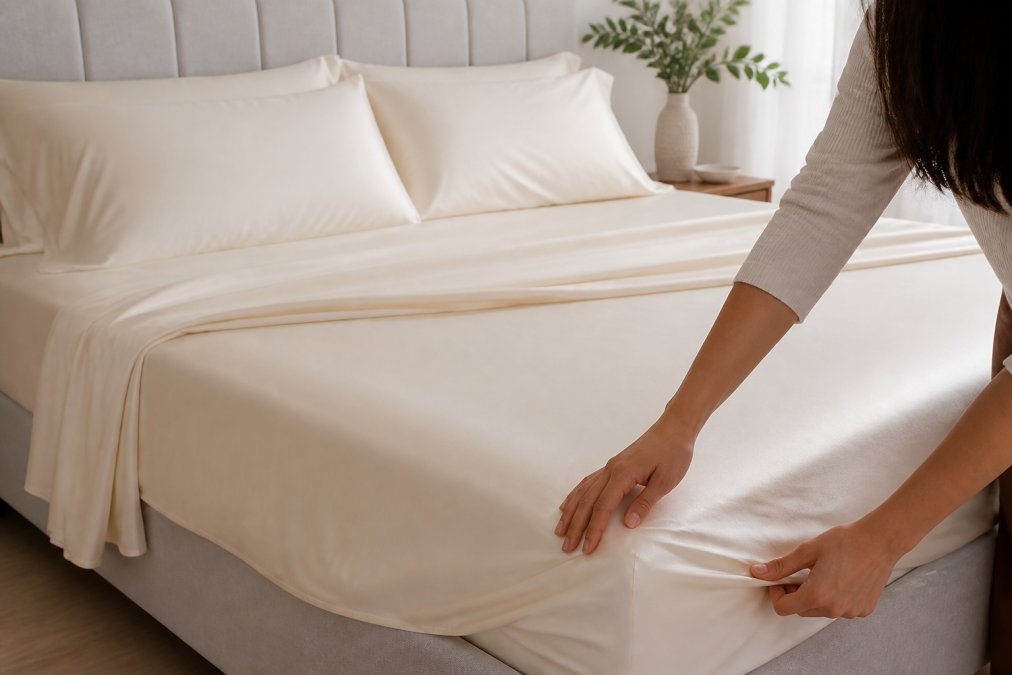
Our top pick for most hot sleepers is the Bambusasheets 7-piece set, starting at $83.00 for a full size. The complete set includes everything you need to dress the bed. The standout feature is the embroidered size indicators on the bottom corners, which tell you at a glance which side is the bottom and which direction it faces.

The fabric is a delicate sateen weave made from naturally breathable and hypoallergenic bamboo fiber. It is buttery soft and naturally repels bacteria, a benefit for sensitive skin or allergies. The sheets include deep pockets for thicker mattresses, and a storage bag is included for seasonal rotation or travel.
| Size | Price | Color Options | Key Feature |
|---|---|---|---|
| Full | $83.00 - $88.00 | Ivory, White, Gray, Navy | Embroidered size letters |
| Queen | $129.00 - $135.00 | White, Ivory, Gray, Navy | Deep pockets, sateen weave |
| King | $144.00 | White, Ivory | Storage bag included |
How to Wash Bamboo Viscose Sheets for Longevity
Proper care is the single biggest factor in whether your bamboo viscose sheets still feel cool after six months or pill by the third wash.
The 6-Month Wear-and-Tear Report: What Actually Breaks Down
After six months of weekly washing, sheets made from short bamboo fibers begin to pill along the center of the fitted sheet and pillowcase edges, where friction is highest. Long-fiber bamboo maintains its smooth surface because the fibers are less likely to break and tangle into pills.
If your fitted sheet pulls up at the corners after a few months, that signals poor fiber quality or excessive heat during drying, not a mattress fit problem.
The First-Wash Protocol That Extends Fabric Life
The most important step happens before you ever sleep on the sheets. Wash them once in cold water with a gentle liquid detergent, then tumble dry on low until just barely damp. This removes residual processing chemicals and relaxes the fibers so they reach their final weave tension. Sheets that skip this step often feel stiff after the first real wash.
The Friction Problem Most Care Guides Ignore
Bamboo viscose is a delicate fiber. The leading cause of pilling is what else is in the drum with your sheets. Denim, rough towels, and anything with zippers create abrasion that breaks bamboo fibers. Wash bamboo sheets alone or with smooth, lightweight items. If you must wash them with other bedding, turn the sheets inside out.
Drying Without Damage
High heat is the fastest way to destroy bamboo viscose. The fibers lose moisture and become brittle, leading to cracking and tearing. Always use the lowest heat setting and remove the sheets while still slightly damp. Bamboo viscose drapes naturally and resists wrinkles, so you will not need an iron.
What to Avoid Entirely
- Chlorine bleach: It degrades the cellulose structure of bamboo viscose, causing yellowing and weakening. Use oxygen-based bleach if you need to brighten whites.
- Fabric softeners: They coat the fibers with a waxy residue that reduces moisture-wicking performance over time. A half-cup of white vinegar in the rinse cycle works as a natural softener without the buildup.
- Dryer sheets: Same problem as fabric softeners. They leave a film that traps heat and makes the sheets feel less breathable.
The Longevity Bottom Line
With the cold-water, low-heat protocol above, a well-constructed set can maintain its quality over time. The first sign of aging is a gradual loss of the silky hand-feel. If the fabric feels rougher, switch to a shorter wash cycle and add an extra cold rinse.
What to Check Before You Buy Cooling Bamboo Viscose Sheet Sets
Before you buy cooling bamboo viscose sheet sets, check the fiber content, the weave, the certifications, and, critically, how the viscose was manufactured. The term "bamboo" on a label can mean very different things depending on the production process.
Fiber Content: 100% Viscose from Bamboo, Not a Blend
The label should say 100% viscose from bamboo. Any blend with cotton or polyester compromises the cooling and moisture-wicking properties. Polyester, in particular, traps heat and defeats the entire purpose of buying bamboo sheets. The Federal Trade Commission guidance on textile labeling requires manufacturers to accurately list fiber content, so if a label says "bamboo blend" without specifying the percentage, that is a red flag.
The Closed-Loop vs. Open-Loop Processing Question
Bamboo is highly renewable, but turning it into viscose requires chemical processing. The difference between an eco-friendly set and a problematic one comes down to closed-loop versus open-loop processing.
Closed-loop processing means the solvents used to dissolve bamboo pulp into fiber are recovered and reused in a continuous cycle. This approach recaptures over 99% of the chemicals and prevents them from entering waterways. It is the gold standard for environmentally responsible viscose production.
Open-loop processing discharges the chemical bath after use, which can release solvents into the environment. While the finished fabric may feel identical, the manufacturing footprint is significantly worse.
The challenge for consumers is that closed-loop status is rarely printed on the retail label. Look for third-party certifications that verify the manufacturing process. The OEKO-TEX Standard 100 certification confirms the finished fabric is free from harmful substances, but it does not verify the production process. For process verification, look for FSC certification on the bamboo sourcing or a brand that explicitly states its manufacturing partner uses closed-loop technology.
The Weave Decision: Sateen vs. Twill vs. Percale
The weave matters as much as the fiber. Sateen gives a silky feel and subtle sheen with a smooth surface that does not trap heat. Twill is more durable and textured but less smooth. Percale is crisp and breathable but can feel stiff compared to sateen.
For hot sleepers, sateen is the better choice because the smooth surface maximizes airflow and minimizes friction. The trade-off is that sateen can be slightly less durable than twill over many years of washing, which is why fiber length matters.
Pocket Depth and Mattress Compatibility
Deep pockets, typically 15 to 18 inches, are essential for pillow-top mattresses or thick toppers. But pocket depth alone is not enough, check whether the fitted sheet has full elastic around the perimeter or just at the corners. Full-perimeter elastic holds better and prevents creeping.
What Certifications Actually Mean for You
- OEKO-TEX Standard 100: Tests for harmful substances in the finished fabric. Relevant for sensitive skin.
- FSC Certification: Verifies the bamboo was harvested sustainably. Relevant for environmental impact.
- USDA BioPreferred: Indicates a minimum percentage of bio-based content, though it does not verify the processing method.
The Environmental Bottom Line
A truly eco-conscious purchase checks three boxes: renewable sourcing, closed-loop processing, and responsible packaging. If a brand only mentions "eco-friendly bamboo" without addressing the chemical process, ask directly. If they cannot answer, that silence is informative.
Which Bamboo Sheet Set Should You Pick?
Choose the Bambusasheets 7-piece set if you want the complete package: cooling fabric, easy bed-making, and a storage bag for under $150 for a king. For a full bed, the price starts at $83.00, competitive with mid-range cotton but with a silk-like feel cotton cannot match. Queen sizes range from $129.00 to $135.00, and king sets are $144.00.

If you sleep hot and move around at night, the deep pockets and stretchy long-fiber construction will keep the sheets anchored. Side sleepers will appreciate the smooth sateen finish that does not bunch up under the hip and shoulder. For gift buyers, the storage bag and size indicators make this a practical present.
Final Verdict: Are Cooling Bamboo Viscose Sheets Worth It?
Cooling bamboo viscose sheets are worth the investment if you are a hot sleeper, have sensitive skin, or prefer a buttery soft, silk-like feel. The thermo-regulating properties address the root cause of night sweats, trapped heat and moisture, rather than masking the symptom. Unlike cotton, bamboo viscose wicks sweat away and allows it to evaporate.
The one drawback is the care requirement. Bamboo viscose needs gentle washing and low-heat drying, a change for people used to tossing cotton in a hot dryer. However, the longevity of high-quality long-fiber sheets makes the extra effort worthwhile.
Frequently Asked Questions
Is bamboo viscose actually cooling?
Yes, bamboo viscose is genuinely cooling for most sleepers. The fabric's structure allows better airflow than cotton, and its moisture-wicking fibers pull sweat away from your skin so it can evaporate. This thermo-regulating effect helps prevent the clammy feeling that wakes hot sleepers. For best results, choose a sateen weave like Bambusasheets' sets, which balances a silky feel with breathability. Wash in cold water to keep the fibers open and maintain that cooling performance over time.
How do bamboo viscose sheets compare to cotton for hot sleepers?
Bamboo viscose sheets outperform cotton for hot sleepers in two key ways: moisture-wicking and breathability. Cotton absorbs sweat but holds it against your skin, while bamboo viscose moves moisture away and releases it. Bamboo fibers also have natural micro-gaps that improve air circulation. The result is a noticeably cooler, drier sleep surface. Bamboo viscose also feels silkier and softer than standard cotton, so you get temperature control and a more luxurious texture in one set.
How should I wash bamboo viscose sheets to keep them soft?
Wash bamboo viscose sheets in cold water on a gentle cycle with mild liquid detergent. Hot water and harsh powders can break down the fibers over time. Tumble dry on low heat and remove them promptly to minimize wrinkles. Avoid bleach and fabric softeners, which coat the fibers and reduce moisture-wicking. Following this routine preserves the silky sateen finish and helps the sheets stay durable for years of regular use.
Are cooling bamboo viscose sheet sets worth the higher price than basic cotton?
For hot sleepers and anyone with sensitive skin, yes. A quality set like Bambusasheets' 7-piece offering costs between $83 and $144 depending on size, which is more than a budget cotton set. You are paying for longer fibers that resist pilling, a sateen weave that stays smooth, and hypoallergenic properties that cotton lacks. If night sweats disrupt your sleep or cotton irritates your skin, the durability and comfort justify the upfront cost.
What is the difference between bamboo viscose and bamboo lyocell?
Both come from bamboo, but the processing differs. Bamboo viscose uses a chemical process that produces a soft, silky fabric with excellent drape. Bamboo lyocell uses a closed-loop system with a less toxic solvent, making it slightly more eco-friendly. For cooling performance, both work well. Viscose tends to feel softer and more buttery, while lyocell can be a bit crisper. If sustainability is your top priority, look for OEKO-TEX certified viscose, which ensures safe processing without harmful residues.
Choosing the right cooling bamboo viscose sheet set comes down to fiber purity, weave quality, and honest construction. Bambusasheets delivers all three with a 7-piece set that includes embroidered size indicators, deep pockets, and a storage bag. The naturally hypoallergenic and breathable bamboo fiber keeps you cool, while the sateen weave provides a luxurious, kind-to-skin finish. Get started with Bambusasheets and wake up refreshed, not drenched in sweat.