

Table of Contents
- Can Dirty Sheets Cause Acne? What the Science Shows
- How Often to Wash Sheets to Prevent Acne
- Dirty Pillowcase and Acne: Why Pillowcases Matter Most
- How to Wash Pillowcases and Bedding Properly
- Best Sheets for Acne-Prone Skin: What to Look For
- When Bedding Is a Trigger vs. When to Seek Help
- Frequently Asked Questions
Last Updated: October 6, 2026
Can Dirty Sheets Cause Acne? What the Science Shows
The connection between bedding and breakouts is real, but it's more nuanced than you might think. Dirty sheets don't directly cause acne the way bacteria or hormones do. Instead, they create an environment where acne-prone skin is more likely to flare.
Here's what happens: your sheets accumulate oil, sweat, dead skin cells, and bacteria every single night. Over time, this buildup can irritate sensitive skin or aggravate existing breakouts. The real issue isn't that dirty sheets cause acne from scratch, it's that they make acne worse if you're already prone to it.
If you struggle with breakouts, your bedding matters more than you realize. The fabric you sleep on, how often you wash it, and even your pillowcase choice can either help or hinder your skin. Below, we'll show you exactly how bedding affects acne-prone skin and what you can do about it.
How Buildup Accumulates on Bedding
Every night, your skin sheds thousands of dead cells. You also sweat and produce natural oils. Your sheets absorb all of it.
Think of your bedding like a magnet for skin debris. Over one week, your sheets collect:
- Dead skin cells from your face and body
- Oil and sebum from your skin
- Sweat and moisture
- Bacteria that live naturally on your skin
- Dust and environmental particles
This buildup doesn't stay on top of the fabric. It works into the fibers. The longer sheets go unwashed, the more concentrated this layer becomes.
For people with acne-prone skin, this matters. When bacteria-laden fabric sits against your face for eight hours, it can clog pores or trigger inflammation. The irritation may worsen existing breakouts or create new ones.
The Role of Friction and Heat
Friction is often overlooked, but it's a real factor. Rough sheets rubbing against your skin create micro-irritation. This irritation can aggravate inflamed pores or sensitive areas.
Heat and trapped moisture make the problem worse. When sweat and oils get trapped between your skin and the sheet, you create the perfect environment for bacteria to thrive. The warmth and humidity accelerate bacterial growth.
Certain fabrics trap more heat than others. Thick cotton or synthetic blends hold moisture close to your skin. Breathable fabrics like bamboo viscose allow moisture to wick away, keeping your skin cooler and drier throughout the night.
How Often to Wash Sheets to Prevent Acne
There is no single correct number, but there is a defensible starting point: most dermatologists and bedding manufacturers suggest washing sheets once a week, and people with acne-prone skin generally do better at the shorter end of that range. The reason is mechanical, not magical. Washing removes the accumulated layer of sebum, sweat solids, shed corneocytes, and skin-surface bacteria that transfers onto fabric each night.
A realistic schedule looks like this:
| Situation | Sheet washing | Pillowcase change |
|---|---|---|
| Clear skin, no night sweats | Every 7-10 days | Every 3-4 days |
| Acne-prone skin, average sweating | Every 5-7 days | Every 2-3 days |
| Hot sleeper or heavy sweater | Every 3-5 days | Every 1-2 days |
| Active breakout or using leave-on actives | Every 3-4 days | Every 1-2 days |
| Sick, feverish, or recovering from a cold | Daily until symptoms resolve | Daily |
| Sleeping with pets in the bed | Every 3-4 days | Every 1-2 days |
| Sleeping in makeup or heavy night creams | Every 3-4 days | Every 1-2 days |
A few practical notes on that table:
- Pillowcases dirty faster than sheets. Your face contacts the pillowcase for six to eight hours, and it picks up residue from hair products, leave-on skincare, and overnight sebum. That is why the pillowcase column runs roughly twice as often as the sheet column.
- Night sweats reset the clock. If you wake up damp, treat that night as if you had exercised in the sheets. Sweat plus warmth is the condition bacteria need to multiply, so a single heavy night can undo several days of a clean-bedding routine.
- Pets and outdoor allergens count. Dander, pollen, and outdoor dust ride in on fur and clothing and settle into the weave. If a dog or cat shares the bed, shorten the interval.
- Illness is its own category. Fever, coughing, and night sweats during a cold or flu load the bedding with moisture and respiratory droplets. Wash daily while you are sick and once more after you recover.
- Consistency beats intensity. A steady 5-7 day cycle removes buildup before it concentrates. A single deep clean after three weeks of neglect does not undo the intervening nights.
If you want to test whether bedding is actually a trigger for you, run a controlled experiment rather than overhauling everything at once. Pick a two-week window. Wash sheets every five days and change the pillowcase every other day. Keep your cleanser, moisturizer, and any active ingredients exactly the same as before. Photograph your face and back at the same time each morning under the same lighting, and note any new lesions.
One more thing worth knowing: the wash itself matters as much as the frequency. A gentle cycle with a mild, fragrance-free detergent and a full rinse removes residue without leaving surfactant behind. Hot water is not required for skin hygiene and can break down fibers faster. What matters is that sheets come out of the dryer completely dry, damp bedding invites mildew, which is its own irritant.
Dirty Pillowcase and Acne: Why Pillowcases Matter Most
Your pillowcase is the single piece of bedding that touches your face for six to eight hours a night, and it collects more than sweat.
Change the case more often than the sheets. Every two to three days is a reasonable target for acne-prone skin.
Flip the pillowcase before you flip the sheets. A pillowcase has two usable sides.
Keep hair off your face. Hair carries its own oils and whatever you applied to it, conditioner, serum, dry shampoo, leave-in treatments.
Watch what you put on your face before bed. Heavy night creams, facial oils, and occlusive balms can migrate onto the pillowcase and then back onto your skin.
Do not sleep in makeup. This is the most common pillowcase-hygiene mistake. Makeup transfers to the case, mixes with sebum, and sits against your skin all night.
Keep a rotation. Three or four pillowcases per pillow means you always have a clean one ready and never have an excuse to skip the swap.
Wash pillowcases with the same care as sheets. Gentle cycle, mild fragrance-free detergent, no fabric softener or dryer sheets, and dry completely.
Fresh White Bamboo Sheets - Full - Light & Breathable 7pc →
None of this is a treatment for acne. It is hygiene, removing a known source of irritation and product transfer so that whatever else you are doing for your skin has a cleaner surface to work with.
How to Wash Pillowcases and Bedding Properly
Washing frequency matters, but technique matters too. The wrong approach can damage your sheets or leave residue that irritates skin.
Washing steps:
- Use cold water on a gentle cycle
- Choose a mild, fragrance-free detergent
- Avoid bleach and fabric softener
- Wash with similar colors to prevent dye transfer
- Tumble dry on low heat or air dry
Why cold water? Hot water breaks down fabric fibers faster. Gentle cycles protect the weave and elasticity of your sheets.
Detergent residue can irritate acne-prone skin. Use less detergent than you think you need. If your sheets feel stiff after washing, you're using too much.
Fabric softener and dryer sheets coat the fabric and trap moisture. Skip them. Your sheets will feel softer over time as they're washed, especially if they're made from quality materials.
Tumble dry on low heat or air dry completely before using. Damp sheets encourage bacterial growth and mildew.
| Washing Element | Best Practice | Why It Matters |
|---|---|---|
| Water temperature | Cold | Preserves fabric; reduces fiber breakdown |
| Wash cycle | Gentle | Protects weave and elasticity |
| Detergent | Mild, fragrance-free | Avoids skin irritation and residue |
| Fabric softener | Avoid | Traps moisture and bacteria |
| Drying | Low heat or air dry | Prevents heat damage; ensures complete drying |
Best Sheets for Acne-Prone Skin: What to Look For
Not all sheets are created equal. If you have breakout-prone skin, the fabric and construction matter.
Look for sheets that are:
- Breathable: Allow air and moisture to move through the fabric
- Soft: Reduce friction and irritation against your skin
- Moisture-wicking: Pull sweat away from your body
- Hypoallergenic: Less likely to trigger allergic reactions or irritation
Bamboo viscose sheets check all these boxes. The fabric is naturally breathable, which keeps you cooler and reduces sweat buildup. It's softer than most cotton, so there's less friction.
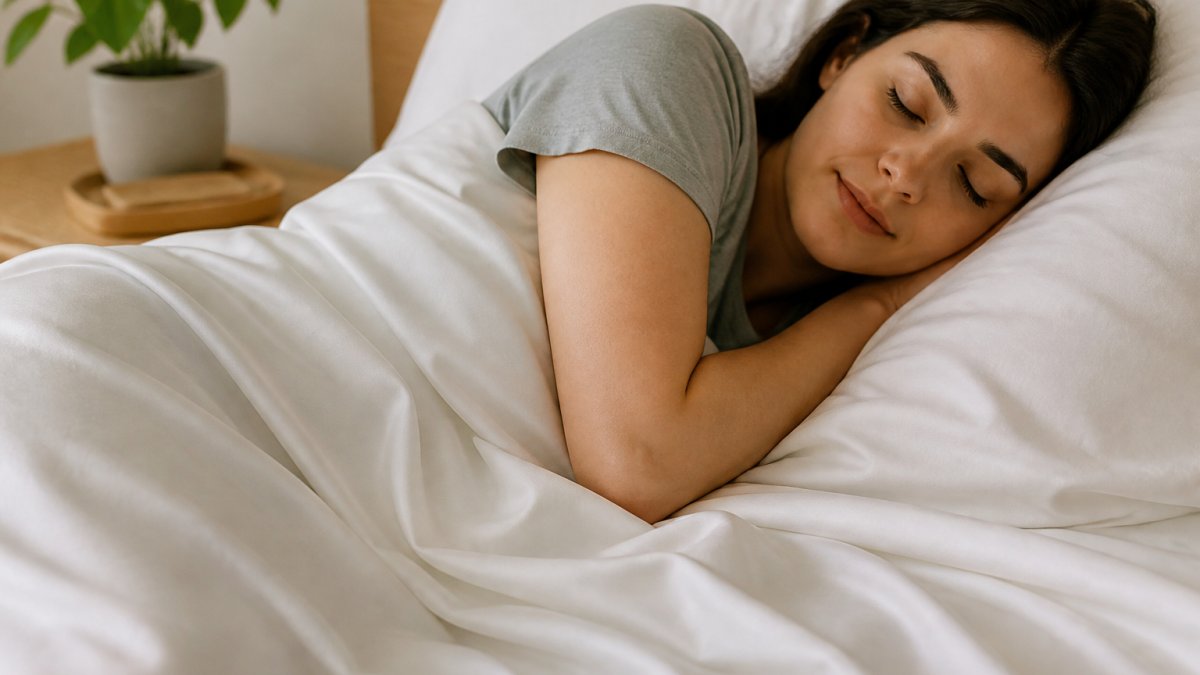
The sateen weave adds durability without sacrificing softness. A well-made set will last years with proper care, which means you're not replacing cheap sheets constantly.
Bambusasheets offers several options in bamboo viscose. The Fresh White Bamboo Sheets in Full size are light and breathable, perfect for hot sleepers who sweat heavily. For those who want classic white with embroidered size indicators, the Classic White Bamboo Sheets in Queen size provide easy identification and deep pockets for secure fit. The Crisp White Bamboo Sheets in King size offer cool-to-the-touch comfort with direction marks for convenience.


All Bambusasheets sets include four pillowcases, so you have extras for frequent changes. The sateen weave adds subtle luster while staying durable through regular washing.
When Bedding Is a Trigger vs. When to Seek Help
Bedding can aggravate acne, but it's rarely the sole cause. Acne is multifactorial. Hormones, genetics, diet, stress, and skincare routine all play roles.
If you've improved your bedding habits, washing more often, switching to breathable fabric, changing pillowcases regularly, and your acne hasn't improved in 4-6 weeks, it's time to see a dermatologist.
A dermatologist can determine whether your breakouts are triggered by:
- Bacteria buildup from bedding
- Contact dermatitis from detergent or fabric
- Hormonal acne
- Dietary factors
- Skincare products
- Underlying skin conditions
Clean bedding is a foundation, not a complete solution. Think of it as one piece of an acne-management strategy, not the answer by itself.
If you notice breakouts only on one side of your face or neck, bedding friction might be the culprit. If breakouts are widespread, the cause is likely internal or related to your skincare routine.
Frequently Asked Questions
Can dirty sheets actually cause acne?
Dirty sheets don't directly cause acne, but they can aggravate existing breakouts. Oil, sweat, dead skin cells, and bacteria accumulate on bedding over time. When these irritants contact acne-prone skin repeatedly, they can trigger inflammation or clog pores, making breakouts worse. People with genetic predisposition to acne are more sensitive to this buildup than others.
How often should you wash your sheets if you have acne?
If you have acne-prone skin, wash sheets weekly to reduce buildup. Change pillowcases every two to three days, since they contact your face directly and accumulate more oil and bacteria. Hot sleepers or those who sweat heavily should wash sheets more frequently, every 5-7 days. Regular laundering removes the sweat, oils, and dead skin cells that can irritate sensitive skin and trigger flare-ups.
What type of sheets are best for acne-prone skin?
Look for soft, breathable fabrics that don't trap moisture or heat. Bamboo viscose sheets are naturally hypoallergenic, moisture-wicking, and breathable, making them a good choice for acne-prone and sensitive skin. Sateen-weave bamboo sheets offer a smooth surface that reduces friction against skin. Avoid heavy cotton or synthetic blends that trap sweat and heat. Deep-pocket fitted sheets that stay anchored prevent constant friction from shifting bedding.
Does a dirty pillowcase cause acne more than dirty sheets?
Yes, pillowcases have a greater impact on facial acne because they contact your skin directly all night. Bacteria, oils, and dead skin cells on pillowcases transfer directly to your face, making them a primary aggravation factor. Changing pillowcases every 2-3 days is more important than changing full sheet sets. If you're struggling with breakouts, prioritize fresh pillowcases first, then establish a regular sheet-washing routine.
Dirty sheets can aggravate acne-prone skin, but the fix is straightforward: wash more often and choose breathable fabrics. Bambusasheets' bamboo viscose sheets are naturally breathable, hypoallergenic, and soft enough to minimize friction. Combined with a regular washing schedule and frequent pillowcase changes, quality bedding becomes a practical tool in managing breakout-prone skin.