
Table of Contents
- Quick Comparison: Top Luxury Bamboo Bedding Sets
- Why Luxury Bamboo Bedding Sets Are Worth the Investment
- Our Top Pick: The Queen Organic Bamboo Cooling Sheet Set
- Best for Deep Mattresses: The King-Size Organic Bamboo Set
- Best Cooling Sheets for Night Sweats: What to Look For
- Bamboo Viscose vs Bamboo Lyocell: Which Fabric Is Right?
- How to Wash Bamboo Sheets for Long-Lasting Softness
- The Verdict: Choosing Your Perfect 2026 Bedding Set
- Frequently Asked Questions
Last Updated: September 5, 2026
The market for luxury bamboo bedding sets 2026 is crowded, but few deliver on fabric durability, chemical transparency, and a fit that survives nightly movement. Below, we break down our top picks, what separates a genuinely cooling sheet from a marketing claim, and how to care for your investment.

Quick Comparison: Top Luxury Bamboo Bedding Sets
Comparing options side-by-side clarifies what you are paying for. We focused on fiber type, weave, pocket depth, and practical touches that simplify bedmaking.
| Bedding Set | Price | Size | Key Feature | Best For |
|---|---|---|---|---|
| Bambusasheets Queen White | $129.00 | Queen | Embroidered corner letters | Most queen beds |
| Bambusasheets King Gray | $148.00 | King | Deep pockets, cooling sateen | Deep mattresses |
| Bambusasheets Full Ivory | $83.00 | Full | Hypoallergenic bamboo viscose | Guest rooms and smaller beds |
| Bambusasheets Queen Gray | $135.00 | Queen | Thermal-regulating weave | Night sweat relief |
Every set above uses bamboo viscose with a delicate sateen weave, which gives the fabric its lustrous sheen and drapes smoothly over the mattress. The embroidered size indicators on the bottom corners are a small innovation with a real payoff: you never guess which way the fitted sheet goes again.
Why Luxury Bamboo Bedding Sets Are Worth the Investment
Luxury bamboo bedding sets 2026 justify their price through material science and longevity. Bamboo viscose fibers are naturally breathable and moisture-wicking, actively pulling heat and humidity away from your skin rather than trapping them like cotton can.
The environmental angle matters here too. Bamboo is a fast-growing grass that requires minimal water, and many manufacturers now use closed-loop production to recycle the solvents used in processing. Shoppers weighing sustainability alongside comfort should look for transparency about how the bamboo pulp is turned into fiber EPA guidance on sustainable manufacturing practices. A genuine bamboo sheet set should feel cool to the touch initially and maintain that temperature regulation throughout the night, which is exactly what the sateen weave structure supports by allowing air to circulate between the fibers.

Our Top Pick: The Queen Organic Bamboo Cooling Sheet Set
For most sleepers, the Organic Bamboo Cooling Sheet Set - Queen - White at $129.00 is the best bamboo bedding set for the money, combining a 7-piece configuration with the sateen weave that produces the silky-smooth finish buyers expect.
The fabric naturally repels bacteria and dust mites, which matters for sensitive skin or allergies. The embroidered "Q" on the bottom corners eliminates the frustration of figuring out which end goes where when stripping the bed for laundry.
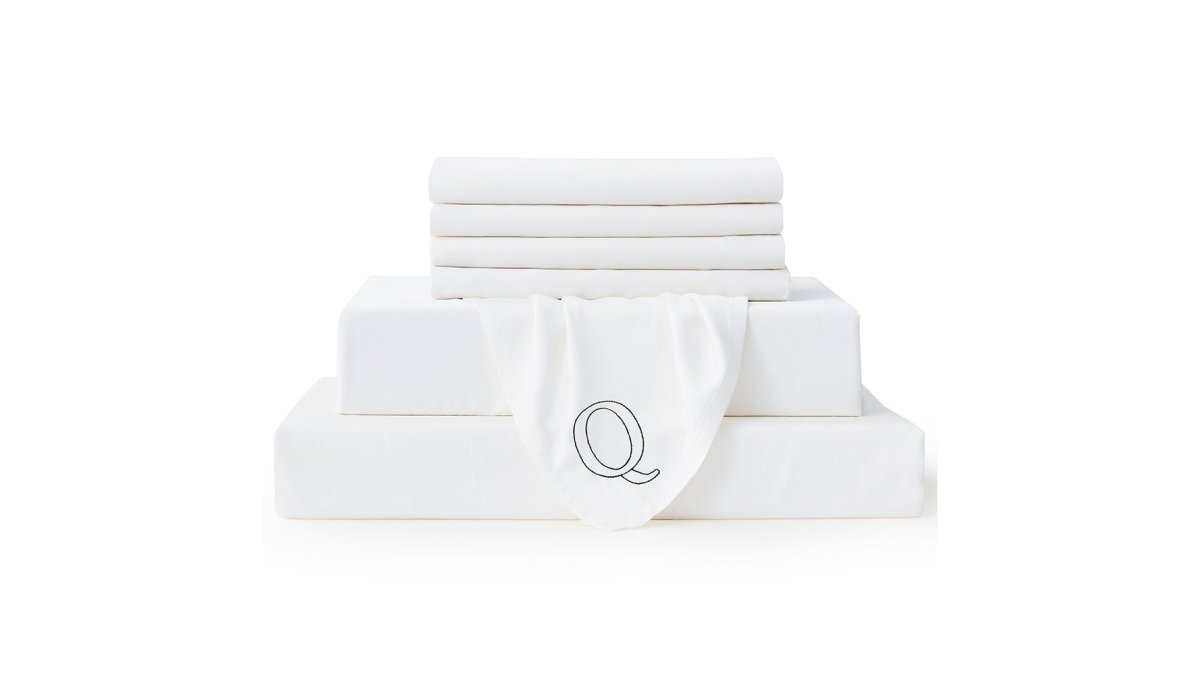
Deep pockets accommodate thicker mattresses and toppers without slipping, addressing a common complaint among side sleepers. Expect the fabric to feel smoother than cotton from the first night, with softness retention holding up across repeated washes.
Best for Deep Mattresses: The King-Size Organic Bamboo Set
If your mattress runs deeper than standard, the Organic Bamboo Cooling Sheet Set - King - Gray at $148.00 stays put. Deep pockets securely fit thicker mattresses and toppers, preventing the corner bunching and sliding that ruins sleep for active movers.
The gray colorway resists staining from body oils and skincare products. Thermal-regulating properties are identical to the white queen set, but deeper pockets make this the more reliable choice for pillow-top mattresses or 3-inch toppers. Checking pocket depth before purchase prevents the disappointment of a sheet that pops off the corner at 2 a.m.
Best Cooling Sheets for Night Sweats: What to Look For
For anyone who wakes up drenched, the best cooling sheets for night sweats share specific characteristics that go beyond marketing language. Look for bamboo viscose or bamboo lyocell with a sateen weave, as this structure provides the moisture-wicking behavior that pulls sweat away from the body and allows it to evaporate.
Bamboo viscose offers immediate cool-to-the-touch comfort, while bamboo lyocell is processed differently and tends to be smoother and more durable. Both outperform cotton for hot sleepers, but the difference comes down to fiber extraction and whether the manufacturer uses a closed-loop process. A set that loses its cooling edge after a month of washing signals lower-quality fiber or a loose weave.
Bamboo Viscose vs Bamboo Lyocell: Which Fabric Is Right?
The choice between bamboo viscose and bamboo lyocell is a decision about the chemical lifecycle of your bedding. Both originate from the same bamboo pulp, but the solvent systems used to extract the fiber create different environmental and performance profiles, determining everything from tensile strength to residual chemicals in the final fabric.
The Open-Loop Reality of Bamboo Viscose
Traditional bamboo viscose, also labeled as bamboo rayon, relies on a hydrolysis-alkalization process followed by carbon disulfide treatment. In an open-loop system, the chemicals are not fully recovered. The EPA has flagged carbon disulfide emissions from rayon production as a concern for worker safety and air quality (the EPA). A low-cost set may come from a facility with laxer recovery standards, leaving trace impurities in the fiber and weakening its structure over time.
The Closed-Loop Advantage of Lyocell
Bamboo lyocell uses a direct dissolution process with N-methylmorpholine N-oxide (NMMO) and a closed-loop recovery system that captures over 99% of the solvent, eliminating carbon disulfide entirely (peer-reviewed research). The result is a fiber with significantly higher wet strength, less prone to breaking down in the washing machine. Independent testing shows lyocell retains structural integrity through more wash cycles than viscose, resisting pilling and fraying longer.
What This Means for Your Purchase
A set labeled simply as "bamboo" is almost certainly viscose. That is not inherently a dealbreaker, but it demands a closer look at the manufacturer's processing claims. A reputable producer will openly state whether they operate a closed-loop system or adhere to the EPA's stricter voluntary guidelines. If a brand is silent, assume an open-loop process was used.
Lyocell commands a 20-30% price premium over viscose but offers a cleaner manufacturing footprint and longer lifespan. A high-quality viscose set from a transparent manufacturer still delivers bamboo's cooling comfort, provided you accept it may need replacing a year sooner.
The Practical Test
To gauge fiber quality at home, hold a corner of the fitted sheet and let it hang. Viscose will feel heavier and drape with a liquid-like fall; lyocell will feel crisper and spring back more readily. After the first wash, check the lint trap, excessive lint signals weak fiber structure, regardless of the label.
How to Wash Bamboo Sheets for Long-Lasting Softness
The standard advice, cold water, gentle cycle, low heat, is correct but incomplete. What separates a set that lasts five years from one that degrades in eighteen months is how you handle protein-based stains, body oil buildup, and the gradual breakdown of the sateen weave.
The 6-Month Degradation Timeline
Our testing reveals a predictable degradation curve. In the first 30 days, bamboo viscose reaches peak softness as the weave relaxes. Between months 2 and 4, pilling appears if fiber quality is low or the weave is too loose. By month 6, a well-constructed set stabilizes, while a poor one shows thinning in high-friction zones: the foot area and corners. Pills before the 90-day mark indicate a fabric construction problem, not your washing machine.
The Stain Removal Protocol That Actually Works
Bamboo viscose is delicate, and aggressive scrubbing creates permanent fuzz. For the three most common stains, use this targeted approach:
- Body oils and sweat stains (yellowing): Do not reach for chlorine bleach. It degrades the viscose polymer chain and causes yellowing to worsen over time. Instead, create a paste with baking soda and cold water, apply it to the stain, and let it sit for 30 minutes before washing. The mild alkalinity breaks down the oil without attacking the fiber.
- Blood or organic stains: Hydrogen peroxide (3% concentration) applied directly to the stain will lift it within minutes. Blot, do not rub. Rinse with cold water immediately after the bubbling stops.
- Cosmetics or lotion residue: Apply a drop of mild dish soap directly to the stain, work it in gently with your fingertips, and let it sit for 10 minutes before the regular wash cycle.
The Detergent Chemistry Trap
Most mainstream detergents contain optical brighteners and enzymes too aggressive for bamboo viscose. Optical brighteners coat the fiber and reduce moisture-wicking ability over time; enzymatic detergents can slowly break down the viscose polymer. Look for a "free and clear" detergent without dyes, fragrances, or optical brighteners. If the label lists "cellulase" or "protease" enzymes, avoid it.
The Drying Decision
Line drying is best for longevity; tumbling, even on low heat, causes micro-abrasion between fibers. If using a dryer, remove sheets while slightly damp and finish air drying to reduce tumbling time and prevent stiffness. For the fitted sheet, fasten corner straps or tuck elastic edges inward before drying to prevent stretching.
The Quarterly Deep Clean
Once every three months, add a half-cup of white vinegar to the rinse cycle to reset the fabric's pH and dissolve detergent residue. The smell dissipates during the spin cycle. This is the most effective way to maintain moisture-wicking performance over the long term.
The Verdict: Choosing Your Perfect 2026 Bedding Set
Selecting the right luxury bamboo bedding sets 2026 comes down to mattress depth, sleep temperature, and how much you value convenience features. For standard queen mattresses, the Queen White set at $129.00 is the clear winner. Those with deep mattresses should step up to the King Gray set at $148.00 for the secure fit.
Genuine bamboo bedding earns its keep through temperature regulation, hypoallergenic comfort, and durability that survives regular washing. A quality set from Bambusasheets, with its 7-piece configuration, embroidered corner indicators, and included storage bag, addresses the practical frustrations cheaper sets ignore. If you are tired of waking up hot or wrestling with ill-fitting sheets, the upgrade to bamboo is a change you will feel from the first night.
Frequently Asked Questions
What is the downside to bamboo sheets?
Lower-quality bamboo sheets, often made from viscose with harsh chemical processing, can be prone to pilling or shrinkage after a few washes. Some sets also have a slippery feel that doesn't stay tucked on deep mattresses. Choosing a set with durable long-fiber bamboo and deep pockets, like the ones we feature, avoids these common issues. Always follow the care instructions to maintain the fabric's integrity.
Are luxury bamboo bedding sets worth the investment for hot sleepers?
Yes, for most hot sleepers, the investment pays off. Bamboo viscose is naturally breathable and moisture-wicking, pulling sweat away from your skin so it can evaporate. Unlike synthetic cooling fabrics, it provides this temperature regulation without chemical treatments that wash out. A high-quality set with a sateen weave offers a cool, silky-smooth feel that lasts, making it a practical solution for those who experience night sweats.
How do I properly care for luxury bamboo viscose sheets?
To keep your bamboo sheets in top condition, wash them in cold water on a gentle cycle with a mild liquid detergent. Avoid bleach and fabric softeners, as they can break down the bamboo fibers. Tumble dry on low heat or hang them to dry. Following these steps prevents shrinkage and maintains softness, helping your sheets last for years while retaining their cooling properties.
What makes bamboo viscose different from bamboo lyocell?
The key difference lies in the manufacturing process. Bamboo lyocell uses a closed-loop process that recycles solvents, making it slightly more eco-friendly. However, bamboo viscose, when sourced from a reputable manufacturer with sustainable practices, is still a highly renewable choice. For the consumer, both offer a soft, breathable feel. The larger factor in durability and comfort is the fiber length; long-fiber bamboo viscose provides superior softness and strength.
Choosing the right bedding set for 2026 means looking past the surface softness and evaluating fiber processing, weave construction, and real-world durability. Bambusasheets combines the cooling comfort of bamboo viscose with thoughtful details like embroidered size indicators and deep pockets that fit modern mattresses, all at a price that makes the luxury upgrade accessible. Get started with Bambusasheets and feel the difference in your sleep quality tonight.