
Table of Contents
- What Makes Bamboo Sheets Sustainable Home Goods?
- How Bamboo Becomes Fabric: Lyocell vs Viscose
- Bamboo vs Cotton: Water, Pesticides, and Carbon Footprint
- Certifications for Sustainable Bamboo Textiles
- The Benefits of Bamboo Viscose Bedding for Sleepers
- Caring for Bamboo Viscose Sheets to Extend Their Life
- End-of-Life: Are Bamboo Sheets Biodegradable?
- Conclusion
- Frequently Asked Questions
Last Updated: September 28, 2026
What Makes Bamboo Sheets Sustainable Home Goods?
Bamboo sheets sustainable home goods are genuinely possible, but only when the fiber is processed in a closed-loop system and the finished textile carries independent certification. The plant itself is a fast-growing resource that regrows from its own root system after harvest, which means no replanting and far less soil disturbance than annual crops. At Bambusasheets, we build our 7-piece sets from bamboo viscose because the fiber is naturally breathable, hypoallergenic, and kind to sensitive skin.

The catch is that "bamboo" on a label tells you almost nothing about how the fabric was made. Two sheets can start from the same plant and end up with wildly different ecological footprints.
How Bamboo Becomes Fabric: Lyocell vs Viscose
Bamboo lyocell and bamboo viscose are the two dominant processing routes, and they differ mainly in the solvent used to dissolve the cellulose. Both are regenerated cellulose fibers, the bamboo plant is dissolved and reconstituted rather than spun directly like linen or cotton, so the fiber extraction step, not the farming, is where most of a bamboo sheet's environmental impact is decided.
Here is the mechanism, step by step. Bamboo stalks are harvested, crushed, and treated to isolate cellulose pulp. That pulp is then dissolved in a chemical solvent to form a thick solution, which is extruded through spinnerets into filaments and washed. The solvent is the variable that matters.
Lyocell (amine oxide route). Lyocell dissolves cellulose in N-methylmorpholine N-oxide, an amine oxide solvent. The process runs as a closed loop: the solvent is captured after extrusion, purified, and fed back into the next batch. In a well-run line, recovery rates are high enough that only a small fraction is lost per cycle, and the solvent itself is considered low-toxicity relative to the viscose chemistry. This is the single biggest lever a manufacturer controls.
Viscose (xanthate route). Viscose, sometimes labeled rayon, converts cellulose into a xanthate intermediate using carbon disulfide and sodium hydroxide. Carbon disulfide is associated with worker safety concerns and air emissions when plants lack proper controls, it affects the nervous system with prolonged exposure. Modern viscose lines capture and treat these emissions, but the gap between a well-controlled plant and a poorly controlled one is enormous. That gap is why processing location and auditing matter as much as the fiber source.
Modal and other routes. Modal is a modified viscose with a different xanthate chemistry that generally yields a stronger fiber and recovers more of its chemicals than conventional viscose, though it is not a true closed loop the way lyocell is.
| Route | Solvent | Loop status | Typical concern |
|---|---|---|---|
| Lyocell | Amine oxide | Closed loop, high recovery | Energy intensity |
| Modal | Modified xanthate | Partial recovery | Residual emissions |
| Viscose | Carbon disulfide | Open unless controlled | Worker safety, air emissions |
Why the Processing Route Decides the Footprint
Two sheets can start from the same bamboo field and end up with wildly different ecological footprints, because the mill, not the plant, sets the emissions, the water treatment, and the chemical handling. A lyocell line running on renewable power and recovering its solvent is a fundamentally different product from a viscose line discharging untreated effluent, even though both are marketed as "bamboo." When you evaluate a sheet, the processing route and the mill's controls are the first thing to interrogate, not the fiber name on the tag.
Bamboo vs Cotton: Water, Pesticides, and Carbon Footprint
Bamboo's clearest advantages over conventional cotton show up in water consumption and pesticide use. Cotton is a thirsty crop that in many regions depends on irrigation, and conventional cotton accounts for a notable share of global insecticide use. Bamboo, by contrast, is typically rain-fed and grows densely enough that it needs little to no pesticide input.
| Factor | Bamboo Viscose | Conventional Cotton |
|---|---|---|
| Water use | Low, mostly rain-fed | High, often irrigated |
| Pesticide input | Minimal | Significant |
| Processing energy | Higher | Lower |
| Land efficiency | Fast-growing, dense | Annual replanting |
| Biodegradability | Yes, untreated fabric | Yes |
Certifications for Sustainable Bamboo Textiles
Certifications are how you separate a verified claim from greenwashing. A bamboo sheet marketed as eco-friendly without an auditable certificate is relying on you not to check. But not all certificates verify the same thing, and knowing which one covers which claim is the difference between a real check and a logo on a hangtag.
What Each Certification Actually Verifies
OEKO-TEX Standard 100 tests the finished textile for harmful substances, things like formaldehyde, heavy metals, and certain azo dyes, at the product level (OEKO-TEX® STANDARD 100). It covers the sheet that actually touches your skin, which makes it one of the most useful labels for a consumer. What it does not do is verify the fiber's agricultural origin or the mill's labor practices.
Organic Bamboo Cooling Sheet Set →
| Certification | Verifies | Does not verify |
|---|---|---|
| OEKO-TEX Standard 100 | Harmful substances in finished textile | Fiber origin, labor |
| OEKO-TEX Made in Green | Chemicals + facility practices | Fiber origin |
| Organic textile standard | Fiber origin, processing chain | Finished-fabric residues |
| Fair trade / labor | Factory working conditions | Chemical safety |
How to Verify a Certificate Number
A logo is not proof. Certifications are issued to specific facilities for specific products, so a brand can hold a valid certificate that does not cover the sheet you are buying. Here is the check:
- Find the certificate number on the packaging or the brand's site, it is usually printed near the logo.
- Look up that number in the issuing body's public database (OEKO-TEX and the major organic standards both maintain searchable registries).
- Confirm the certificate holder matches the brand or its named manufacturer, and that the product category covers bedding.
- Check the expiry date. Certificates lapse, and a lapsed certificate is not a valid claim.
The Supply Chain Transparency Gap
Most sustainability content stops at the certificate. The harder question is whether the factory that made your sheet has been independently audited for labor practices at all, and most bamboo bedding brands do not publish that information. A practical way to probe it: ask the brand for the name and location of the mill that produced the fabric, and whether that mill holds a social-compliance audit.
The Benefits of Bamboo Viscose Bedding for Sleepers
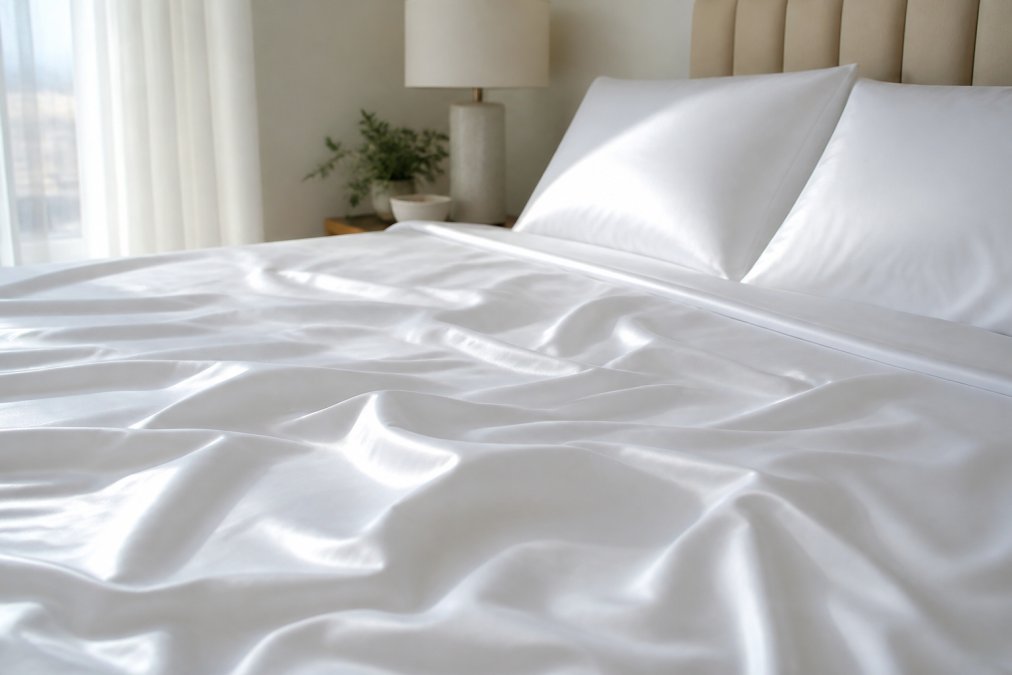
Bamboo viscose bedding offers real comfort advantages for hot sleepers and people with sensitive skin. The fiber's cross-section wicks moisture away from the body, and its natural breathability helps with thermal regulation through the night. For anyone who wakes up damp or overheated, that combination is the main reason to switch.
Caring for Bamboo Viscose Sheets to Extend Their Life
Caring for bamboo viscose sheets comes down to avoiding heat and harsh chemistry. Wash in cold water on a gentle cycle, tumble dry on low, and skip bleach entirely. High heat is what breaks down the long fibers that give bamboo its softness, so the dryer setting is where most people shorten a sheet's life without realizing it.
A few habits make a measurable difference:
- Wash separately from heavy items like jeans or towels that abrade the weave
- Use a mild detergent rather than a strong enzyme or bleach-based formula
- Remove promptly from the dryer to limit wrinkling
- Rotate two sets so each one rests between washes
End-of-Life: Are Bamboo Sheets Biodegradable?
Bamboo sheets are biodegradable at end of life, provided the fabric is not blended with synthetic fibers. Untreated bamboo viscose breaks down through normal microbial action, returning to the soil rather than persisting for decades the way polyester does. That closed loop, plant to fiber to soil, is what separates a genuinely sustainable sheet from one that only markets itself that way.
Conclusion
Sorting sustainable bamboo from greenwashed bamboo takes about two minutes once you know what to check: processing method, certification, and fiber content. Most sheets fail at least one of those tests.
Frequently Asked Questions
Are bamboo sheets environmentally friendly?
It depends on how the bamboo is processed. Bamboo lyocell made in a closed-loop system recovers and reuses most of the solvent, making it far more eco-friendly than viscose from bamboo, which can release chemicals like carbon disulfide if not managed properly. Bamboo itself is a fast-growing, pesticide-free resource that regenerates quickly, but the fiber extraction method determines the final ecological footprint. Look for OEKO-TEX Standard 100 certification and brands that disclose their supply chain.
What is the downside to bamboo sheets?
The main downside is that not all bamboo sheets are made the same way. Viscose from bamboo, also called rayon, often uses chemical-heavy processing that generates carbon disulfide emissions and chemical runoff. Bamboo sheets can also wrinkle more than cotton blends and may pill if washed with high heat. Some consumers report they feel cooler at first but lose that quality over time if the fabric is low quality. Choosing certified, long-fiber bamboo viscose reduces these risks.
Do bamboo sheets release microplastics?
Bamboo viscose and lyocell are cellulose-based fibers, not synthetic plastics, so they do not shed microplastics the way polyester or nylon do. However, some bamboo-blend sheets mix viscose with synthetic fibers, which can release microplastics during washing. Check the label for 100% bamboo viscose or lyocell. Using a gentle cycle and a microfiber-catching wash bag further reduces any fiber shedding into waterways.
What certifications should I look for in sustainable bamboo textiles?
OEKO-TEX Standard 100 verifies the finished fabric is free from harmful substance levels, which matters for sensitive skin and hypoallergenic bedding. Organic certification like USDA Organic or GOTS confirms the bamboo was grown without synthetic pesticides. For processing, look for lyocell made in a closed-loop system with solvent recovery. Supply chain transparency from the brand, including where fiber extraction and textile manufacturing happen, is another strong signal of genuine sustainability.