
Table of Contents
- Bamboo Viscose vs Cotton Sheets: A Quick Comparison
- Fiber and Weave Basics: Viscose, Rayon, Lyocell, and Cotton Types
- Softness and Feel: Sateen Bamboo vs Cotton Weaves
- Cotton vs Bamboo Sheets Breathability and Cooling
- Bamboo Viscose Sheets for Hot Sleepers and Sensitive Skin
- Bamboo Viscose Sheets Pros and Cons for Everyday Use
- How to Wash Bamboo Viscose Sheets and Cotton Sheets
- Choosing Your Set: Sizes, Pricing, and a Natural Pick
- Frequently Asked Questions
Last Updated: October 7, 2026
Bamboo Viscose vs Cotton Sheets: A Quick Comparison
Bamboo viscose vs cotton sheets comes down to one trade-off: bamboo viscose gives you a silkier, cooler-feeling surface, while cotton gives you a crisper, more familiar hand. Neither wins outright. Bambusasheets sells bamboo viscose bedding, so we have a clear stake here, and we will tell you where cotton still makes sense.

Here is the short version. Bamboo viscose is a cellulose fiber spun from bamboo pulp, then woven into fabric. Cotton is a natural fiber picked from the cotton plant and spun into yarn. The fiber decides the feel. The weave decides almost everything else.
The Comparison Table at a Glance
| Factor | Bamboo Viscose | Cotton |
|---|---|---|
| Feel | Silky, smooth, fluid drape | Crisp to soft, depending on weave |
| Breathability | High airflow, light against skin | Good, varies by weave and weight |
| Moisture handling | Wicks and dries quickly | Absorbent, dries slower |
| Best weave match | Sateen | Percale or sateen |
| Care demands | Cold wash, low heat | More forgiving of heat |
| Best for | Hot sleepers, sensitive skin | Sleepers who prefer a crisp bed |
Federal Trade Commission textile fiber labeling rules governs how fiber content must be disclosed on bedding labels, which is why "viscose from bamboo" and "rayon from bamboo" both appear in stores.
Fiber and Weave Basics: Viscose, Rayon, Lyocell, and Cotton Types
Most confusion in the bamboo viscose vs cotton sheets debate comes from mixing up two separate decisions: the fiber and the weave. Get those straight and the rest of the comparison falls into place.
Bamboo viscose is a cellulose fiber made by dissolving bamboo pulp in a chemical solvent, then extruding the dissolved cellulose through spinnerets into strands that harden into filament.
Lyocell is a related cellulose fiber, but it is made in a closed-loop process that captures and reuses most of the solvent.
Here is the label-literacy point most guides skip. A tag that says "100% bamboo" is not a fiber name under U.S. labeling rules, it is a marketing phrase.
Federal Trade Commission textile fiber labeling rules governs how fiber content must be disclosed on bedding labels, which is why "viscose from bamboo" and "rayon from bamboo" both appear in stores even though the fiber is the same.
One more label habit worth building: check the fiber-content percentage, not just the fiber name. A sheet labeled "bamboo blend" might be 60% bamboo viscose and 40% polyester, which changes the feel, the breathability, and the care routine. If the percentage is not stated, assume the bamboo share is smaller than the marketing implies.
Softness and Feel: Sateen Bamboo vs Cotton Weaves
Sateen bamboo feels slick and cool at first touch; cotton feels drier and more textured, and percale cotton feels distinctly crisp. That difference is structural, not marketing.
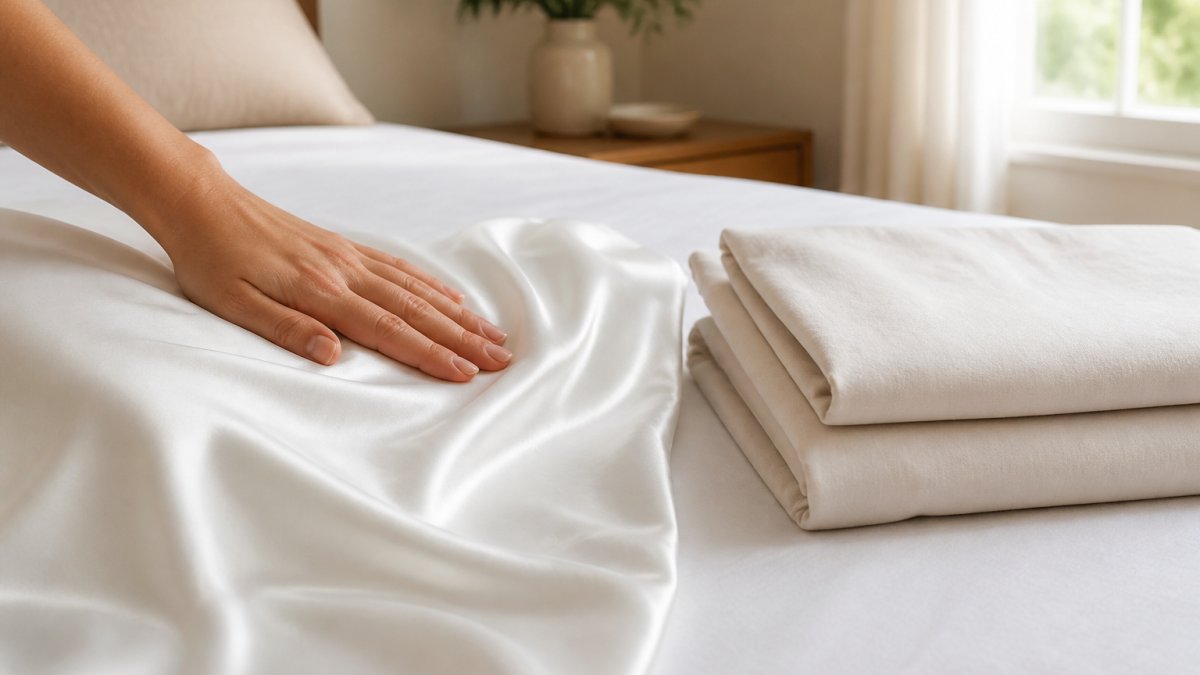
Bamboo viscose fibers are fine and round, so they slide rather than grip. A sateen weave amplifies that, which is why our sets use a delicate sateen weave for a soft sheen and a fluid drape. Cotton's surface has more natural friction. Some sleepers love that; others find it scratchy for the first several washes.
Two practical notes most guides skip. First, cotton softens over time as fibers relax, so a mid-range cotton sheet may feel better in month six than week one. Second, bamboo viscose starts soft and stays soft, but only if you keep heat out of the laundry cycle. Hot water and a hot dryer are what turn a smooth sheet dull.
Cotton vs Bamboo Sheets Breathability and Cooling
Cotton vs bamboo sheets breathability favors bamboo viscose on airflow, but the gap is smaller than the marketing suggests. Both materials breathe. The difference is how they move moisture.
Bamboo viscose wicks moisture away from the skin and dries quickly, which is why it feels cool rather than damp. Cotton absorbs more water and holds it longer, so a heavy cotton sheet can feel clammy after a sweaty night. Fabric weight matters too: a lightweight cotton percale breathes well, while a heavy sateen cotton traps more heat.
Sheets manage moisture and airflow; they do not control your body temperature.
Bamboo Viscose Sheets for Hot Sleepers and Sensitive Skin
For hot sleepers, bamboo viscose sheets for hot sleepers is the search term that matters, and the honest answer is that the fiber helps but does not guarantee anything. What it does well is stay light, wick moisture, and avoid the heavy, clinging feel that wakes people up.
Sensitive skin is a separate question. Smooth, fine fibers create less friction against skin than coarser weaves, and friction is a common trigger for irritation. That is a mechanical advantage, not a medical one.
What we can tell you is what is in the set: bamboo viscose, a sateen weave, and a smooth surface. If you have a diagnosed skin condition or a known fiber allergy, check the label and talk to your doctor before buying any sheet, ours included.
Bamboo Viscose Sheets Pros and Cons for Everyday Use
Bamboo viscose sheets pros and cons are easiest to judge against how you actually sleep.
Fresh White Bamboo Sheets - Full - Light & Breathable 7pc →
Pros
- Silky, smooth feel that stays smooth with correct care
- Good airflow and quick moisture wicking
- Fluid drape that resists stiff creasing
- Light against the skin in warm rooms
Cons
- Needs cold water and low heat, so it demands more attention than cotton
- Higher upfront cost than basic cotton sets
- Can dull or pill if washed hot or dried on high
- Fewer budget options than cotton
Cotton's pros and cons read almost in reverse. It is cheaper, tougher in the wash, and available everywhere. It is also less slick, slower to dry, and more prone to stiff creases out of the dryer.
How to Wash Bamboo Viscose Sheets and Cotton Sheets
How to wash bamboo viscose sheets is simpler than most people expect: cold water, gentle cycle, low heat, no bleach. Heat is the enemy, not water. The fiber itself tolerates water fine; it is the combination of agitation and high temperature that breaks down the smooth surface over time.
For bamboo viscose:
- Wash cold on a gentle cycle with a mild liquid detergent
- Skip bleach, fabric softener, and dryer sheets, softener coats the fiber and dulls the sheen
- Tumble dry low, or line dry if you have the space
- Remove promptly from the dryer to limit creasing
- Wash separately from towels, jeans, and anything with zippers or hooks
For cotton:
- Warm water is usually fine; hot water is acceptable for whites but speeds shrinkage over time
- A medium dryer setting will not ruin it, though high heat still causes shrinkage
- Bleach is tolerated when you need to brighten whites
- Fabric softener is optional and mostly a feel preference
The mechanical difference is worth understanding. Bamboo viscose fibers are fine and smooth, and heat plus friction causes them to abrade and pill at the surface. Cotton fibers are shorter and more textured, so they tolerate agitation better and actually soften with repeated washing as the fibers relax.
On total cost of ownership, the calculation is not just sticker price. Bamboo viscose costs more upfront and needs gentler handling, so the care routine is part of the purchase. Cotton costs less upfront and takes more abuse.
A few care habits that extend the life of either material: wash sheets in their own load rather than with heavy items, use the lowest heat setting that gets them dry, and rotate two sets so each one rests between uses.
Choosing Your Set: Sizes, Pricing, and a Natural Pick
Choosing between bamboo viscose and cotton sheets comes down to three questions: how hot do you sleep, how much do you care about feel, and how much laundry patience do you have?
If you sleep hot or want the smoothest surface, go bamboo viscose. If you want a crisp bed and the simplest laundry routine, go cotton. If you are unsure, start with one set of each and rotate them across seasons.
Our own sets are built around the details that make bamboo viscose easy to live with. Every Bambusasheets 7-piece set includes a fitted sheet, flat sheet, four pillowcases, and a storage bag. The fitted and flat sheets carry embroidered size indicators, so a K, Q, or F on the corner tells you the size and which way the sheet goes, which ends the guessing game on laundry day.
Sizes and prices:
- Full, Fresh White or Warm Ivory: $83.00
- Queen, Classic White: $129.00
- King, Crisp White or Hotel-Luxury Ivory: $144.00
If you want to compare against cotton in person, feel both in a store first. Fabric weight and weave tell you more in ten seconds than any spec sheet will.

Frequently Asked Questions
Are bamboo viscose sheets more breathable than cotton sheets?
Bamboo viscose sheets tend to feel cooler and more breathable than standard cotton because the fiber wicks moisture quickly and lets air move through the fabric. Cotton can be breathable too, especially percale weaves and long-staple varieties, but heavier sateen cotton may trap more heat. If you overheat at night, bamboo viscose sheets are usually the cooler pick, while a lightweight cotton percale is a close second.
Which sheets feel softer: bamboo viscose or cotton?
Bamboo viscose sheets typically have a silkier, smoother feel than cotton, with a slight drape and sheen from the sateen weave. Cotton softness depends on the variety: long-staple and Egyptian cotton feel smoother than short-staple cotton, and percale has a crisp, matte finish rather than a silky one. If you want that cool, fluid hand-feel, bamboo viscose sheets are the closer match.
Are bamboo viscose or cotton sheets better for hot sleepers?
Bamboo viscose sheets are often the better choice for hot sleepers because the fiber moves moisture away from the skin and feels cool to the touch. Cotton can work well too, especially lighter percale weaves, but heavy sateen cotton tends to hold more warmth. Pair bamboo viscose sheets with a breathable mattress protector and light blankets to get the most cooling benefit through the night.
How do you wash bamboo viscose and cotton sheets?
Wash bamboo viscose sheets in cold water on a gentle cycle and tumble dry low, skipping bleach and high heat to protect the softness. Cotton sheets can usually handle warm water and a normal cycle, though cold water and low heat help prevent shrinkage and fading over time. For both materials, wash separately from rough items like towels and remove sheets promptly to limit wrinkling.
Which is better for everyday use, bamboo viscose or cotton sheets?
Both work for everyday use, but they suit different preferences. Bamboo viscose sheets give you a silky, cooling feel and drape smoothly on the bed, which many people enjoy year-round. Cotton sheets offer a crisp, familiar feel and stand up to frequent washing with less fuss. If you want softness and breathability for daily sleep, bamboo viscose sheets are a strong fit, while cotton remains a reliable classic.
Choosing sheets is really a question about how you sleep, not which material is objectively better. If you run warm, wake up clammy, or want a smooth surface that stays cool against your skin, our bamboo viscose sets are built for exactly that, with a soft sateen weave, four pillowcases, and embroidered size marks that make bed-making faster. Get started with Bambusasheets and build a bed that feels cool and comfortable from the first night.