
Table of Contents
- The Cool-to-the-Touch Myth vs. All-Night Comfort
- How Bamboo Fabric Actually Regulates Temperature
- Are Bamboo Sheets Cooling Compared to Other Fabrics
- Bamboo Sheets vs. Linen for Hot Sleepers
- What Actually Affects Your Sleep Temperature
- Best Cooling Sheets for Hot Sleepers: What to Look For
- Are Bamboo Sheets Cooling in Practice: What the Evidence Shows
- Frequently Asked Questions
Last Updated: October 9, 2026
The Cool-to-the-Touch Myth vs. All-Night Comfort
When you first slip into bamboo sheets, they feel cool against your skin, but do bamboo sheets really stay cool all night long?
The cool-to-the-touch feeling comes from how bamboo conducts heat away from your body initially. Sustained comfort depends on breathability, moisture management, and how the fabric interacts with your sleep environment.
Many hot sleepers buy bamboo sheets expecting them to solve sweating entirely, which sets them up for disappointment.
How Bamboo Fabric Actually Regulates Temperature
Bamboo fabric regulates temperature through three properties: breathability, moisture wicking, and fiber structure.
Breathability and airflow
Breathable fabrics let air circulate between your skin and the sheets, dissipating body heat instead of trapping it. Bamboo viscose is naturally more breathable than standard cotton.
Its fibers have a slightly hollow center that creates pathways for air movement, unlike denser cotton, so heat escapes more easily.
Breathability alone doesn't guarantee comfort: a breathable fabric in a hot, humid room with heavy blankets still won't keep you cool.
Moisture wicking and sweat management
Moisture wicking describes how quickly fabric absorbs and releases sweat. Bamboo viscose absorbs moisture faster than many fabrics, pulling sweat off your skin so you feel drier.
When sweat sits on your skin you feel hot and clammy; when fabric wicks it away, evaporation cools your body naturally. This is where bamboo outperforms standard cotton.
But wicking only works if the fabric can release that moisture into the air.
Fiber type matters: viscose vs. rayon vs. lyocell
Not all bamboo sheets are equal; the manufacturing process changes how the fabric performs.
Viscose from bamboo is the most common type, made by dissolving bamboo pulp and spinning it into fibers.
Lyocell (often branded Tencel) uses a closed-loop process that recycles most chemicals, making it more eco-friendly but pricier. Its fibers are slightly stronger and smoother.
For cooling, the differences are small: all three are breathable and moisture-wicking.
Are Bamboo Sheets Cooling Compared to Other Fabrics
Bamboo sheets are more breathable and moisture-wicking than standard cotton, making them a better choice for hot sleepers. But the comparison is more nuanced than a simple ranking.
Here's how bamboo stacks up against common alternatives:
| Fabric | Breathability | Moisture Wicking | First-Touch Coolness | Sustained Overnight Feel | Durability |
|---|---|---|---|---|---|
| Bamboo Viscose | High | High | Very High | Good to Very Good | Good |
| Cotton (standard) | Medium | Medium | Medium | Medium | Very Good |
| Linen | Very High | Low | Medium | Very Good (in dry heat) | Very Good |
| Microfiber | Low | Low | Low | Poor | Good |
| Tencel Lyocell | High | High | High | Very Good | Very Good |
Bamboo wins on softness and moisture management, cotton is more durable, and linen is the most breathable but rougher and wrinkle-prone.
The first-touch vs. all-night distinction
A fabric can feel cool on contact without lowering your body temperature over eight hours.
Bamboo viscose scores high on first-touch coolness because its smooth fibers conduct heat well initially, which is why many people ask do bamboo sheets really stay cool throughout the night.
Linen has lower first-touch coolness but often performs better overnight in dry heat because its loose weave allows constant airflow.
What this means for hot sleepers
For hot sleepers, bamboo offers real advantages: breathability and moisture wicking address the two main problems, heat buildup and sweat accumulation, giving better temperature regulation than standard cotton.
The tradeoff is durability: bamboo needs gentle care, cold water, and low-heat drying, while cotton handles aggressive washing.
If you sleep hot and dry, linen may edge out bamboo on breathability. If you want immediate softness plus solid moisture management, bamboo is the stronger all-around choice.
Bamboo Sheets vs. Linen for Hot Sleepers
Linen is the gold standard for breathability, beating bamboo, cotton, and almost any other natural fabric. So why aren't all hot sleepers buying it?
Linen feels stiff and rough when new and takes dozens of washes to soften.
Bamboo sheets feel soft immediately, comfortable from the first night, and resist wrinkles better than linen, so your bed looks neater without extra work.
For pure breathability, linen wins; for immediate comfort and softness, bamboo wins.
What Actually Affects Your Sleep Temperature
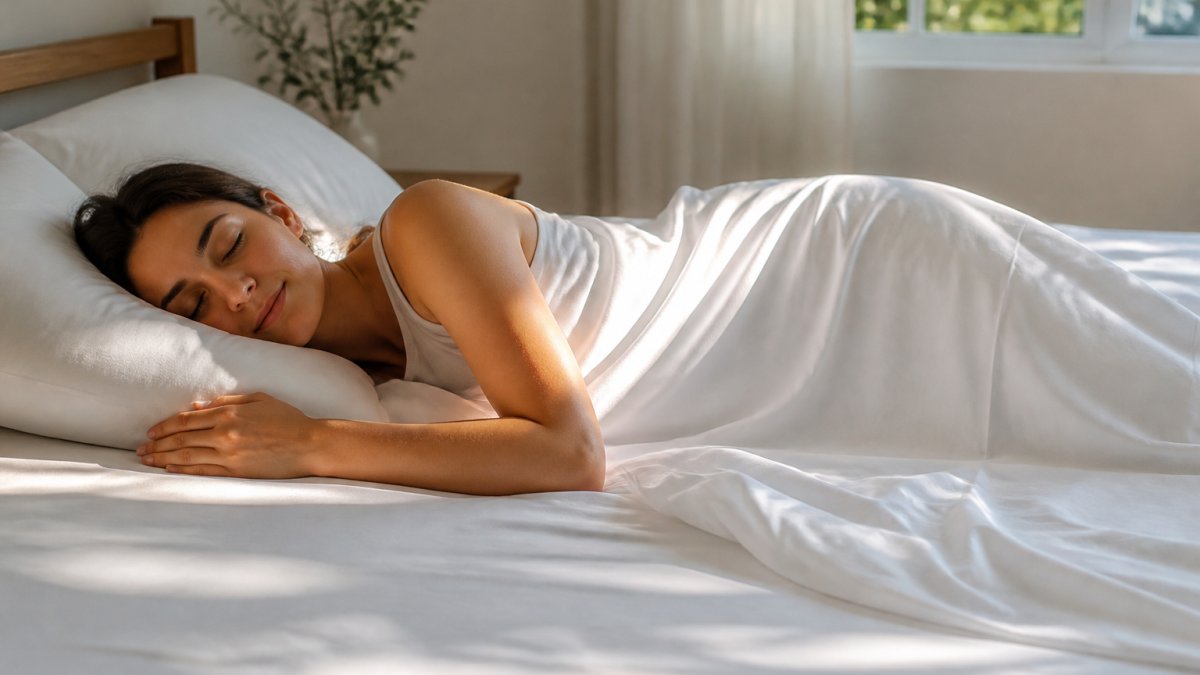
The sheets themselves are only one factor in how cool you sleep. Your room conditions, mattress, blankets, and sleepwear matter just as much, sometimes more.
Room temperature and humidity
A cool room is essential: at 75°F or warmer, even the best cooling sheets won't help much, because room temperature determines whether your body heat can escape.
Humidity matters equally. In a humid room, sweat doesn't evaporate from your skin or the sheets, so you feel clammy regardless of breathability; in a dry room, the same sheets feel dramatically cooler.
Ultra-Soft Bamboo Sheet Set - King, Grey - 7 Piece Cooling →
Many hot sleepers buy expensive cooling sheets but keep their bedroom at 72°F with high humidity, conditions no sheet can overcome.
Mattress, duvet, and sleepwear
Your mattress affects heat retention significantly: memory foam traps heat, innerspring sleeps cooler, and with memory foam even cooling sheets have limits.
Your duvet matters too: a heavy comforter traps heat, while a lightweight or no blanket lets heat escape. Some hot sleepers use only a sheet and sleep much better.
Sleepwear changes the equation too: pajamas trap heat, while sleeping nude or in minimal clothing lets your body cool more easily. Cotton or bamboo sleepwear is cooler than synthetics.
Best Cooling Sheets for Hot Sleepers: What to Look For
If you're shopping for cooling sheets, focus on these features.
Weave and fabric weight
A sateen weave creates a smooth, lustrous surface that's softer than percale and cooler to the touch, ideal for hot sleepers who want comfort and cooling together.
Percale weave is crisp and cool, more like traditional cotton sheets. Some prefer the crisp feel, but it's less soft than sateen.
Fabric weight matters too: lighter sheets breathe better than heavy ones. Look for "lightweight" labels, since higher counts feel denser and trap more heat.
Care and durability
How you care for your sheets affects how long they stay soft and cool. Bamboo needs cold water and gentle washing, since hot water breaks down fibers faster.
Tumble dry on low heat; high heat damages bamboo fibers and causes shrinkage. Air drying is gentler but slower.
Avoid bleach and fabric softener: bleach weakens fibers, and softener coats the fabric and reduces breathability.
Our Ultra-Soft Bamboo Sheet Set in Grey uses a sateen weave that feels cool and smooth from the first night.

Are Bamboo Sheets Cooling in Practice: What the Evidence Shows
Marketing claims about cooling sheets often overstate reality. Many brands promise all-night coolness, but understanding what the evidence actually shows helps you evaluate claims critically.
What cooling claims do and don't demonstrate
When a brand says its sheets are "three times cooler" or "clinically proven to reduce night sweats," ask what was measured. Most claims come from one of three sources:
- Thermal conductivity tests measure how quickly heat moves through a fabric sample. A high score means cool first touch, but says nothing about eight hours of body heat and moisture.
- Moisture wicking tests measure how fast a fabric absorbs and releases liquid. This is relevant to sweat management but doesn't directly measure temperature regulation.
- Consumer perception surveys ask sleepers how cool they felt. These are subjective and often conducted by the brand itself, with no control group or blinding.
None measure the outcome hot sleepers care about: waking up less sweaty and more rested. That would require a controlled sleep study with objective measures like skin temperature, sweat rate, and sleep stage data, which are rare in bedding because they're expensive and slow.
What independent testing would need to show
A rigorous test would need to control for:
- Room temperature and humidity, the same sheets perform differently at 65°F and 40% humidity versus 75°F and 70% humidity.
- Mattress type, memory foam traps heat; innerspring and latex sleep cooler.
- Duvet and sleepwear, a heavy comforter or synthetic pajamas can overwhelm any sheet's cooling properties.
- Fabric specifications, weave, weight (grams per square meter), fiber type (viscose, rayon, lyocell), and finish treatments all affect performance.
- Duration, first-touch coolness and eight-hour comfort are different measurements.
Without controlling for these variables, any cooling claim is incomplete. This doesn't mean bamboo sheets don't help. It means the evidence is mostly indirect, based on fabric properties rather than measured sleep outcomes.
What the fabric properties do support
The properties of bamboo viscose and lyocell are well documented: they absorb moisture faster than cotton, allow more airflow than tightly woven cotton, and feel smooth and cool to the touch.
Hot sleepers who switch to bamboo often notice immediate improvement in how dry they feel, even if they still wake up warm on the hottest nights, consistent with what the fabric properties predict: better moisture management and moderate heat dissipation.
How to evaluate a brand's cooling claim
When you see a cooling claim, ask:
- What was measured, thermal conductivity, moisture wicking, or subjective perception?
- Who conducted the test, the brand or an independent lab?
- What were the test conditions, room temperature, humidity, duration?
- Does the claim describe first-touch coolness or all-night performance?
If a brand can't answer these questions, treat the claim as marketing rather than evidence. That doesn't mean the sheets won't help you sleep cooler; it means you should rely on the fabric's known properties and your own sleep environment rather than a number on a label.
The bottom line for hot sleepers
Bamboo sheets do help hot sleepers sleep better: they're more breathable and moisture-wicking than standard cotton, a real advantage backed by the fabric's properties.
But they're not a magic solution.
Real improvement comes from combining cooling sheets with room temperature control, a breathable mattress, and lightweight blankets. Together, those changes help hot sleepers sleep noticeably better.
The initial cool-to-the-touch feeling is real and immediate.
Frequently Asked Questions
Do bamboo sheets keep you cool all night, or just at first?
Bamboo viscose sheets feel cool to the touch initially because the fabric absorbs body heat quickly. However, sustained overnight cooling depends on breathability, moisture wicking, and your sleep environment. A sateen weave bamboo sheet with deep pockets, like those in Bambusasheets' 7-piece sets, maintains airflow and moisture management throughout the night, but room temperature, humidity, your mattress, and duvet significantly influence total sleep comfort. Hot sleepers often report better results when bamboo sheets are paired with lighter bedding.
Are bamboo sheets cooling better than cotton for hot sleepers?
Bamboo viscose generally outperforms standard cotton for hot sleepers. Bamboo fabric is naturally more breathable and moisture-wicking, helping regulate body temperature more effectively. Cotton can absorb sweat but often retains heat and feels heavy when damp. However, high-thread-count cotton sheets perform similarly to lower-quality bamboo. The sateen weave used in quality bamboo sheets adds durability and a smooth texture that reduces friction and heat buildup, making bamboo a stronger choice for sustained cooling.
What makes some bamboo sheets cooler than others?
Fiber type, weave, and fabric weight determine cooling performance. Viscose from bamboo offers better breathability than rayon blends. A sateen weave, which creates a smooth, lustrous surface, provides better airflow than a percale weave. Lighter fabric weights cool faster but may be less durable. Additionally, deep pockets and quality construction prevent bunching, which traps heat. Bambusasheets' sateen weave with embroidered size indicators ensures proper fit and consistent airflow, avoiding the heat pockets created by poorly fitted sheets.
Do bamboo sheets work for side sleepers who move around at night?
Yes, if they fit properly. Bamboo sheets that shift or bunch trap heat and reduce cooling benefits. Deep pockets and stretchy fibers are essential for active sleepers. Bambusasheets' long-fiber viscose construction and deep pockets are designed to stay anchored even with movement, preventing the bunching that disrupts airflow and thermoregulation throughout the night. Proper fit is as important as fabric choice for maintaining cooling performance.