

Table of Contents
- Quick Comparison: Durable Bamboo Sheets for Daily Use
- What Makes Bamboo Sheets Durable Enough for Daily Use
- Bamboo Viscose vs Lyocell Durability: Which Fiber Lasts Longer
- How to Wash Bamboo Sheets Without Breaking Down the Fiber
- Long-Term Wear and Tear: What to Expect After a Year of Daily Use
- Best Durable Bamboo Sheet Sets for Daily Use
- Frequently Asked Questions
Last Updated: September 15, 2026
Quick Comparison: Durable Bamboo Sheets for Daily Use
Durable bamboo sheets for daily use survive frequent washing and nightly rotation without losing softness, and the difference between a set that lasts one year and one that lasts five comes down to fiber type, weave, and fabric weight. Bambusasheets built its 7-piece bamboo viscose sets around long-staple fibers and a sateen weave to survive that rotation. This guide breaks down what determines longevity, then compares the sets worth buying.
Quick Picks:
- Best Overall: Bambusasheets Organic Bamboo Cooling Sheet Set ($83-$148), long-fiber bamboo viscose, sateen weave, embroidered size indicators
- Best for Hot Sleepers: Bambusasheets Queen in White ($129), moisture-wicking and thermal regulating
- Best Value: Bambusasheets Full in Gray ($88), same construction at the lowest entry price
| Set | Size Options | Price | Best For |
|---|---|---|---|
| Bambusasheets Ivory Full | Full | $83 | First-time bamboo buyers |
| Bambusasheets White Queen | Queen | $129 | Couples, hot sleepers |
| Bambusasheets Gray King | King | $148 | Larger beds, daily rotation |
| Bambusasheets Navy Full | Full | $88 | Guest rooms, gifts |
What Makes Bamboo Sheets Durable Enough for Daily Use
Durability in bamboo bedding comes down to three things: fiber length, weave structure, and fabric weight. Get all three right and a set handles twice-weekly washing for years. Get them wrong and you get pilling by month four.

Sateen Weave and Long-Staple Bamboo Viscose
Sateen weave passes threads over three or four yarns before going under one, creating a smooth surface with fewer interlacing points. That reduces friction between fibers during washing, where most wear happens. Long-staple bamboo viscose adds tensile strength because longer fibers mean fewer exposed ends to fray. The trade-off: sateen feels silkier but snags more easily than twill, so keep pets off the bed and trim nails.
GSM, Thread Count, and Fabric Weight
GSM (grams per square meter) measures fabric density and matters more than thread count for bamboo. Higher GSM means more fiber per square meter and better resistance to thinning. Bamboo sheets typically land between 100 and 150 GSM; anything under 100 feels flimsy after a few washes (Fiber and Materials Matrix). Thread count is a weaker signal, viscose fibers are finer than cotton, so a 300-count bamboo sheet can feel denser than a 400-count cotton one.
Bamboo Viscose vs Lyocell Durability: Which Fiber Lasts Longer
Bamboo viscose and lyocell start from the same raw material, bamboo cellulose, but the manufacturing route changes the fiber's internal structure, which determines how the sheet behaves after 50 or 100 wash cycles.
Bamboo viscose is made through wet-spinning, dissolving bamboo cellulose in a solvent and extruding it into fibers. The result is a very fine, soft fiber with a smooth surface, silkier out of the bag than almost any cotton. The trade-off: its outer layer is more susceptible to surface abrasion, the mechanical action that produces pilling.
Lyocell (sold as "bamboo lyocell" or TENCEL Lyocell) uses a closed-loop solvent system that recovers most processing chemicals. The fiber is more uniform in diameter and has higher wet strength, it holds its shape better when wet, exactly when sheets take the most abuse in a washing machine.
Modal is a third option on labels. It is also regenerated cellulose, usually made from beechwood, and sits between viscose and lyocell on softness and wet strength. Some bamboo-blend sheets use modal to add durability without losing drape.
Here is how the three compare on the factors that actually affect daily-use lifespan:
| Fiber | Wet strength | Pilling resistance | Abrasion resistance | Typical feel |
|---|---|---|---|---|
| Bamboo viscose | Lower | Moderate | Moderate | Silkiest, coolest |
| Bamboo lyocell | Higher | Good | Good | Smooth, slightly crisper |
| Modal | Moderate | Good | Good | Soft, cotton-like drape |
What the difference looks like over time
In the first six months, a well-made bamboo viscose set and a well-made lyocell set are hard to tell apart, both feel smooth, wick moisture, and sleep cool. The split shows up in year two and three. Viscose washed cold and dried low holds its structure well, but viscose exposed to hot water or high dryer heat degrades faster: the surface roughens, short fibers work loose, and pilling starts at friction points (foot of the bed, pillowcase hems, fitted-sheet corners). Lyocell's higher wet strength tolerates the same abuse with less damage, so a carelessly washed lyocell set usually outlasts a viscose set washed the same way.
That does not make lyocell automatically the better buy. Washed cold and dried low, which you should do with any bamboo sheet, viscose can easily last past two years and costs less. The durability gap narrows dramatically when care is consistent.
How to read a fiber label
Labels are not always clear. A sheet sold as "bamboo" may be 100% bamboo viscose, a viscose-lyocell blend, or a bamboo-cotton or bamboo-modal blend. Check the fiber content panel, not the front of the package. "100% bamboo viscose" or "100% viscose from bamboo" means the softer, more care-sensitive fiber; "lyocell" or "TENCEL Lyocell" means the more abrasion-resistant one; modal, cotton, or polyester alongside bamboo means a blend whose durability tracks whichever fiber dominates.
How to Wash Bamboo Sheets Without Breaking Down the Fiber
Follow this protocol:
Drying, Pilling, and Shrinkage Prevention
Long-Term Wear and Tear: What to Expect After a Year of Daily Use
Month 1-3: The break-in period
Month 4-6: First stress points appear
Month 7-12: The durability verdict
Year 2 and beyond
The care habits that separate a one-year set from a five-year set
| Care habit | Cold-wash, low-dry household | Hot-wash, high-dry household |
|---|---|---|
| Wash temperature | Cold (under 86°F) | Warm to hot |
| Dryer setting | Low, 10-15 min, then air dry | High until fully dry |
| Detergent | Mild, bleach-free | Any, sometimes with boosters |
| Typical fitted-sheet life | 2+ years | 10-14 months |
| Typical pilling onset | Rare before year 2 | Common by month 6-9 |
| Typical shrinkage | 3-5% on first wash | Can exceed 8% |
Best Durable Bamboo Sheet Sets for Daily Use
Frequently Asked Questions
Are bamboo bed sheets durable enough for daily use?
Yes, when the fiber quality and care routine are right. Long-staple bamboo viscose made with a tight sateen weave resists pilling and thinning better than short-fiber blends. The biggest threats to durability are heat and friction, not daily use itself. Wash in cold water on a gentle cycle, dry on low heat, and skip bleach. Sets built this way, like Bambusasheets' 7-piece bamboo viscose sets, are designed to hold their softness and structure through regular washing.
How often should you wash bamboo sheets for maximum longevity?
Once a week is the sweet spot for daily-use sheets. Waiting longer lets body oils and sweat settle into the fibers, which attracts more friction and dulls the fabric over time. Washing more often than every three to four days adds unnecessary wear from the machine cycle itself. A weekly cold-water wash on gentle, followed by a low tumble dry, keeps durable bamboo sheets clean without accelerating fiber breakdown.

What is the difference between bamboo viscose and lyocell for durability?
Bamboo viscose is spun from bamboo pulp using a solvent process, producing an extremely soft, drapey fabric. Lyocell uses a closed-loop solvent system that recovers most of the chemicals, and the resulting fiber tends to be slightly stronger and more pill-resistant. In practice, both can last for years with proper care. Viscose wins on immediate softness; lyocell edges ahead on tensile strength and long-term shape retention. The weave and GSM matter as much as the fiber name.
How do you prevent bamboo sheets from pilling?
Pilling comes from friction and heat. Wash sheets separately from towels, zippers, and anything with a rough texture. Use cold water and a gentle cycle, then tumble dry on low or hang to dry. Avoid fabric softener and bleach, both of which weaken fibers and encourage surface fuzz. If pills do form, a fabric shaver removes them without damaging the weave. Following these steps keeps durable bamboo sheets smooth well past the first year.
Which bamboo sheet set is best for daily use?
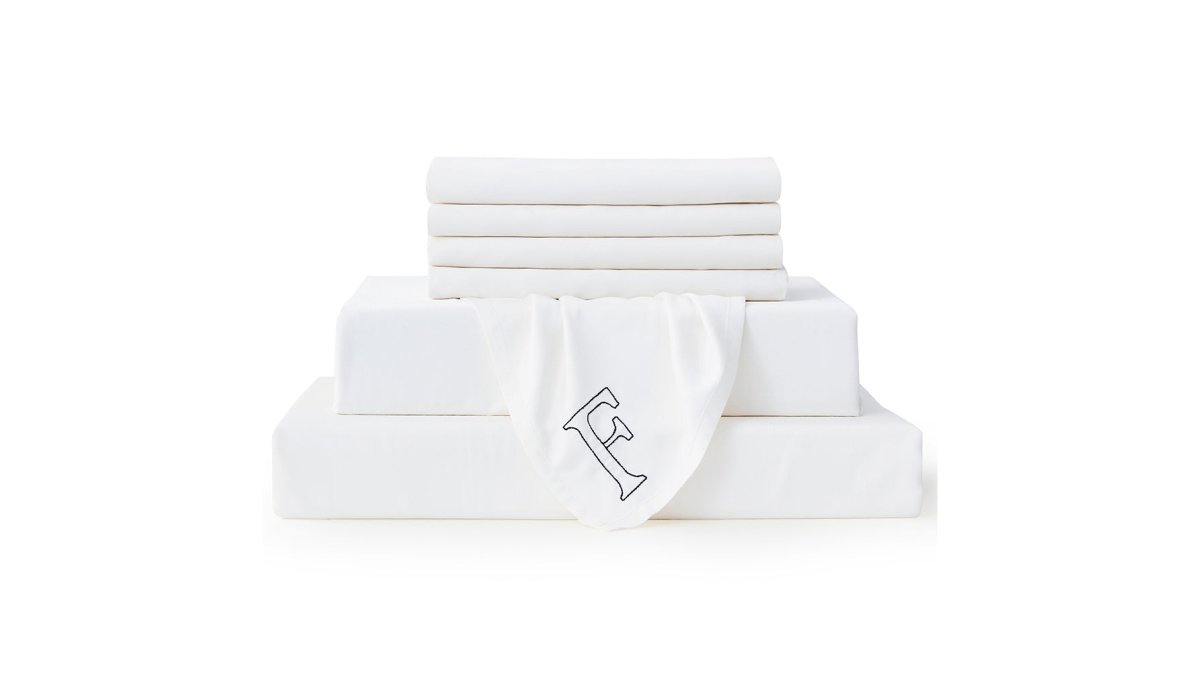
Look for long-staple bamboo viscose, a sateen weave, and a mid-range GSM that balances breathability with strength. Bambusasheets' Organic Bamboo Cooling Sheet Set comes in Full, Queen, and King sizes from $83 to $148, with a 7-piece configuration, embroidered size indicators on the bottom corners, and deep pockets that hold thicker mattresses. The corner letters also cut bed-making time, which matters when sheets go on and off the bed every week.
Replacing sheets every year gets expensive, and it's usually a fiber problem, not a user problem. Bambusasheets solves it with long-staple bamboo viscose, a durable sateen weave, and embroidered size indicators that make daily bed-making faster. If you want a set built to survive real daily use, start with the 7-piece Organic Bamboo Cooling Sheet Set and stop rebuying sheets every twelve months.