

Last Updated: October 25, 2026
Quick Summary
To store bamboo bedding long term, wash sheets in cool water with fragrance-free detergent, dry them completely, and place them in a breathable cotton or linen bag in a cool, dry interior closet. Check stored bedding every 3-6 months and replace moisture-absorbing packets regularly to prevent musty odors and mildew.
- Air-dry sheets for 2-4 hours in a well-ventilated area; trapped moisture creates musty smells within weeks
- Use breathable fabric bags or ventilated bins, never vacuum-sealed bags or sealed plastic containers that trap humidity
- Keep storage location between 60-75°F with relative humidity below 50% to prevent mildew growth
- Replace silica gel packets every 6 months or when indicator beads change color
- Inspect stored bedding every 3-6 months for dampness, odors, and discoloration
Table of Contents
- Why Proper Storage Matters for Bamboo Bedding
- Step 1: How to Wash Bamboo Sheets Before Storage
- Step 2: How to Dry Bamboo Sheets Completely
- Step 3: Fold or Roll Your Bedding for Storage
- Step 4: Choosing the Best Storage Bags for Bedding
- Step 5: How to Prevent Mildew on Stored Bedding
- Step 6: Selecting the Right Storage Location
- Step 7: Inspection Schedule and Long-Term Maintenance
- Frequently Asked Questions
Why Proper Storage Matters for Bamboo Bedding
Bamboo viscose sheets sleep cool and feel luxurious, but they need the right care to stay that way when you store bamboo bedding long term.
The good news: storing bamboo bedding correctly is straightforward. A few simple steps protect your investment and keep sheets fresh for years.
Proper storage starts before you pack anything away: sheets must be completely clean and bone-dry, and the storage location matters as much as the method.
Step 1: How to Wash Bamboo Sheets Before Storage
Start with clean sheets.
Wash your bamboo sheets in cool or warm water, not hot.
Here's the washing process:
- Use the gentle or delicate cycle on your washing machine
- Add sheets alone or with similar light colors
- Use about half the recommended detergent amount
Residual detergent traps moisture, which leads to mildew during storage.
Treat stains before washing: a stain remover applied 15 minutes beforehand works better than high heat or harsh chemicals.
Learn the complete care process for bamboo sheets before storing them long-term to ensure your bedding stays pristine.
Step 2: How to Dry Bamboo Sheets Completely
Moisture is the enemy of long-term storage. Even slightly damp sheets will develop odors within weeks. Make sure sheets are completely dry before packing them away.
Air-drying is best.
Drying takes 2-4 hours depending on humidity and airflow. Check by touch: sheets should feel completely dry, not just surface-dry. Run your hand along seams and folded areas where moisture hides.
If you use a dryer, keep it on low heat, high heat damages bamboo fibers and causes shrinkage.
Never pack sheets that feel even slightly cool or damp. Trapped moisture creates musty smells during storage.
Step 3: Fold or Roll Your Bedding for Storage
How you fold affects how well sheets store. Tight creasing weakens fibers over time, especially in bamboo viscose.
To fold sheets:
- Lay the fitted sheet flat and fold it into a rough rectangle
- Fold the flat sheet in half, then in half again
- Stack pillowcases on top
Rolling works well for long-term storage:
- Roll each sheet loosely, not tightly
- Start from one corner and roll toward the opposite corner
- Secure rolled sheets with a fabric tie or ribbon (not rubber bands, which crease fabric)
Rolled sheets take up about 30% less space than folded ones and develop fewer permanent creases. Either method works as long as you don't compress sheets too tightly.
Master the folding technique needed to prepare sheets for storage with our step-by-step guide.
Step 4: Choosing the Best Storage Bags for Bedding
The right storage container protects bamboo bedding from dust, light, and pests while still letting moisture escape, where most people get it wrong. Bamboo viscose and bamboo lyocell are regenerated cellulose fibers: highly absorbent, they hold onto ambient humidity, so a container that traps air also traps the moisture that feeds mildew and musty odors.
There is no single best container. The right choice depends on where the bedding will live and how humid that space gets. Use this decision guide.
Match the container to the environment
| Storage environment | Best container | Why |
|---|---|---|
| Bedroom or hallway linen closet (climate-controlled) | Breathable cotton or linen bag, or the original reusable bedding bag | Air circulates, dust and light are blocked, and normal indoor humidity stays low |
| Under-bed storage in a climate-controlled room | Breathable fabric bag inside a ventilated bin with open vents | Keeps dust off while allowing airflow |
| Humid climate, coastal area, or unconditioned room | Ventilated bin with moisture absorber, checked monthly | Sealed containers condense; vents plus a desiccant manage humidity |
| Attic or garage | Avoid if possible; if unavoidable, ventilated bin plus desiccant and frequent checks | Temperature swings drive condensation on fabric and container walls |
| Basement | Avoid; if unavoidable, raised shelf, ventilated bin, dehumidifier nearby | Ground-level rooms carry the highest sustained humidity |
Breathable fabric bags
Cotton, linen, and canvas bags are the default for a reason. The weave lets water vapor pass through so trapped humidity does not condense on the fabric. Look for:
- A breathable natural-fiber weave, not a coated or laminated fabric
- Enough room to hold the set loosely without compression
- A zipper or drawstring that closes fully against dust
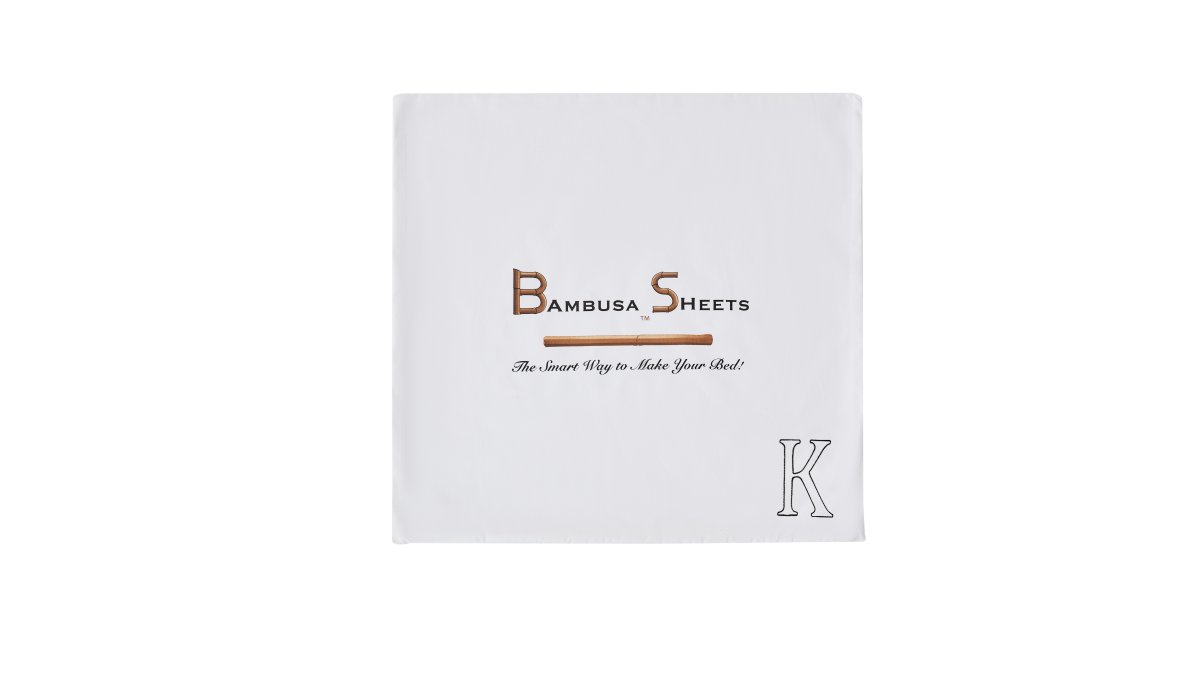
Bambusasheets offers Full, Queen, and King storage bags at $20.00 each, sized to the sheet set and finished with embroidered size indicators so you can identify contents without unzipping. A bag sized to the set prevents the overstuffing that crushes bamboo fibers.
Ventilated bins
Rigid bins protect against pests and dust better than fabric, but only if they breathe. Choose bins with molded vents or drill small holes in the lid and upper sides, pair with a moisture absorber, and check monthly in humid conditions. Never stack heavy items on a bin holding bamboo bedding; compression defeats loose packing.
When sealed containers are acceptable
A fully sealed plastic tote is only safe when the fabric is bone-dry, the room stays below roughly 50% relative humidity year-round, and a fresh desiccant pack is inside. Otherwise sealed plastic becomes a condensation chamber. If you use one, open it every 4-6 weeks to release trapped humid air and swap the desiccant.
Containers to skip
- Vacuum-sealed bags: they compress fibers and trap residual moisture, and the pressure sets permanent creases in bamboo viscose
- Coated or waterproof fabric bags: the coating blocks airflow the same way plastic does
- Cardboard boxes: they absorb ambient moisture and can transfer it to fabric, and they invite pests
Breathable storage bags protect your bedding while keeping everything organized in your linen closet.

Step 5: How to Prevent Mildew on Stored Bedding
Mildew needs three things: moisture, warmth, and a food source, on bamboo bedding, often invisible residue, body oils, detergent film, or sizing left in the fiber. Remove any one leg of that tripod and mildew cannot establish. Most storage failures come down to moisture already in the fabric or the air around it.

Prevention: close the three openings
Moisture in the fabric. Wash and dry as described in Steps 1 and 2, then give sheets an extra 30 minutes of air-drying in a breezy room before packing.
Moisture in the air. Keep the storage location between 60-75°F and aim for relative humidity below 50%. A $10-$15 hygrometer takes the guesswork out of it.
Moisture from the container. Use the breathable or ventilated options from Step 4. Never seal damp fabric into any container, even a breathable one.
Moisture-control add-ons, ranked
- Silica gel packets: the most effective per dollar for small spaces; replace every 6 months or when the indicator beads change color
- Activated charcoal: absorbs odors and some moisture; refresh by leaving it in sunlight monthly
- Cedar blocks or chips: modest moisture control and a real deterrent to insects; sand lightly when the scent fades
Troubleshooting musty smells after storage
A musty smell means mildew has started, even if you cannot see it yet. Work through this sequence rather than reaching for a hot wash.
- Air first. Hang the sheets outside in shade with good airflow for 2-3 hours. Sunlight helps, but intense direct sun can fade bamboo viscose, so a shaded, breezy spot is safer.
- Smell again. If the odor is gone, re-dry completely and re-store with fresh desiccant. If it lingers, move to step 3.
- Wash on gentle with a half dose of fragrance-free detergent and add a half cup of white vinegar to the rinse cycle. Vinegar helps strip detergent film and mild odor without harsh chemistry. Do not use bleach or fabric softener.
- Double-rinse to remove all residue, then air-dry fully.
- Inspect for spots. Visible dark speckling or discoloration that survives washing usually means the mildew has stained the fiber. Wash once more; if the stain remains, the sheet is compromised for long-term storage and should go back into rotation rather than back into a bag.
A simple prevention routine
- Check stored bedding every 3-6 months: open the container, smell the fabric, feel for dampness, and look for spots
- Replace silica gel or charcoal every 6 months
- Rotate sets so the oldest is used first
- Keep a note of storage date and last inspection so patterns are easy to spot
If one location keeps producing musty bedding, the problem is the location, not the sheets. Move the set to a drier closet before trying again.
Step 6: Selecting the Right Storage Location
Where you store bamboo bedding matters as much as how. The ideal location is cool, clean, and dry.
Avoid these storage locations:
- Basements (humidity fluctuates with seasons)
- Attics (temperature swings damage fabric)
- Bathrooms (constant moisture from showers)
- Kitchens (heat and humidity from cooking)
Best storage locations:
- Interior closets in bedrooms or hallways
- Under-bed storage in a climate-controlled room
- Linen closets away from bathrooms
- Interior shelves in living spaces
A bedroom linen closet is nearly perfect: cool, dry, and protected from light. Without a dedicated closet, a shelf in your bedroom or hallway works well.
Check the storage area before packing: look for moisture, dust, or pest activity, and wipe down shelves so they're clean and dry.
Step 7: Inspection Schedule and Long-Term Maintenance
Long-term storage isn't "set it and forget it." Regular inspections catch problems before they damage your sheets.
Check your stored bedding every 3-6 months:
- Open the storage bag and visually inspect sheets
- Smell the fabric for any musty odors
- Feel for dampness or stickiness
- Look for discoloration or mold spots
If sheets smell slightly musty, air-dry them in sunlight for 2-3 hours; this usually eliminates odors. For mold spots or heavy discoloration, wash again on the gentle cycle before re-storing.
Rotate stored bedding if you have multiple sets. Use the oldest sets first.
Keep a simple log of storage dates and inspections, noting any issues.
Even the best storage has limits, and fresh sheets feel better anyway.
Storing bamboo bedding long term requires attention to moisture, location, and container choice.
Frequently Asked Questions
How should you store bamboo sheets long term?
Store bamboo bedding long term by washing and completely drying the sheets first, then folding or rolling them into a breathable cotton or fabric storage bag. Place the bag in a cool, dry location away from direct sunlight. Check your stored bedding every 3-6 months for any signs of moisture or odors. Avoid plastic bins or vacuum-sealed bags, which trap moisture and can cause mildew.
Should bamboo bedding be washed before storage?
Yes, always wash bamboo sheets before long-term storage. Clean bedding removes body oils, sweat, and bacteria that can accumulate and cause musty odors or attract pests during storage. Use a gentle, fragrance-free detergent in cool water, then dry completely before packing. This step is especially important for bamboo viscose fabric, which benefits from a fresh start before extended rest.
What is the best container for storing bamboo sheets?
The best storage bags for bedding are breathable cotton or fabric containers that allow airflow while protecting from dust and light. Bambusasheets storage bags ($20.00 each, available in Full, Queen, and King sizes) are designed specifically for this purpose, featuring natural breathability to prevent moisture buildup. Avoid plastic bins, vacuum-sealed bags, or airtight containers, which trap humidity and promote mildew growth on your bamboo fabric.
How do you keep stored bedding from smelling musty?
Prevent musty smells by ensuring sheets are completely dry before packing, storing in a breathable container in a cool, dry environment, and checking bedding every 3-6 months. Add moisture-absorbing packets like silica gel inside the storage bag if your climate is humid. Avoid damp basements or attics. If a musty smell develops, remove the sheets, air them out in sunlight for several hours, and rewash before storing again.
