

Table of Contents
- Why Sheets Pill After Washing: The Core Causes
- Fiber Shedding vs. Pilling: What Is Actually Happening
- How to Prevent Pilling on New Sheets
- How to Wash Bamboo Sheets Correctly
- How to Remove Pilling from Sheets
- Matching Your Care Routine to Your Fabric Type
- Frequently Asked Questions
Last Updated: September 12, 2026
Why Sheets Pill After Washing: The Core Causes
If you've noticed fuzzy bumps forming on your bedding right after a wash, you're not imagining it. Sheets pill after washing because the wash cycle's mechanical action pulls loose fibers to the surface, where friction and heat tangle them into small knots called pills (PubMed). This guide from Bambusasheets breaks down exactly why it happens and how to stop it.
Pilling is one of the most common complaints in bedding care, and it almost always traces back to two culprits: abrasion and heat. Understanding both is the fastest route to protecting your linens.
Friction and abrasion in the wash cycle
Every time fabrics rub against each other in the drum, fibers weaken and break. Agitation from a crowded or heavy laundry cycle accelerates this abrasion, and short fibers work loose faster than long ones. Once those loose ends surface, they tangle with neighboring fibers and form pills that won't comb out.
Heat damage to fiber integrity
Hot water and high-heat drying both stress fiber structure. Heat causes fibers to contract and become brittle, which makes them more likely to snap during the wash. Over time, repeated exposure to high heat reduces tensile strength and leaves fabric prone to surface fuzz.
Fiber Shedding vs. Pilling: What Is Actually Happening
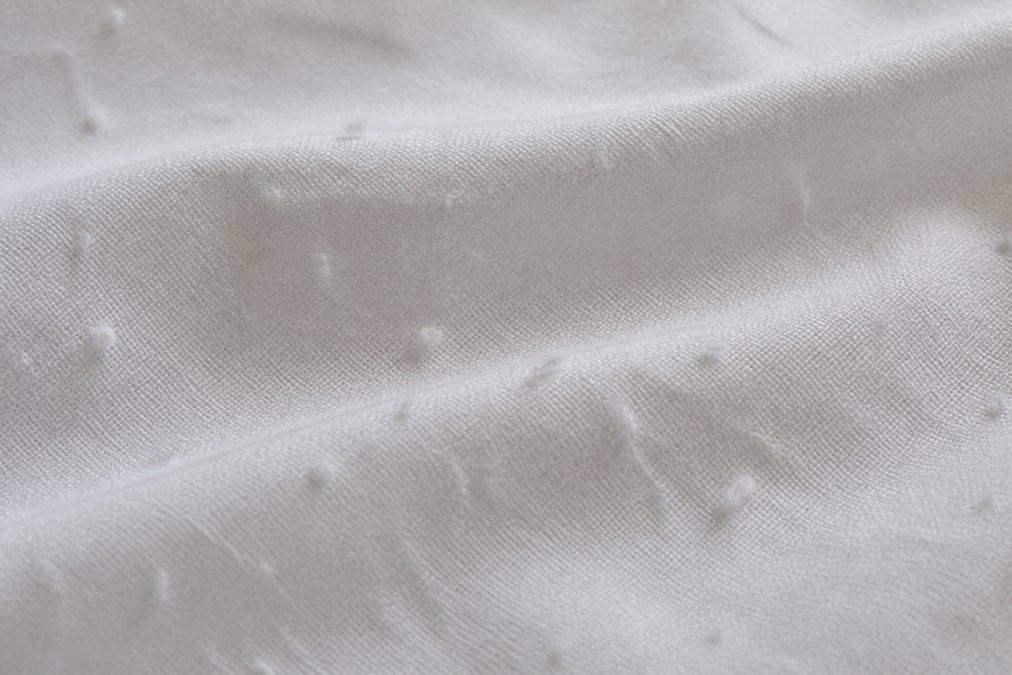
Fiber shedding is the release of individual fibers from a fabric's weave. Pilling is what happens when those shed fibers tangle back onto the surface into visible balls. The two are related but distinct stages of the same wear process, and understanding the difference tells you which fix actually works.
Here's where most guides get it wrong: they treat shedding as the problem to solve. In reality, shedding is normal. What you want to control is how much fiber escapes and whether it reattaches as a pill.
What happens at the fiber level
Most bedding fabrics are spun from staple fibers, short lengths of fiber twisted into yarn. When a yarn is spun, thousands of fiber ends sit at or near the surface. Under abrasion, two things happen at once:
- Fiber ends work loose from the yarn's twist and migrate to the surface.
- Those loose ends hook onto each other and roll into a tight knot, the pill.
A pill has three parts: the anchor fibers still rooted in the yarn, the tangled body on the surface, and the shed fibers caught in the tangle. That's why pills feel gritty and why they keep growing if abrasion continues.
Why long-staple fibers resist pilling
Staple length is the single biggest predictor of pilling resistance (PubMed). A long-staple fiber has fewer exposed ends per inch of yarn, so there's less raw material available to migrate and tangle. Short-staple fibers, common in lower-cost cotton and some regenerated cellulose blends, shed more ends and pill faster under the same wash conditions.
This is also why a tighter weave helps. A dense weave traps more fiber ends inside the structure, so abrasion has to work harder before anything reaches the surface.
Shedding vs. lint vs. pills
These three get confused constantly, and they need different responses:
| What you see | What it is | What to do |
|---|---|---|
| Fine fuzz in the dryer lint trap | Normal fiber shedding | Nothing, this is expected |
| Loose fuzz on the sheet surface | Shed fibers that haven't tangled yet | Shake out; reduce agitation |
| Firm, round bumps attached to the fabric | Pills (anchored tangles) | Fabric shaver, then fix the wash routine |
| Thinning, see-through patches | Fiber loss and weave breakdown | Replace the sheet, pilling isn't the issue anymore |
If you're seeing the fourth row, no de-pilling tool will help. That's structural wear, and it means the fabric has lost more fiber than it can recover.
How to Prevent Pilling on New Sheets
The first few washes determine how a sheet set ages. Treat new bedding gently from the start, and you'll dramatically reduce pilling later.

First-wash rules for new bedding
Wash new sheets alone or with similar lightweight fabrics in cold water on a delicate cycle. Skip fabric softener entirely on the first wash; it leaves a waxy residue that traps lint and loose fibers against the weave.
Sorting and load capacity
Overloading the drum is the single biggest pilling trigger. Fill the washer no more than two-thirds full so sheets move freely without excessive friction. Sort by fabric weight: keep heavy towels and denim away from lightweight sheets, since coarse fabrics abrade finer ones.
| Mistake | Why It Causes Pilling | The Fix |
|---|---|---|
| Overloading the washer | Extra friction between fabrics | Fill drum two-thirds max |
| Hot water wash | Heat weakens fibers | Cold water, delicate cycle |
| Fabric softener | Residue traps loose fibers | Skip it; use wool dryer balls |
| Tumble drying on high | Heat + agitation damage | Low heat or air dry |
| Washing with towels | Coarse fabric abrades sheets | Wash sheets separately |
How to Wash Bamboo Sheets Correctly
Bamboo viscose needs a gentler routine than cotton, and the reason is structural. Viscose fibers are regenerated cellulose, they're smoother and more uniform than cotton, which is why they feel cool and silky, but that smoothness also means they have less natural crimp to hold the weave together (PubMed). Abrasion and heat both strip that advantage faster than they would on cotton.
Machine settings and detergent choices
Set your machine to cold water and the delicate or gentle cycle. Cold water matters more for viscose than for cotton because heat softens the fiber and makes it more prone to surface disruption during agitation.
Detergent choice is where most people go wrong. Here's what to look for and avoid:
| Ingredient or feature | Effect on bamboo viscose | What to use instead |
|---|---|---|
| Protease enzymes | Break down protein-based soils, but can attack fiber surfaces over repeated washes | Enzyme-free or cellulose-safe formulas |
| Cellulase enzymes | Designed to smooth cotton; can thin regenerated cellulose | Avoid entirely on viscose |
| Optical brighteners | Leave residue that traps lint and dulls the sateen finish | Skip brightener-heavy detergents |
| Chlorine bleach | Degrades cellulose fibers and weakens the weave | Oxygen-based bleach only, and rarely |
| Fabric softener | Coats fibers in wax, traps shed lint, reduces breathability | Wool dryer balls or nothing |
Use about half the detergent you'd use for a cotton load. Residue buildup is a leading cause of dullness and surface pilling on viscose, and more detergent doesn't mean cleaner sheets, it means more residue left in the weave.
Avoid detergent pods that don't fully dissolve in cold water. Undissolved residue sits in the fabric and attracts lint, and the pod's outer film can leave a stiff patch that abrades nearby fibers.
Drying bamboo viscose without heat damage
Air drying is the safest option. Lay sheets flat or drape them over a line so air moves through the weave. If you use a dryer, choose the lowest heat setting and remove sheets while slightly damp, the residual moisture helps the fibers relax as they finish drying.
High heat is the fastest way to shrink and pill bamboo viscose. Viscose loses strength when wet, so a hot dryer cycle on damp sheets combines heat stress with mechanical tumbling at the fiber's weakest point. That's the combination that produces the pilling you notice on the next wash.
A wash routine you can repeat
- Wash sheets alone or with other lightweight viscose or cotton items, never with towels or denim.
- Fill the drum no more than two-thirds full so sheets tumble freely.
- Use cold water, delicate cycle, and half the normal detergent dose.
- Skip softener and bleach; add wool dryer balls if you tumble dry.
- Air dry, or tumble on the lowest heat and pull sheets out slightly damp.
Follow that sequence and the fiber surface stays intact through repeated washes, which is what actually prevents pilling, not a single corrective step after the damage is done.
How to Remove Pilling from Sheets
Existing pills can be removed, though the fix is cosmetic rather than permanent. A fabric shaver is the most effective tool: lay the sheet flat on a firm surface and run the shaver in gentle, overlapping strokes. A fine-toothed comb or pumice stone works for light cases.
Always test on a hidden corner first. Aggressive de-pilling thins the fabric, so treat it as maintenance, not a cure. If pills keep returning within a few washes, the underlying fiber damage is the real issue, and it's worth reviewing your wash routine instead of shaving repeatedly.
Matching Your Care Routine to Your Fabric Type
Different fibers demand different care, and using one routine for everything is a common mistake. Cotton tolerates warmer water and moderate agitation. Bamboo viscose, linen, and other long-fiber fabrics need cold water and low agitation to preserve their smooth surface.
Long-staple fibers resist pilling better than short ones because fewer loose ends work free during washing. That's why fiber quality matters as much as technique. Bambusasheets uses long-fiber bamboo viscose in a delicate sateen weave, which helps the fabric hold its smooth finish through regular washing. The set's embroidered size indicators also make it easy to rotate and care for each piece correctly.
For bedding built to resist pilling from the start, explore the Organic Bamboo Cooling Sheet Set and pair it with a storage bag to keep spare linens protected between washes.

Frequently Asked Questions
Can you remove pilling from bed sheets?
Yes. Lay the sheet flat and run a fabric shaver or de-pilling comb gently across the pilled areas to lift the surface fuzz. For a quick fix, a fine-tooth comb or pumice stone works too. Wash the sheet afterward on a cold, delicate cycle to remove loose lint. This restores a smoother feel, though the underlying fiber damage cannot be reversed, so pair removal with gentler washing habits to slow new pills from forming.
Do bamboo sheets pill more than cotton?
Bamboo viscose can pill when washed with high heat, harsh detergent, or heavy agitation, but quality long-fiber bamboo sheets resist pilling well when cared for properly. Cotton with short staple fibers tends to pill more easily over time. The deciding factors are fiber length, weave structure, and laundry habits, not the material alone. Cold water, mild detergent, and low-heat drying keep bamboo viscose smooth for years.
How often should you wash your sheets to prevent wear?
Most households should wash sheets every one to two weeks. Washing more often than every few days speeds up fiber breakdown through repeated agitation, while waiting too long lets oils and debris weaken the fabric. A steady weekly or biweekly routine with cold water and a gentle cycle balances hygiene with textile longevity, so sheets stay fresh without wearing out faster than necessary.
Does pilling mean bad quality?
Not always. Pilling happens when short or loose fibers tangle together under friction, and even good sheets can pill if washed with high heat or abrasive loads. Fiber staple length, thread count, and weave structure matter more than brand reputation. Long-fiber bamboo viscose and tightly woven sateen weaves shed less surface fuzz, so they hold up better over repeated laundry cycles than loosely woven short-staple fabrics.
Pilling is frustrating, but it's rarely random. It's the predictable result of friction, heat, and fiber quality, which means it's largely within your control. Bambusasheets designs long-fiber bamboo viscose sheets with a delicate sateen weave, embroidered size indicators, and a hypoallergenic, cooling finish that holds up to a gentle care routine. Build the cold-water, low-heat habits above into your laundry day, and get started with Bambusasheets for bedding that stays smooth wash after wash.