

Last Updated: November 18, 2026
Quick Summary
Organize bedding with size-marked labels by tagging every piece, not just the fitted sheet, and placing each label on the exposed top flap of the folded bundle so it faces out on the shelf. Fold each set as one unit, slide it inside a matching pillowcase, then attach a visible size label to the outside of the bundle.
- Fold first, then label, attaching tags to the exposed top flap near the front edge.
- Use codes like TXL for Twin XL and SK-L and SK-R for split King halves.
- Bundle a full set inside one matching pillowcase so pieces cannot separate.
- Assign one shelf per bed size and label the shelf edges as well as the bundles.
- A full closet reset takes about an hour: sort, measure, label, fold, then place.
Table of Contents
- Why Size-Marked Labels End the Linen Closet Guessing Game
- How to Label Bed Linens So Sizes Stay Visible After Folding
- Folding and Bundling Sheets So Each Set Stays Together
- How to Store Sheet Sets Without Losing the Matching Pieces
- Linen Closet Organization Ideas That Work for Multiple Beds
- A Step-by-Step Closet Setup and Labeling Checklist
- Pick Up a Set With the Size Already Stitched In
- Frequently Asked Questions
Why Size-Marked Labels End the Linen Closet Guessing Game
A size-marked label is a tag or stitched marker that names a sheet set's bed size right on the fabric, so you can identify it without unfolding.
Here is the core problem. Most people sort their linens by color or by stack height. Both fail the moment two sets look alike.
Below, we'll show you exactly how to label every piece, fold sets into tidy bundles, and set up a closet that stays organized.
How to Label Bed Linens So Sizes Stay Visible After Folding
How to label bed linens comes down to one rule: the label must survive the fold and stay readable from standing height. A tag buried inside a bundle is useless.
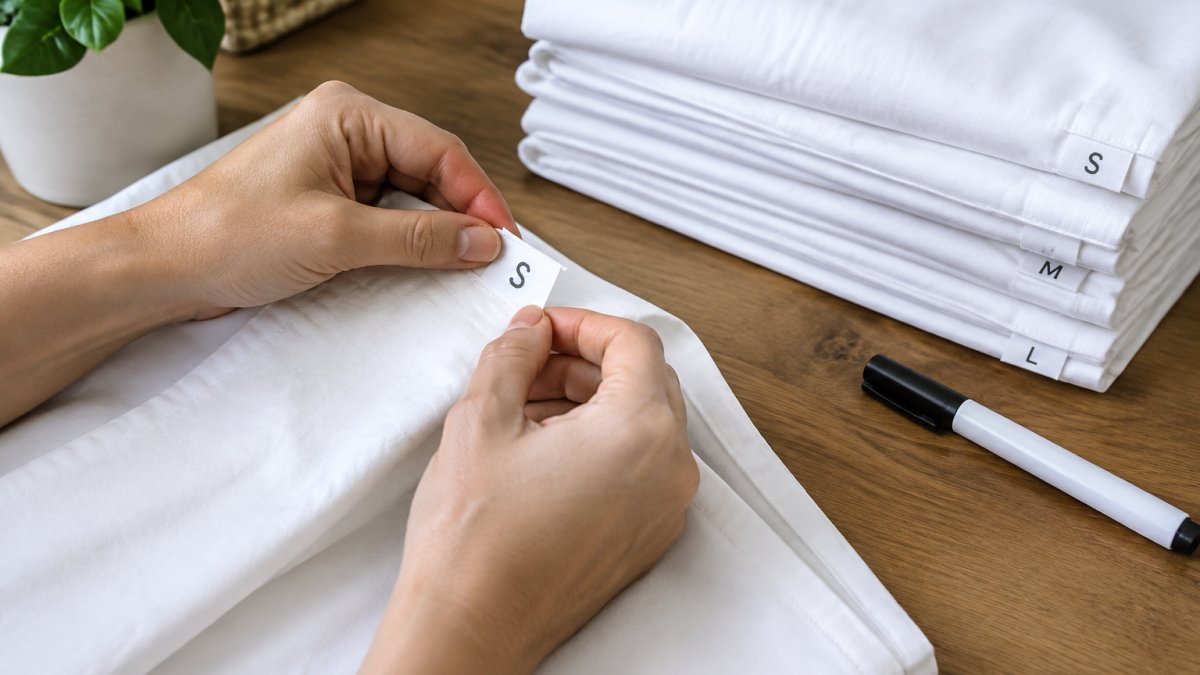
Start with these supplies:
- Fabric-safe permanent markers (test on a hidden hem first)
- Iron-on or sew-in fabric labels
- Small safety pins or label clips
Label every piece, not just the fitted sheet. That means the flat sheet, each pillowcase, and any matching comforter, duvet cover, or mattress pad. When a piece gets separated during laundry, its label brings it home.
Where to Place a Label So It Shows on the Shelf
Fold first, then label. Attach the label to the exposed top flap of the folded bundle, near the front edge, so it faces out when the bundle sits on a shelf.
For individual pieces, use the same anchor spot every time:
- Fitted sheet: the corner seam on the short end, or the elastic corner nearest the front of the shelf
- Flat sheet: the hem on the short end, folded so the label lands on the outside
- Pillowcases: the open hem, so the label shows when the case is folded in half
If you store sets inside a pillowcase bundle, put a second label on the outside of the bundle so you never have to open it to check the size.
DIY Labels vs. Store-Bought Tags
DIY labels cost little and work well for a single household. Store-bought tags cost more but hold up better through repeated washing. The right choice depends on how often the set is washed and whether the fabric can take heat or stitching.
| Option | Relative cost | Durability | Wash behavior | Fabric safety | Best for |
|---|---|---|---|---|---|
| Fabric marker | Low | Fades over time | May bleed on synthetics | Test on hidden hem | Quick, temporary labeling |
| Iron-on labels | Low | Good | Holds through gentle cycles | Heat-sensitive fabrics can scorch | Cotton and blends |
| Sew-in tags | Low | Excellent | Survives repeated washing | Needle holes in delicate weaves | Sets washed often |
| Clip-on tags | Moderate | Fair | Remove before washing | Can snag threads | Renters, no-sew homes |
| Pre-printed stickers | Low | Poor in wash | Peels in hot water | Adhesive residue | Drawer-only storage |
Whichever you choose, test one label through a full wash and dry cycle before committing the whole closet. Check for fading, curling edges, and adhesive residue.
Labeling Unusual and Mixed Sizes
Generic Twin, Full, Queen, and King labels do not distinguish the sizes that cause the most confusion. Build a short code into your labels so odd sets are unmistakable:
- Twin XL: write "TXL" rather than "Twin"
- Split King: label each half "SK-L" and "SK-R" so the pair stays matched
- California King: use "CK" and note the dimensions on the shelf edge
A common pattern is to keep a small index card taped inside the closet door listing each code and its meaning, so anyone in the household can decode a label without asking.
Folding and Bundling Sheets So Each Set Stays Together
Folding and bundling is where most closets fall apart. Loose sheets drift, mix, and lose their partners.
Try this method:
- Fold the flat sheet into a neat rectangle.
- Fold the fitted sheet, tucking its elastic corners inward.
- Stack the flat sheet, fitted sheet, and pillowcases together.
- Slide the whole stack inside one matching pillowcase.
- Attach the size label to the outside of the bundle.
The pillowcase trick keeps a full set in one place, and it costs nothing. For a step-by-step folding method, our guide on how to fold fitted sheets walks through each fold.
Once bundled, stack sets by bed size, largest on the bottom shelf.
How to Store Sheet Sets Without Losing the Matching Pieces
Storing sheet sets well means controlling three things: moisture, light, and separation. Keep bundles together, keep the closet dry, and build a shelf layout that matches the beds in your home. A damper closet invites musty smells, so leave a little breathing room between stacks and avoid packing bundles tight against the back wall.
Follow these storage habits:
- Store sets in cotton or breathable bags, not sealed plastic.
- Keep one bundle per bed, clearly labeled on the outside.
- Rotate sets so the same one is not always on the bottom.
Watch out: sealing sheets in plastic traps moisture and can leave a musty smell that is hard to remove. Use breathable fabric bags instead.
A Repeatable Closet Setup, Step by Step
A full reset takes about an hour and follows the same order every time: sort, measure, label, fold, then place. Working in that sequence prevents the common failure where labels are added before the closet layout is decided.
- Empty the closet and sort every piece by bed size.
- Measure any unlabeled fitted sheet before guessing its size.
- Wash and fully dry each set before labeling.
- Label every piece using one consistent spot and code.
- Fold each set and bundle it inside a matching pillowcase.
- Attach a visible size label to the outside of each bundle.
- Assign one shelf per bed size and label the shelf edges.
- Place the most-used sizes at eye level and heavier items lower.
- Write a quick inventory list and tape it inside the door.
Recheck the closet each season. Replace faded labels and reunite stray pieces before they pile up.
Shelf Placement for Multiple Beds
A home with three bed sizes needs a clear zone for each. Assign one shelf per bed size, then label the shelf edge as well as the bundle so the system works even when a bundle is pulled out.
A simple layout looks like this:
- Top shelf: off-season and guest bedding
- Middle shelves: Twin, Full, and Queen by size
- Lower shelf: King and heavy comforters
- Floor baskets: mattress pads and extra pillowcases
Keep the most-used size at eye level. If guests or family members grab sheets often, an easy-to-reach spot prevents the whole stack from being pulled apart.
Labels That Work for the Whole Household
A labeling system only holds up if everyone who uses the closet can read it. When the same clear cues extend to folded items in drawers, clothes folding techniques can help keep everyday linens easy to identify and put away.
- Use large block letters for size codes on bundle labels.
- Assign one color per bed size and repeat it on the shelf edge.
- Add a simple icon (a small bed shape or a letter) for households with young children.
- Keep a printed index card inside the door showing each code and color.
For long gaps between uses, our guide on storing bamboo bedding long term explains how to keep sets fresh and odor-free.
Linen Closet Organization Ideas That Work for Multiple Beds
Linen closet organization ideas work best when the closet matches the household. A home with three bed sizes needs a clear zone for each. Assign one shelf per bed size, then label the shelf edge as well as the bundle.
A simple layout looks like this:
- Top shelf: off-season and guest bedding
- Middle shelves: Twin, Full, Queen by size
- Lower shelf: King and heavy comforters
- Floor baskets: mattress pads and extra pillowcases
Keep the most-used size at eye level. If guests or family members grab sheets often, an easy-to-reach spot prevents the whole stack from being pulled apart.
Handling Mixed and Unusual Sizes
Odd sizes are where labeling earns its keep. Crib sheets, Twin XL, split-King, and sofa-bed sizes all look similar once folded. Label each one clearly, and note the size on the shelf edge too.
If a set has lost its label, measure before you guess. Our guide on how to tell fitted sheet size shows how to measure and match an unlabeled sheet to the right bed.
A Step-by-Step Closet Setup and Labeling Checklist
A full closet reset takes about an hour. Work through it in order, and the whole system comes together.
- Empty the closet and sort every piece by bed size.
- Wash and fully dry each set before labeling.
- Test one label through a wash cycle.
- Label every piece: fitted, flat, and pillowcases.
Recheck the closet each season. Replace any faded labels and reunite stray pieces before they pile up.
Pick Up a Set With the Size Already Stitched In
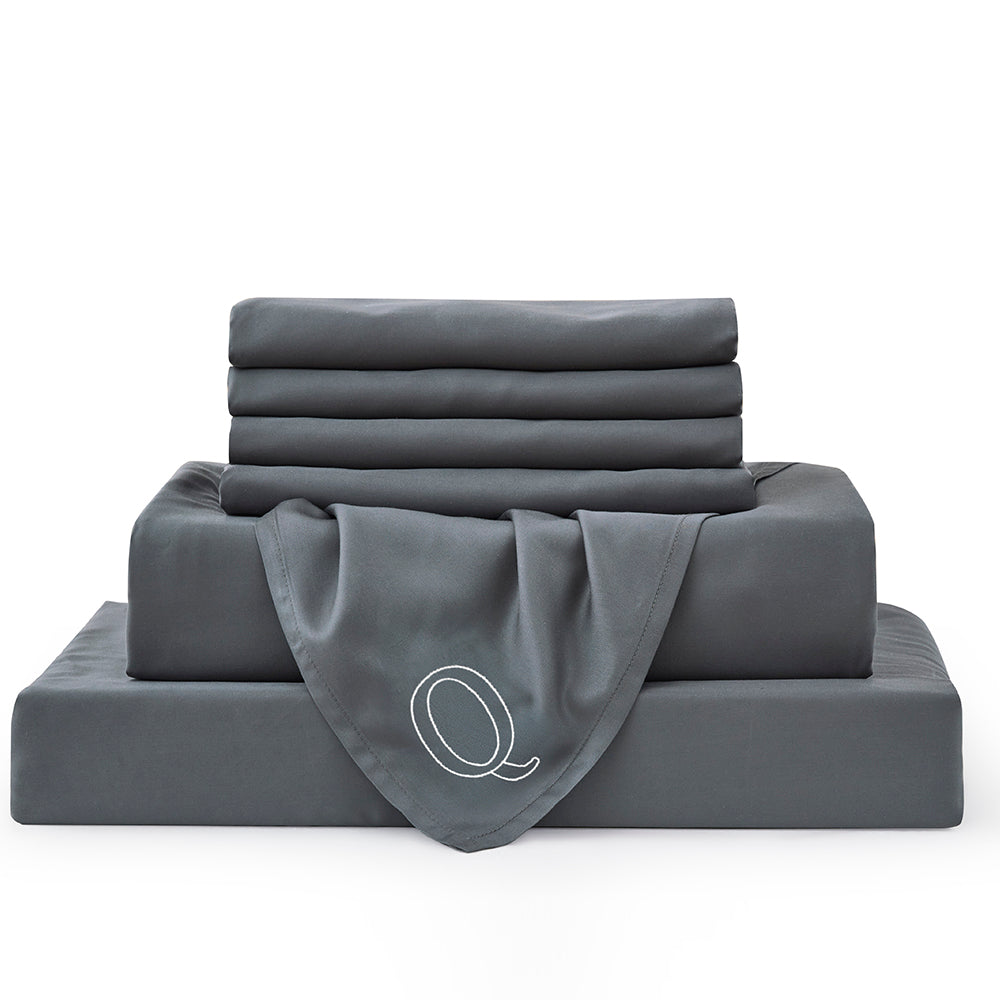
Our 7-piece bamboo viscose sets carry embroidered size indicators stitched into the bottom corners, so you can see the size letter on the corner and tell the size and direction at a glance.
The Queen set, for example, has a Q stitched on the corners, so you grab the right size and put it on the right way.
If you are ready to end the guessing game, start with a set that arrives already labeled. You can pick up a queen set with size-marked corners and skip labeling altogether.
The real test of any linen closet is the morning scramble: a bed to make, a set to find, and no time to unfold three stacks. A clear labeling system turns that scramble into a five-second grab. Bambusasheets makes it even easier with embroidered size indicators on every corner, a full 7-piece set, and a storage bag for each. Get started with Bambusasheets and make every bed-making morning simpler.
Frequently Asked Questions
How do you keep sheet sets together in the closet?
Fold the fitted sheet, flat sheet, and pillowcases into one bundle, then tuck the whole stack inside its matching pillowcase or secure it with an elastic organizer band. Add a size-marked label to the outside of the bundle so you can read the size without untying anything. Storing each set as a single labeled unit means you never dig for a missing pillowcase or pair a Queen flat sheet with a King fitted sheet.
How can you tell what size a fitted sheet is once the tag has faded?
Check the corners first. Many sets now stitch the size letter directly into the bottom corners, so an F, Q, or K is visible before you unfold anything. If your sheets have no mark, measure the fitted sheet flat across its widest point and compare it to standard dimensions: Twin runs about 39 by 75 inches, Full about 54 by 75, Queen about 60 by 80, and King about 76 by 80. Add a fabric label at the corner so you never have to measure again.
Should bedding be stored in a bag or on a shelf?
Both work, but use them for different jobs. A breathable cotton or fabric storage bag suits seasonal sets and guest bedding you rarely touch, keeping dust off and the set together. For everyday sets, open shelves with labeled bundles give faster access and better airflow. Avoid sealed plastic bins for long-term storage because trapped moisture can cause musty odors, and keep the closet dry.
What is the best way to label bed linens for a household with several bed sizes?
Use one consistent system across every set: size letter plus room or bed name, such as Q-Guest or K-Master. Write it on a durable fabric label and attach it to the same corner of every fitted sheet and bundle so your hand always finds it in the same place. Color-code by size if you prefer, but keep the written size as the primary mark so anyone in the house can sort the linen closet without asking.
