
Last Updated: November 14, 2026
Quick Summary
To recycle old bamboo sheets, first confirm the care label says 100% bamboo viscose, then sort by condition. Clean sheets can be donated, lightly worn ones cut into cleaning cloths or pet bedding, and torn or heavily stained ones sent to a textile recycling program.
- Check the care label for bamboo viscose, bamboo rayon, or a blend before choosing a route.
- Donate clean, intact sheets, and call the shelter first to confirm what they need.
- Cut lightly worn sheets into cleaning cloths, about 12 inches square.
- Keep blends and elastic out of the compost, since they do not break down the same way.
- Confirm a textile drop-off accepts bedding and fiber blends before you load the car.
Table of Contents
- Check Your Sheet's Fiber and Condition Before You Decide
- How to Recycle Old Bamboo Sheets at Home
- Textile Recycling Near Me: Finding and Verifying a Drop-Off
- Donate Old Sheets to Shelters and Charities That Accept Them
- What to Do With Old Fitted Sheets, From Rags to Rag Rugs
- Prepare Sheets for Recycling or Donation in Four Steps
- Choosing Your Next Set of Bamboo Sheets
- Frequently Asked Questions
Check Your Sheet's Fiber and Condition Before You Decide
Not every old sheet is bamboo, and that changes what you can do with it. Before you donate, recycle, or repurpose a set, confirm what it is made of and how much life it has left, because knowing whether you can recycle old bamboo sheets depends on that.
Most bamboo sheets are actually bamboo viscose, a fabric made from bamboo pulp that has been processed into fiber. The care label is the fastest way to tell.
How to Read the Care Label to Confirm Bamboo Viscose
Check the label sewn into the hem or the fitted sheet's corner. For the full steps on confirming fiber and caring for it properly, see how to wash bamboo viscose sheets. Look for three things:
- Fiber content: The percentage of each fiber, such as "100% bamboo viscose."
- Care symbols: Washing and drying instructions often hint at the fabric's gentleness.
- Brand or origin details: These help you confirm the product, but they don't prove the fiber.
If the label is missing or worn off, a burn test is not a good idea at home. Instead, rely on the seller's product listing or contact the maker if you still have the receipt.
Condition Decision Tree: Donate, Repurpose, or Recycle
Use the sheet's condition to choose your next step:
- Clean, no stains, no holes: Donate to a shelter or charity.
- Light wear, small stains, thin spots: Repurpose into cleaning cloths or rags.
- Torn, heavily stained, or badly worn: Recycle through a textile program, or cut into rags first.
Keep a small pile for each category so you don't mix usable sheets with worn ones.
How to Recycle Old Bamboo Sheets at Home
Home recycling of bamboo sheets works best when you treat the fabric as a material with specific properties, not as generic cloth. Bamboo viscose is a regenerated cellulose fiber. Care label instructions are the best guide to handling it at home.
Start by confirming what you have. A care label reading "100% bamboo viscose" or "viscose from bamboo" behaves differently from a blend that includes polyester or cotton.
Sort by fiber first, then by condition
Before you cut anything, separate your sheets into three groups:
- Pure bamboo viscose, clean: best candidates for cleaning cloths, pet bedding, and garden use.
- Bamboo blends with cotton or polyester: keep for rags and drop cloths, but route worn-out pieces to textile recycling rather than compost.
- Heavily worn or torn pieces: cut into rags only if the fabric still holds together; otherwise send to a textile program.
A common pattern is to keep one bin for "still useful" fabric and one for "recycle only" so the two never get mixed at drop-off.
Home uses that suit bamboo viscose
Old bamboo sheets can be put to a few practical uses:
- Cleaning cloths: Cut usable sections into squares of about 12 inches.
- Pet bedding: Layer a clean, unbleached sheet under a pet blanket or inside a crate. Wash it on a gentle cycle and dry on low, since high heat will shrink it.
- Garden weed barrier: Lay a single layer under mulch to slow weeds. Pure bamboo viscose is a plant-based fiber, while polyester blends do not break down, so keep blends out of the garden bed.
Watch out: cutting a fitted sheet without removing the elastic first will dull your scissors and leave a tangle of elastic in your rag pile. Pull or cut the elastic corners off before you start.
Composting and the limits of home processing
A common pattern is to shred pieces into strips a few inches long and mix them with brown material. Do not compost blends, elastic, or serged hems, which contain synthetic thread. If you are not sure the sheet is pure bamboo viscose, keep it out of the compost and send it to textile recycling instead.
Wash any sheet before reuse, and dry it fully to avoid odor or mildew. Use the care label's instructions rather than defaulting to hot water.
Textile Recycling Near Me: Finding and Verifying a Drop-Off
Local textile recycling is the best option for sheets that are too worn to donate or reuse, but the search is where most people get stuck. The U.S. Environmental Protection Agency publishes general guidance on textile waste and recycling at EPA guidance on textile waste and recycling, and your city or county waste office is the most reliable starting point for what is actually accepted nearby.
Verify a drop-off in four checks
Before you load the car, run through these checks:
- Confirm the program accepts bedding. Many clothing bins take shirts and pants only. Ask specifically whether sheets, pillowcases, and comforters are accepted.
- Ask about fiber restrictions. Some programs sort by fiber and will reject blends or unknown fabrics. Tell them your sheet is bamboo viscose or a bamboo blend and ask whether that matters.
- Confirm preparation rules. Ask whether items must be clean and dry, bagged or loose, and whether elastic, buttons, or hardware need to be removed.
- Check the destination. Ask where the material goes, a fiber sorter, a resale channel, or an industrial wiping-cloth buyer. A program that cannot say where textiles go is a weak signal.
Watch out: a bin labeled "donations" is not the same as a textile recycler. Items placed in donation bins that are too worn to resell are often baled and sold, and some end up in landfill anyway. If your goal is recycling, confirm the program's actual downstream use.
What actually happens to collected bamboo sheets
Recycling outcomes vary widely, and it helps to know the realistic paths:
- Fiber-to-fiber recycling: A small share of collected textiles is sorted and processed back into new fiber.
- Resale and reuse: Clean, intact sheets may be sold in secondhand markets or sent to developing markets. This is reuse, not recycling, and it extends the sheet's life without breaking down the fiber.
- Industrial wiping cloths: Worn fabric is sometimes cut into wiping rags for industrial buyers.
Because results depend on the program, treat any drop-off as one step toward keeping textiles out of landfill, not a guaranteed outcome. Ask the program which of these paths your sheets are likely to take, and keep donation-ready sheets separate from recycling-only fabric so each group goes where it is most useful. Keeping donation-ready sheets separate from recycling-only fabric makes it easier to choose the right next step for other worn textiles too, as TURATH FASHION explains in its discussion of responsible clothing disposal.
Mail-in and retail programs
If no local drop-off accepts bedding, some national retailers and mail-in textile programs accept clean sheets by the box or bag. Check the program's accepted-items list before shipping, since bedding is often excluded, and confirm whether blends are accepted. Mail-in programs are convenient but add shipping cost and packaging, so they make the most sense for a larger batch rather than a single worn sheet.
Before you load the car, run through these four checks to confirm a drop-off will actually take your sheets.
| Check | What to ask | Why it matters |
|---|---|---|
| Bedding accepted | Do you take sheets, pillowcases, comforters? | Many clothing bins take shirts and pants only |
| Fiber restrictions | Do you accept bamboo blends or unknown fabrics? | Some programs sort by fiber and reject blends |
| Preparation rules | Must items be clean, dry, bagged, de-hardwared? | Avoids rejection at drop-off |
| Destination | Where does the material go? | A program that cannot say is a weak signal |
Donate Old Sheets to Shelters and Charities That Accept Them
Donation works best for sheets that are clean, intact, and in good shape. Animal shelters often welcome old bedding, and many keep a steady need for blankets and towels.
Call before you bring anything. Each organization has its own rules about what it needs. Some want only flat sheets, and others accept fitted sheets as well.
Donating is not always the right choice.
What to Do With Old Fitted Sheets, From Rags to Rag Rugs
Fitted sheets are harder to reuse because of their elastic corners. The good news is that you can cut them apart easily. Remove the elastic, then cut the sheet into flat pieces for rags or cleaning cloths.
For a simple rag rug, cut the fabric into strips about 2 inches wide and 12 inches long. Braid three strips together, then sew the braids into a coil. Many crafters find this a relaxing weekend project, and the finished rug can handle a bathroom mat or a doorway.
Other fitted-sheet ideas include tote bags, dust covers for storage bins, and padding for moving boxes. Keep your cuts simple so each piece stays easy to handle.
Prepare Sheets for Recycling or Donation in Four Steps
Preparation takes only a few minutes, and it makes a real difference to the next person or program that receives your sheets.
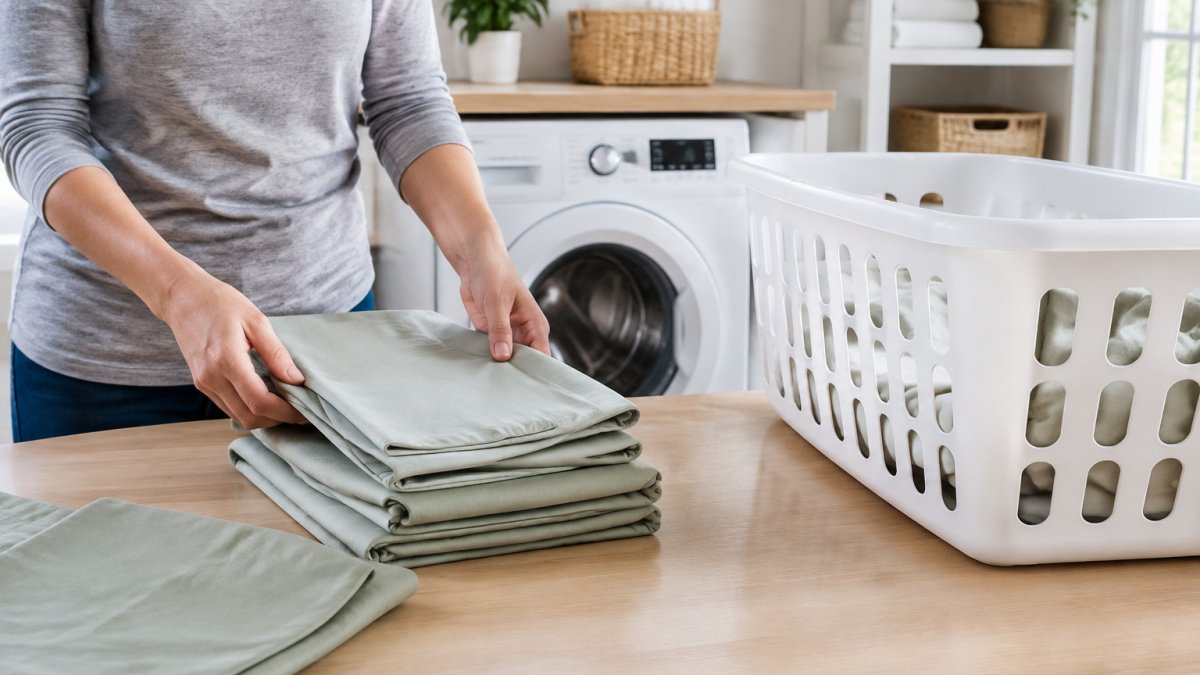
- Wash the sheet. Use the care label's instructions, and rinse out any detergent residue.
- Dry it completely. Damp fabric can smell or grow mildew before it reaches its destination.
- Remove hardware and trim. Take off buttons, labels that don't come off easily, and any elastic you can remove.
- Fold and bag it. Fold neatly, then place in a clear bag labeled with what it is, such as "bamboo sheets for shelter" or "textiles for recycling."
Sorting before you drop off also helps. Keep donation-ready sheets separate from rags so each group goes where it is most useful.
Choosing Your Next Set of Bamboo Sheets
Once your old sheets have found a new use, you may be ready for a fresh set. Look for a set made from bamboo viscose with a clear fiber label, and check the care instructions before you buy.
Bambusasheets offers 7-piece bamboo viscose sheet sets with embroidered size indicators and a storage bag. You can find current pricing and availability on the Bambusasheets website.
Before you buy, check how the sheets are cared for. If you're deciding whether it's time to replace your current sheets, our guide on how often to replace bed sheets explains typical timelines, and our guide on how long bamboo sheets last covers durability. To check whether a new set is genuine, see how to tell if bamboo sheets are authentic. For keeping new sheets from wrinkling after they come out of the dryer, read how to keep bamboo sheets from wrinkling after drying.
Frequently Asked Questions
Can bamboo sheets be recycled?
Bamboo viscose sheets can be recycled, but acceptance depends on the program. Many textile recycling programs take clean, dry textiles regardless of fiber, while some accept only cotton or specific blends. Check the drop-off location's rules before you bring them. Sheets that are torn or heavily stained may be refused, so reuse them as cleaning cloths or rags when they are no longer fit for donation or recycling.
Where can I recycle old bamboo sheets?
Start with textile recycling drop-off bins at retailers, city or county waste offices, and charity thrift stores that run textile programs. Call ahead or check the website to confirm the program accepts bedding and bamboo fiber. Some take-back programs are run by brands, so ask whether the manufacturer offers one before you donate or discard the set.
Should I donate old bamboo sheets?
Donate sheets that are clean, dry, and free of holes, stains, or odors. Animal shelters often accept usable sheets for bedding, and many charities accept household linens. Torn or stained sheets are better repurposed as cleaning cloths or sent to textile recycling, since shelters and thrift stores usually cannot resell damaged items.
What is the best way to prepare old sheets for recycling?
Wash the sheets, dry them completely, and remove any non-textile parts such as plastic fasteners or labels where practical. Fold the set neatly and place it in a clean bag. Keep the fitted sheet, flat sheet, and pillowcases together so the donation or recycling center can sort them easily.
