

Last Updated: October 29, 2026
Quick Summary
Bamboo viscose sheets are generally soft and breathable, but whether they are safe for a newborn depends on how they are used. The key safety points are a snug fitted sheet on a firm, flat sleep surface, with no blankets, pillows or bumpers in the crib. Check the fit after every wash.
- Use only a fitted sheet made for that specific crib mattress.
- Keep blankets, pillows and bumpers out of the crib during sleep.
- Check the corner fit after every wash, since sheets can shrink.
- Replace any sheet that is torn or no longer fits snugly.
- Wash bamboo viscose in cold water on a gentle cycle with low dryer heat.
Table of Contents
- Are Bamboo Viscose Sheets Safe for Newborn Babies?
- Newborn Crib Sheet Safety: The Rules That Matter Most
- Bamboo Sheets for Sensitive Skin: What Parents Should Expect
- Bamboo Viscose vs Cotton Crib Sheets: How They Compare
- How to Wash Bamboo Viscose Sheets Without Damaging Them
- Common Mistakes Parents Make With Baby Bedding
- Choosing Bedding for Your Baby's Crib Next
- Frequently Asked Questions
Are Bamboo Viscose Sheets Safe for Newborn Babies?
Bamboo viscose sheets are generally considered gentle, but "safe for a newborn" depends on how they are used, not just what they are made of. At Bambusasheets, we focus on the parts of this question that matter most for a parent deciding what goes in the crib. The short answer is that the fabric itself is soft and breathable, while the bigger safety questions are about fit, sleep setup and care.
Many parents choose soft, smooth fabrics because they feel light against delicate skin. Still, no bedding replaces the basic rules of infant sleep, and those rules apply to every fabric.
Newborn Crib Sheet Safety: The Rules That Matter Most
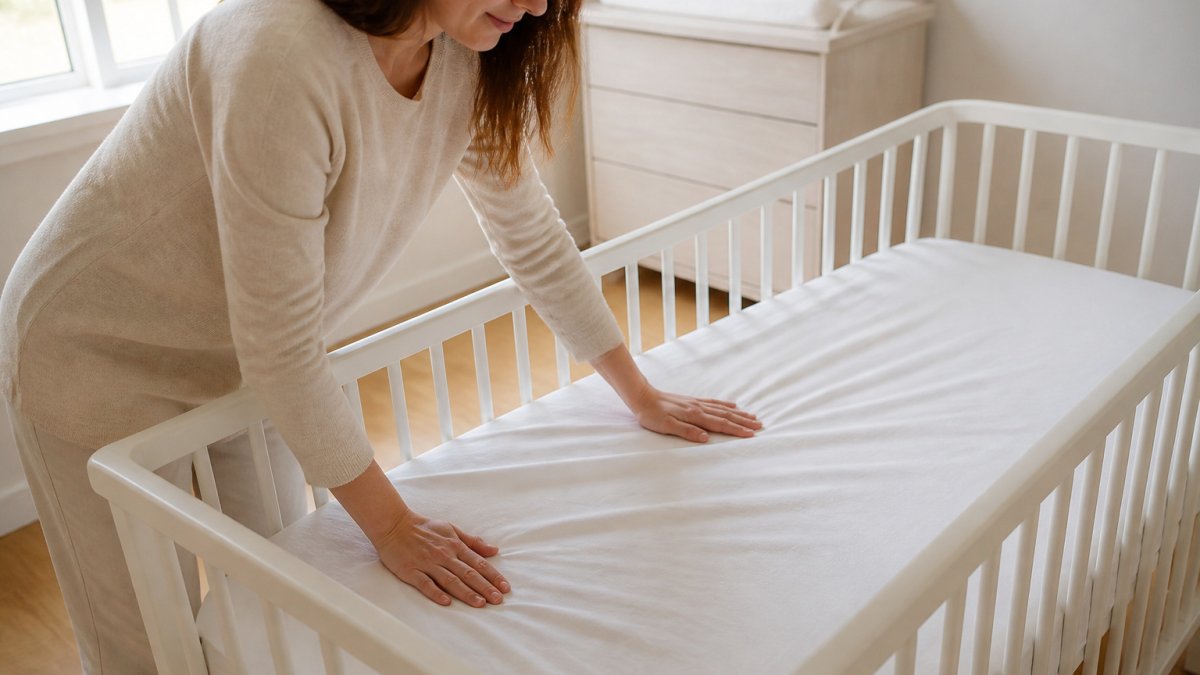
A fitted sheet should snugly cover the crib mattress with no loose fabric near the baby. Pull the corners tight and check that the sheet cannot lift off the mattress corners during the night.
The American Academy of Pediatrics recommends a firm, flat sleep surface with nothing else in the crib during sleep. American Academy of Pediatrics safe sleep guidance
Keep these basics in mind for any crib sheet:
- Use only a fitted sheet made for that crib mattress
- Keep blankets, pillows and bumpers out of the crib (Safe Sleep - Cribs and Infant Products)
- Check the fit after every wash, since sheets can shrink
- Replace any sheet that is torn or no longer fits snugly
A parent smoothing a fitted white bamboo sheet onto a clean crib mattress shows how simple this step should be.
Bamboo Sheets for Sensitive Skin: What Parents Should Expect
Many parents of babies with sensitive skin find that soft, smooth fabrics feel more comfortable. Bamboo viscose is often described as silky. Parents of babies with eczema-prone skin can read whether bamboo sheets are a good fit for more detail.
Still, every baby reacts differently. Watch for redness, rash or irritation, and talk to a pediatrician if you see any changes. Testing a new sheet on a small area first can also help you learn how your baby's skin responds.
Bamboo Viscose vs Cotton Crib Sheets: How They Compare
Cotton is a common crib sheet fabric. Parents weighing softness and feel can read how bamboo stacks up against synthetic fabrics for bedding for a fuller comparison. Parents often ask whether the softness of bamboo viscose is worth switching for. The honest comparison is less about which fiber is "better" and more about which measurable properties matter for a newborn's sleep surface.
Fiber Quality and Length
Fabric quality starts at the fiber, not the label. Longer fibers can be spun into smoother, stronger yarns with fewer exposed ends, which tends to mean less pilling and a softer hand over time. Short fibers produce more surface fuzz and shed more quickly. This is true for cotton and for bamboo viscose alike, so a well-made cotton sheet can outperform a poorly made bamboo one, and vice versa. When you shop, look for brands that describe fiber length or spinning method rather than only thread count.
Thread Count, Ply, and GSM
Thread count is the number most shoppers reach for, and it is also the most abused. A high number does not guarantee a better sheet, and some manufacturers inflate it by counting multi-ply yarns as if each ply were a separate thread. A single-ply yarn at a moderate count is usually a better sign than a very high count built from multi-ply yarns.
For bamboo viscose in particular, GSM (grams per square meter) is a more useful number than thread count. GSM measures fabric weight per area, so it tells you how substantial the sheet actually is. A very low GSM sheet feels thin and can wear through faster; a very high GSM sheet may feel heavy and less breathable. Ask for GSM if it is published, and treat thread count as a secondary clue.
Weave Type
Weave changes how a sheet feels and drapes. Percale is a tight, matte, crisp weave that tends to feel cool and durable. Sateen has a smoother, slightly sheenier surface with a softer drape. Bamboo viscose is often woven or knit in a sateen-like structure to play up its silky hand, while cotton crib sheets are commonly percale. Neither weave is unsafe; the choice comes down to whether you prefer crisp and cool or smooth and fluid.
Breathability and Temperature
Both fibers breathe, but the fabric construction matters as much as the fiber. A loose weave and a moderate GSM move air better than a dense, heavy fabric. For a newborn, the goal is a comfortable, not overheated, sleep environment, and no sheet fabric substitutes for dressing the baby appropriately and keeping the room at a comfortable temperature.
Fresh White Bamboo Sheets - Full - Light & Breathable 7pc →
Pilling, Durability, and Feel
Bamboo viscose is often described as smoother than many cotton sheets and can stay soft with gentle care. Care routines differ between the two fibers, so choose based on how you plan to wash.
A Quick Side-by-Side
| Factor | Bamboo Viscose | Cotton |
|---|---|---|
| Feel | Smooth, silky, fluid drape | Crisp (percale) or soft (sateen) |
| Durability | Moderate; more delicate | Generally sturdy |
| Pilling risk | Higher with rough washing | Lower with quality long-staple fiber |
| Care | Cold, gentle, low heat | Tolerates warmer washing |
| Best metric to check | GSM and ply | Fiber length and ply |
How to Wash Bamboo Viscose Sheets Without Damaging Them
A crib sheet that shrinks or stretches out of fit becomes a safety problem, not just an inconvenience. The care routine below is built around protecting both the fabric and the snug fit.
Why Bamboo Viscose Needs Gentler Care
Use cold water, a gentle cycle and low dryer heat to help the sheet keep its shape and softness.
Step-by-Step Washing
- Wash in cold water on a gentle or delicate cycle.
- Use a mild, bleach-free detergent. Skip fabric softener, which can coat the fibers and reduce breathability.
- Wash bamboo viscose separately from towels and items with zippers or hooks that can snag the surface.
- Tumble dry on low heat, or line dry. Remove promptly to limit wrinkling.
- Avoid high heat and bleach, both of which weaken the fabric and dull the softness.
The Fit Check After Every Wash
This is the step most parents skip, and it matters most for a crib sheet. After washing and drying, pull each corner of the fitted sheet over the mattress and press down along the edges. The sheet should stay tight and should not lift off the corners when you tug gently. If it has shrunk enough to feel loose, replace it. A loose sheet can bunch and create a hazard near a newborn.
Keeping Softness Over Time
Gentle care is what preserves the silky hand that makes bamboo viscose appealing in the first place. If pilling appears, a fabric shaver can remove surface fuzz, but pilling is usually a sign the fiber is being stressed by heat or friction, so adjust the wash routine first.
Cotton vs Bamboo Care at a Glance
Bamboo viscose sheets are best washed in cold water on a gentle cycle with low dryer heat. Matching the care routine to the fabric helps the sheet keep its fit.
Common Mistakes Parents Make With Baby Bedding
A common mistake is buying a fitted sheet that is too loose for the mattress. A loose sheet can pull off and create a risk near the baby. Another frequent error is adding extra blankets or soft items because the sheet feels cozy. Keep the crib simple, even when the bedding looks inviting.
Many parents also forget to check the fit after washing. Sheets can change size slightly, so a quick pull-test on the corners is a good habit.
Choosing Bedding for Your Baby's Crib Next
Start with a fitted sheet that fits your crib mattress snugly, then choose a fabric that feels right for your family. If you want a soft, cooling option, bamboo viscose crib sheets are worth a look, and you can compare bamboo viscose and cotton options before you decide.
Our Fresh White Bamboo Sheets Full set is priced at $83.00 and includes a fitted sheet, flat sheet, four pillowcases and a storage bag. Our Classic White Bamboo Sheets Queen set is $129.00, and our Crisp White Bamboo Sheets King set is $144.00. For care steps, read our guide on how to wash bamboo viscose sheets.
Frequently Asked Questions
Are bamboo viscose sheets safe for newborn babies?
Bamboo viscose is smooth and soft, and many parents choose it for that reason. However, no fabric is automatically safe for a newborn crib on its own. Safety depends on the sheet fitting the mattress snugly, having no loose fabric or ties, and being used with a firm, flat mattress. Follow current pediatric safe sleep guidance: place babies on their backs and keep the crib free of blankets, pillows, and bumpers. If your baby has a known skin condition or allergy, check with your pediatrician before using a new fabric.
Can bamboo viscose sheets irritate a baby's skin?
Some babies react to any new fabric, and reactions are more likely with dyes, finishes, or detergent residue than with the fiber itself. Wash new sheets before first use to remove residues, and use a fragrance-free detergent. If redness, bumps, or rash appear, stop using the sheet and contact your pediatrician.
How often should I wash newborn crib sheets?
Wash crib sheets at least once a week, and more often if your baby spits up, drools, or has a diaper leak. Use cold water on a gentle cycle and tumble dry on low. Keep a spare fitted sheet on hand so you can swap immediately after a spill. Clean sheets help reduce skin irritation and keep the sleep surface hygienic.
Do bamboo sheets need special washing instructions?
Yes. Wash in cold water on a gentle cycle and tumble dry on low, or line dry. Following these steps helps the sheets keep their softness.
Bambusasheets offers sateen bamboo viscose sheet sets with embroidered size indicators, deep pockets and a storage bag. Choose the set that fits your mattress and keep the crib simple for safe sleep.
