
Table of Contents
- Bamboo Sheets vs Synthetic Fabrics: The Core Differences
- Breathable Fabrics for Hot Sleepers: Why Fiber Type Matters
- The Benefits of Bamboo Viscose Bedding for Skin and Sleep
- Durability, Pilling, and Long-Term Wash Testing
- Microplastic Shedding and Environmental Impact
- How to Care for Bamboo Sheets to Extend Their Life
- How to Choose High-Quality Bamboo Sheets
- Frequently Asked Questions
Last Updated: September 14, 2026
Bamboo Sheets vs Synthetic Fabrics: The Core Differences
The answer comes down to fiber chemistry, not marketing. Bamboo sheets are made from regenerated cellulose spun into long, smooth filaments, while synthetic fabrics are petroleum-based polymers extruded into thin threads. That single difference drives everything else: how the fabric breathes, how it feels on skin, how it wears, and what it leaves behind in the wash.

This guide from Bambusasheets breaks down where bamboo wins, where synthetics genuinely compete, and which claims you should treat with skepticism.
Bamboo viscose is a regenerated cellulosic fabric produced by dissolving bamboo cellulose and extruding it into fibers, most commonly through the viscose process. Polyester is a synthetic polymer fiber made from PET, and microfiber is polyester or a polyamide blend spun into strands finer than a human hair.
The distinction matters because cellulose absorbs water; PET does not.
How Bamboo Viscose Is Made
Bamboo viscose production starts with crushed bamboo stalks, which are treated with a chemical solvent to extract cellulose. The dissolved pulp is forced through spinnerets, hardened into filaments, then spun into yarn.
The honest caveat: most viscose uses carbon disulfide, a solvent that requires careful recovery and disposal (osha.gov). This is the part marketing pages skip. Better mills capture and reuse the solvent in what's called a closed-loop or near-closed-loop system, which sharply reduces emissions. If a brand won't tell you which process it uses, that's your answer.
What Goes Into Polyester and Microfiber Sheets
Polyester sheets come from ethylene glycol and terephthalic acid, polymerized into PET chips, melted, and extruded. Microfiber uses the same base polymer drawn into much finer filaments, which creates a dense, peach-fuzz hand feel at low cost.
The trade-off is structural. PET is hydrophobic, so it doesn't absorb moisture, it traps it between fibers. That's why synthetic sheets can feel clammy rather than wet.
| Attribute | Bamboo Viscose | Polyester / Microfiber |
|---|---|---|
| Fiber origin | Regenerated bamboo cellulose | Petroleum-based PET polymer |
| Moisture handling | Absorbs and wicks | Repels, traps between fibers |
| Breathability | High | Low to moderate |
| Typical hand feel | Silky, cool, drapes | Smooth, warm, can feel slick |
| Pilling risk | Low with long fibers | Higher with short staple |
| Wash care | Cold, gentle, low heat | Warm tolerant, heat sensitive |
| End of life | Biodegrades over time | Sheds microplastics |
Breathable Fabrics for Hot Sleepers: Why Fiber Type Matters
Breathability is about air and vapor moving through the weave, and cellulose fibers move both far more readily than PET. If you wake up damp at 3 a.m., fiber type is the variable worth changing first.
Thermoregulation depends on two mechanisms. First, moisture transport: bamboo viscose pulls perspiration off skin and spreads it across the fabric surface so it evaporates. Second, thermal conductivity: cellulose feels cooler to the touch because it conducts heat away from your body faster than polyester.
Synthetic microfiber sheets can feel cool when you first get in. The problem shows up an hour later, when trapped humidity builds and the fabric has nowhere to send it.
The Benefits of Bamboo Viscose Bedding for Skin and Sleep
Bamboo viscose bedding is a strong fit for sensitive skin because the fiber surface is smooth and round, with fewer protruding ends to create friction. Synthetic fibers, especially short-staple microfiber, can trap heat and moisture against skin, which is exactly the environment that aggravates irritation.
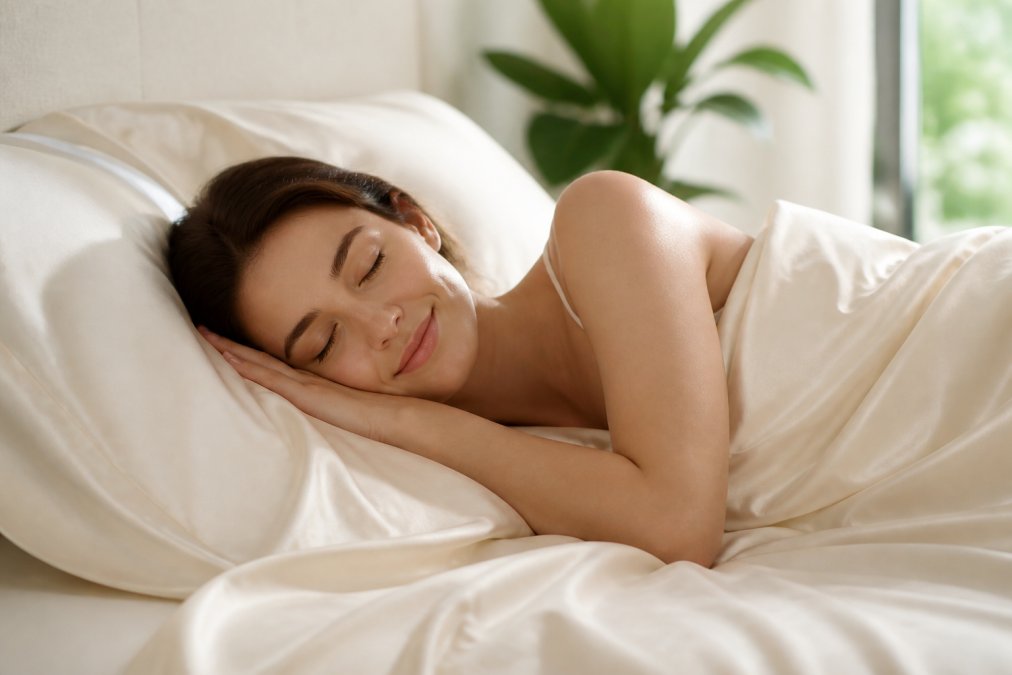
Two factors matter most for reactive skin. The first is mechanical: smooth filaments glide instead of catching. The second is environmental: a drier sleep surface gives dust mites less to work with, since dust mites thrive in humid bedding. Bamboo viscose's moisture-wicking behavior helps keep that surface drier.
On the hypoallergenic question, be precise about what that word means. It does not mean a fabric is certified safe for every person. It means the material is unlikely to provoke a reaction in most people. If you react to dyes or finishes rather than fiber, look for third-party testing such as the OEKO-TEX STANDARD 100 certification, which screens for harmful substances in textiles.
Durability, Pilling, and Long-Term Wash Testing
Pilling is the single biggest durability complaint about any soft sheet, and it comes down to fiber length. Long, continuous filaments shed fewer loose ends, so fewer fibers migrate to the surface and tangle into pills. Short staple fibers break free more easily under friction from movement and washing, which is why synthetic microfiber tends to pill first at the feet, hips, and pillow edges where abrasion concentrates.
Most reviews stop at how a sheet feels on night one. The more useful question is what it looks like after 50 washes. Here is the pattern that shows up when you track both fiber types through repeated laundering:
| Wash interval | Bamboo viscose (long-fiber) | Polyester / microfiber |
|---|---|---|
| 1-5 washes | Softens slightly, drape improves | Feels unchanged, may feel slicker |
| 10-20 washes | Surface stays smooth, minimal fuzz | Light pilling at high-friction zones |
| 30-40 washes | Slight loss of luster, no pilling | Visible pilling, pills mat down and gray |
| 50+ washes | Hand feel remains soft if washed cold | Stiffening, dull surface, persistent pills |
The variable that decides which column you land in is heat, not detergent. High dryer temperatures weaken cellulose fibers and can melt synthetic ones into a stiff, shiny film. Cold water, gentle cycles, and low heat preserve fiber integrity across repeated washes. Skipping fabric softener matters too, because softener coats fibers and reduces absorbency, which is the property you bought the sheet for in the first place.
A second, less obvious factor is load size. Overstuffing the washer increases friction between sheets and drives pilling faster in both fiber types. Washing one set at a time, or pairing it only with light items, keeps abrasion down. Turning bamboo sheets inside out before washing also protects the face surface that touches your skin.
If you want a simple rule: treat bamboo like a fine knit and treat microfiber like a utility fabric. The bamboo set will outlast the microfiber set on surface quality if you respect the temperature limits, and the microfiber set will outlast nothing if you don't.
Microplastic Shedding and Environmental Impact
Microplastic shedding is the environmental cost synthetics pay that bamboo largely avoids, and it is worth understanding the mechanism rather than repeating the headline. Polyester and microfiber are plastic polymers. Every wash cycle subjects them to mechanical agitation, water, and heat, and that combination abrades the fiber surface. The fragments that break off are plastic, and many are small enough to pass through standard wastewater treatment filters and end up in waterways and sludge.
Shedding rate tracks three variables: fiber type, fabric construction, and wash conditions. Finer filaments and looser knits shed more than tight, long-filament weaves. Hot water and long cycles shed more than cold, short ones. That is why the same care habits that extend sheet life also reduce what leaves the machine.
Bamboo viscose behaves differently at end of life because it is a cellulose fiber, not a plastic. It breaks down rather than persisting as synthetic particles. That does not make it impact-free, and the honest version of the comparison has to say so. The viscose process uses solvents, and unsustainable bamboo harvesting can clear natural forest. The fiber is biodegradable; the supply chain is not automatically clean.
The U.S. Environmental Protection Agency's textile waste research documents how much textile material ends up in landfills each year, which is why fiber longevity and end-of-life both count toward the real environmental math. A sheet that lasts five years and biodegrades beats a sheet that pills in eighteen months and sheds plastic the whole time, even if the second one costs less up front.
What you can actually do:
- Choose bamboo viscose from mills using closed-loop solvent recovery, which captures and reuses the process chemicals instead of venting them.
- Wash synthetic textiles in a filter bag if you own them. It captures a meaningful share of loose fibers before they reach the drain.
- Wash cold and wash less often. Shedding scales with agitation and heat.
- Line dry when you can. Dryer heat degrades both fiber types and accelerates the breakdown that produces fragments.
How to Care for Bamboo Sheets to Extend Their Life
Proper care for bamboo sheets comes down to four habits: cold water, gentle cycle, low heat, and no harsh additives. Follow them and the fabric keeps its drape and softness for years.
- Wash in cold water on a gentle or delicate cycle
- Use a mild, bleach-free detergent
- Skip fabric softener and dryer sheets entirely
- Tumble dry on low, or line dry when possible
- Remove promptly to limit wrinkles
- Rotate two sets so each gets less wear
- Store folded in a breathable bag, not plastic
That last point is where a storage bag earns its place. Bambusasheets includes one with each set, which keeps spare linens dust-free and out of cramped closet corners.
How to Choose High-Quality Bamboo Sheets
Quality in bamboo bedding is decided by four things you can verify before buying: fiber length, weave, certification, and construction details. Ignore thread count as a proxy, since it was designed for cotton and means little for fine bamboo filaments.
Look for long-fiber construction, which resists pilling. Check for a sateen or twill weave, both of which balance smoothness with airflow. Ask about solvent recovery in manufacturing. And inspect the practical details, because a luxurious sheet that fights you every time you make the bed isn't actually luxurious.
That's the thinking behind the Bambusasheets 7-piece set. The long-fiber bamboo viscose is woven in a delicate sateen for a soft, cool hand feel, and the embroidered size indicators on the bottom corners tell you instantly which end is which. It sounds minor until you've wrestled a fitted sheet at 11 p.m. The set is naturally breathable, hypoallergenic, and designed to repel bacteria, and it ships with a storage bag. Full size runs $83, Queen $129, and King $144.
| What to Check | Why It Matters | What to Look For |
|---|---|---|
| Fiber length | Determines pilling resistance | Long, continuous filaments |
| Weave type | Affects airflow and feel | Sateen or twill |
| Certification | Verifies chemical safety | OEKO-TEX or equivalent |
| Solvent recovery | Reduces manufacturing impact | Closed-loop production |
| Construction | Daily usability | Size indicators, deep pockets, storage bag |
Frequently Asked Questions
What is the downside to bamboo sheets?
The main downside is that bamboo sheets require gentle care. They should be washed in cold water on a gentle cycle and tumble dried on low heat to prevent shrinking or fiber damage. Some lower-quality bamboo viscose sheets can also pill over time. However, high-quality long-fiber bamboo sheets from brands like Bambusasheets are durable and resist pilling when cared for properly.
Do bamboo sheets contain microplastics?
No, bamboo viscose sheets do not contain microplastics. They are made from natural bamboo cellulose, not synthetic polymers like polyester or microfiber. Synthetic fabrics shed tiny plastic particles during washing, which can enter waterways. Bamboo sheets are a biodegradable alternative, though the viscose production process does involve chemical solvents that require responsible manufacturing.
How do bamboo sheets compare to polyester in terms of breathability?
Bamboo sheets are significantly more breathable than polyester. Polyester traps heat and moisture because it is a synthetic, non-porous fiber. Bamboo viscose has a naturally porous structure that allows air to circulate and wicks moisture away from the skin. For hot sleepers, this means bamboo sheets keep you cooler and drier throughout the night compared to polyester or microfiber.
What is the healthiest fabric for sheets?
Bamboo viscose is one of the healthiest options for sheets, especially for people with sensitive skin or allergies. It is naturally hypoallergenic, resistant to dust mites, and gentle on the skin. Unlike synthetic fabrics, bamboo does not trap bacteria or irritants. Look for sheets made from long-fiber bamboo viscose with a sateen weave, like those from Bambusasheets, for the best combination of comfort and skin-friendly properties.
Do bed bugs like bamboo sheets?
Bed bugs are not attracted to any specific fabric type, but they can hide in the seams and folds of any bedding. Bamboo sheets do not repel bed bugs, but their smooth, tightly woven sateen surface makes it harder for bed bugs to grip and hide compared to rougher fabrics. Regular washing in hot water and inspecting seams can help prevent infestations regardless of sheet material.
If you've been sleeping on synthetic sheets and waking up damp, the fix is a fiber change, not a higher thread count. Bambusasheets builds its 7-piece bamboo viscose sets around exactly that problem: long-fiber construction that resists pilling, a sateen weave that stays cool, hypoallergenic fiber for reactive skin, and embroidered size indicators that end the fitted-sheet guessing game. Get started with Bambusasheets and wake up on a drier, smoother, cooler surface.