

Table of Contents
- The Verdict: When Expensive Bamboo Sheets Pay Off
- What Drives the Price of Expensive Bamboo Sheets
- Thread Count vs. GSM: The Metric That Actually Predicts Quality
- Bamboo Sheets for Hot Sleepers: Do They Deliver on Cooling Claims?
- Durability, Pilling, and How Long Bamboo Sheets Actually Last
- How to Wash Bamboo Sheets Without Ruining Them
- Hypoallergenic Comfort for Sensitive Skin
- Price-to-Value: Comparing Bambusasheets Options Side by Side
- Frequently Asked Questions
Last Updated: September 11, 2026
The Verdict: When Expensive Bamboo Sheets Pay Off
Expensive bamboo sheets are worth it when fiber quality, weave, and processing method justify the price, and a waste of money when you're paying for a label rather than a better night's sleep. This guide from Bambusasheets breaks down the manufacturing, durability, and cooling questions that separate a genuinely premium set from an overpriced one, and which claims to ignore.
Here's what most guides get wrong: price alone tells you almost nothing. Two sets can use the same raw fiber and still perform differently, because processing method and fabric weight matter more than the number on the tag.
What Drives the Price of Expensive Bamboo Sheets
Cost comes down to three things: how the bamboo is processed into fiber, how heavy the finished fabric is, and how much finishing work goes into the set. Raw bamboo is cheap. Turning it into a soft, durable bedsheet is not.
A common mistake is assuming all bamboo sheets start from the same material. Most budget sets are viscose, made through a chemical dissolution process with widely varying quality control. Premium sets often use lyocell, a closed-loop process that recovers most of the solvent, raising production cost and usually fabric consistency (PubMed).
You also pay for what's in the box. A 7-piece set with a flat sheet, fitted sheet, and pillowcases costs more to produce than a 3-piece set, and features like embroidered size indicators add finishing steps cheaper lines skip.
Viscose, Lyocell, and Modal: Why Processing Method Changes Everything
Bamboo viscose is bamboo fiber dissolved and regenerated into a spinnable pulp, then woven into fabric. It's the most common bamboo textile and the base for most sheet sets, including the long-fiber viscose used in Bambusasheets bedding. Lyocell uses a closed-loop solvent system that captures and reuses most of the chemicals, producing a fiber with slightly higher tensile strength. Modal is a related regenerated cellulose fiber, often blended in for stretch.
The practical difference shows up in hand-feel and how the fabric ages. Viscose feels silkier and drapes more fluidly; lyocell holds up marginally better to repeated washing. Neither is automatically "better", it depends on the mill's quality control, not the label.
Federal Trade Commission textile fiber labeling rules require accurate fiber content disclosure, so check the tag rather than the marketing copy.
Thread Count vs. GSM: The Metric That Actually Predicts Quality
GSM (grams per square meter) measures fabric weight and density, and it predicts bamboo sheet quality far better than thread count. Higher GSM generally means denser, more durable fabric. Thread count is a cotton-era metric bamboo manufacturers inflate by counting multi-ply yarns, so a "1000 thread count" bamboo sheet may be no denser than a 300 count one.
For bamboo, a GSM in the 130-150 range reads as light and airy; 150-170 feels more substantial (peer-reviewed research). Below 120, expect a thin sheet that pills quickly.
| Metric | What It Measures | Why It Matters | Watch For |
|---|---|---|---|
| GSM | Fabric weight per square meter | Predicts density and durability | Below 120 pills fast |
| Thread count | Yarns per square inch | Weak signal for bamboo | Inflated by multi-ply counting |
| Weave type | How threads interlace | Affects sheen and hand-feel | Sateen drapes, twill wears harder |
| Fiber length | Staple length of yarn | Longer fibers resist pilling | Short fibers shed |
Bamboo Sheets for Hot Sleepers: Do They Deliver on Cooling Claims?
Bamboo sheets genuinely help hot sleepers, but the mechanism is moisture-wicking and breathability, not active cooling. The fabric moves sweat away from your skin and lets air circulate, keeping thermal comfort steadier overnight. It won't feel cold to the touch after the first few minutes.
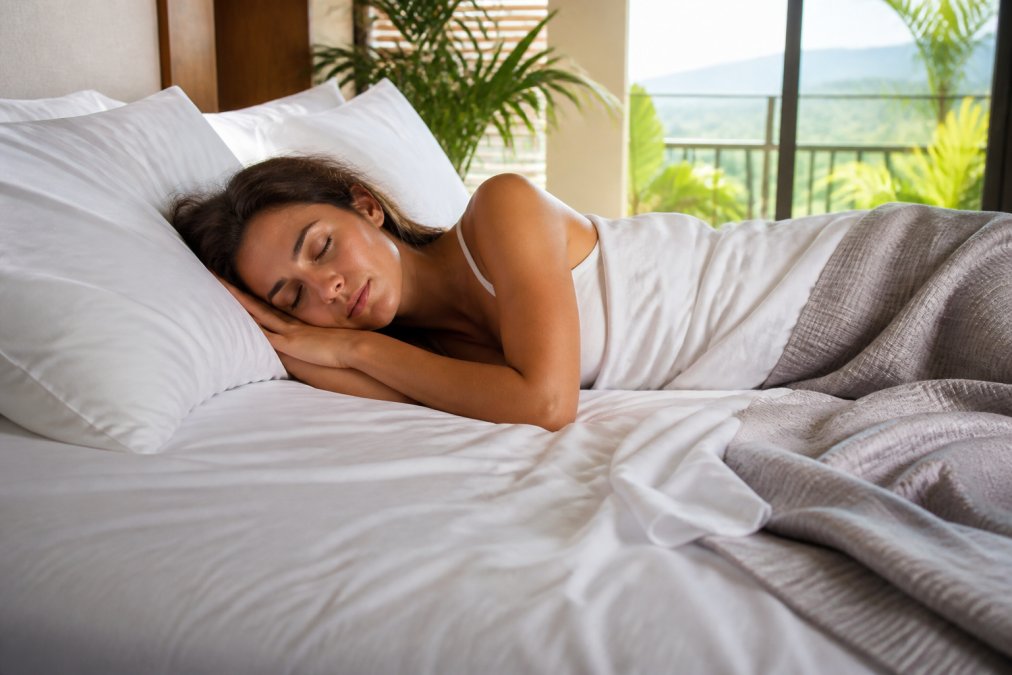
The cooling benefit depends on weave and GSM. A sateen weave in a mid-range GSM traps less heat than a tight twill. Bambusasheets uses a delicate sateen weave that keeps the surface smooth and lets the fabric breathe without feeling flimsy.
What most guides miss: cooling claims are easy to overstate. Bamboo won't fix a hot room or a heavy duvet. It removes one heat trap, for many hot sleepers, the difference between waking up twice and sleeping through.
Durability, Pilling, and How Long Bamboo Sheets Actually Last
A well-made bamboo set lasts three to five years with regular washing; a cheap one can pill visibly within three months. The difference is almost entirely fiber length and finishing, not thread count or brand name.
Pilling is the real failure point: short fibers work loose from the yarn, migrate to the surface, and tangle into balls under friction. Longer staple fibers stay twisted into the yarn and resist this migration, which is why a heavier short-fiber fabric can pill faster than a lighter long-fiber one, density alone doesn't save a weak fiber.
Three things accelerate pilling:
- Washing in hot water, which swells and weakens the cellulose fibers
- High-heat drying, which shrinks the fabric and roughens the surface
- Friction from rough bedding, pets on the bed, or sleeping directly on the sheet without a top layer
Bamboo has decent tensile strength when fibers are long, so a quality set holds its shape and softness far longer than a budget one. The trade-off: viscose is more delicate than cotton and punishes neglect faster than a cotton percale would.
The Wash-Cycle Math Most Reviews Skip
Think about how many times a set actually gets washed in a year. Weekly washing is 52 cycles; rotate two sets and each sees 26. Over three years, that's 78 cycles per set versus 156 for a single set. Pilling and thinning are cumulative, every cycle removes surface fiber, so rotation roughly doubles each set's calendar lifespan.
A common pattern: first pills show up around wash 15-20 on low-quality viscose, and around wash 40-50 on long-fiber lyocell or high-grade viscose. That gap is the entire price difference in practice.
How to Judge Longevity Before You Buy
You can't wash-test a sheet in the store, but you can read the signals:
| Signal | What It Tells You | Red Flag |
|---|---|---|
| Fiber length disclosure | Longer staple = less pilling | No mention of fiber length |
| GSM stated | Density and durability baseline | Brand can't or won't share it |
| Processing method | Lyocell holds up marginally better than viscose | "Bamboo" with no process named |
| Weave type | Sateen drapes, twill wears harder | Vague "premium weave" language |
| Care instructions | Realistic care = honest brand | "Machine wash hot" on bamboo |
What Actually Fails First
In practice, the fitted sheet goes first. It takes the most friction, stretches over the mattress corners, and gets the most direct body contact; flat sheets and pillowcases usually outlast it by a year or more. When you replace a set, the fitted sheet tells you it's done, not the pillowcases.
Elastic failure is the second most common complaint. Cheap fitted sheets use thin elastic that loses stretch after 30-40 washes; better sets use wider, encased elastic that holds tension longer. It's a construction detail, not a fiber detail, and one of the clearest ways to tell a premium set from a budget one before you sleep on it.
How to Wash Bamboo Sheets Without Ruining Them
Cold water, gentle cycle, low heat. That's the whole method. Wash bamboo sheets separately from heavy items like jeans or towels, use mild detergent, and skip fabric softener, which coats the fibers and reduces breathability.
- Set washer to cold water and gentle or delicate cycle
- Use a small amount of mild liquid detergent
- Skip bleach, fabric softener, and dryer sheets
- Tumble dry on low, or line dry
- Remove promptly to minimize wrinkles
- Rotate a second set in so each gets a rest between washes
A second set is the single best durability investment you can make. It cuts wash frequency per set roughly in half, which directly extends lifespan.
Hypoallergenic Comfort for Sensitive Skin
Bamboo fabric is naturally hypoallergenic and resistant to common allergens like dust mites, making it a reasonable choice for sensitive skin. The smooth fiber surface creates less friction than cotton, and bamboo naturally resists bacteria and odor.
For people who react to rough weaves or heavy finishes, the sateen surface of a quality bamboo set feels noticeably gentler. That said, "hypoallergenic" is not a regulated medical claim, treat it as a fabric property, not a guarantee.
If you have a diagnosed allergy, patch-test any new bedding the same way you would a new detergent. Wash it once before first use to remove any manufacturing residue.
Price-to-Value: Comparing Bambusasheets Options Side by Side
Value at this price point comes from fiber quality, weave, and features that reduce daily friction. Bambusasheets builds its sets around long-fiber viscose, a delicate sateen weave, and embroidered size letters on the bottom corners that make size and direction matching instant.
But price alone doesn't tell you value. The right question is cost per year of use. A set that lasts three years at a mid-range price can cost less per year than a budget set that pills out in eight months. Here's how the options break down:
| Set | Size | Price | Best For |
|---|---|---|---|
| Organic Bamboo Cooling Sheet Set | Full, Ivory | $83.00 | Guest rooms and smaller beds |
| Organic Bamboo Cooling Sheet Set | Queen, White | $129.00 | Most primary bedrooms |
| Organic Bamboo Cooling Sheet Set | Queen, Ivory | $129.00 | Warm-toned bedrooms |
| Organic Bamboo Cooling Sheet Set | King, White | $144.00 | Larger beds and couples |
| Organic Bamboo Cooling Sheet Set | King, Ivory | $144.00 | Larger beds, softer palette |
Each set includes a storage bag, and the 7-piece configuration covers a full bed setup in one purchase. The embroidered corner letters sound minor until you've wrestled a fitted sheet the wrong way at 11 p.m.

What You're Actually Paying For
Break the price into its parts and the premium becomes easier to judge:
- Fiber quality, Long-fiber viscose costs more to source and produces less pilling. This is the single biggest driver of how the sheet feels in year two, not just year one.
- Weave and finishing, A sateen weave takes more loom time than a basic plain weave. The result is a smoother surface and better drape.
- Construction details, Encased elastic, reinforced seams, and embroidered size indicators add labor. They also reduce the daily friction that makes cheap sheets annoying.
- Set completeness, A 7-piece set includes a flat sheet, fitted sheet, and pillowcases. A 3-piece set often skips the flat sheet, which means buying it separately later.
The Cost-Per-Year Calculation
This is the math most buyers never do. Take the purchase price and divide by the realistic lifespan:
- A $129 queen set that lasts three years costs about $43 per year.
- A $60 budget set that pills out in ten months costs about $72 per year, and you're sleeping on a worse surface for most of that time.
The premium set wins on both comfort and economics, but only if the fiber quality actually supports the three-year lifespan. If it doesn't, you're paying more for the same short life.
When the Cheaper Option Makes Sense
There are real cases where the budget set is the right call:
- Guest rooms that get used a few nights a year
- A first bamboo set where you're still testing whether you like the feel
- Kids' beds where accidents and rough use shorten any sheet's life
For a primary bedroom that gets used every night, the math favors the better set. For occasional use, the cheaper option is not a compromise, it's the correct choice.
Frequently Asked Questions
Are luxury bamboo sheets actually better for sleep quality?
Higher-priced bamboo sheets tend to use longer fibers and tighter weave standards, which translates to a smoother hand-feel and fewer rough spots that can disrupt sleep. The cooling and moisture-wicking properties of bamboo viscose help regulate temperature, which matters most for hot sleepers. However, sleep quality also depends on mattress, room temperature, and personal preference. Expensive bamboo sheets are worth it if temperature regulation and softness are your priorities, but they are not a cure-all for every sleep issue.
What is the downside of expensive bamboo sheets?
The main downsides are higher upfront cost and more careful maintenance. Bamboo viscose requires cold-water washing and low-heat drying to preserve fiber integrity, so you cannot treat them like heavy cotton. Some lower-quality bamboo sheets pill after a few washes, though this is less common with longer-fiber options. Expensive bamboo sheets also may wrinkle more than polyester blends if left in the dryer. For buyers who want zero-fuss bedding, the maintenance routine can feel like a trade-off.
How do you distinguish between high-quality and low-quality bamboo viscose?
Check the GSM (grams per square meter) rather than thread count, since bamboo fiber is measured differently than cotton. Higher GSM generally means a denser, more durable fabric. Look for details on fiber length and processing method: lyocell and modal production tends to yield stronger fibers than basic viscose. A sateen weave gives a smoother surface and better drape. If a brand will not disclose GSM or processing method, treat that as a red flag.
Do bamboo sheets really help with temperature regulation?
Bamboo viscose is naturally breathable and moisture-wicking, which helps move sweat away from your skin and allows air to circulate. This can keep hot sleepers cooler compared to less breathable fabrics. That said, temperature regulation depends on multiple factors: your mattress, pajamas, room temperature, and blanket choice. Bamboo sheets for hot sleepers work best as part of a broader cooling setup. Many users report noticeable improvement, but results vary based on individual body temperature and sleep environment.
How long do expensive bamboo sheets last with regular washing?
With proper care, quality bamboo viscose sheets can last two to three years or longer. Long-fiber bamboo holds up better to repeated washing than short-fiber alternatives, which tend to pill and thin out faster. Following the care instructions, cold water, gentle cycle, low-heat drying, and no bleach, extends lifespan significantly. Rotating between two sets also reduces wear on each. If you wash weekly and follow the guidelines, you should get solid longevity from a premium set.
The challenge with expensive bamboo sheets is separating real quality from marketing, and that's where most shoppers stall. Bambusasheets solves it by building around long-fiber bamboo viscose, a delicate sateen weave for a silky hand-feel, and embroidered size indicators that remove the bed-making guesswork. Every set also ships with a storage bag, so your bedding stays organized between washes. Get started with Bambusasheets and upgrade to bedding that earns its price every night.