
Table of Contents
- What Makes Bedding Healthy: Materials, Certifications, and Breathability
- Healthiest Bedding Materials Compared
- The Benefits of Bamboo Sheets for Hot Sleepers and Sensitive Skin
- Non-Toxic Bedding Certifications That Actually Matter
- How to Wash Bamboo Sheets So They Last
- Choosing Healthy Bedding for Skin, Sleep, and the Planet
- Conclusion: Building a Healthier Bed
- Frequently Asked Questions
Last Updated: September 30, 2026
What Makes Bedding Healthy: Materials, Certifications, and Breathability
The healthiest bedding to sleep on is made from natural, breathable fibers that carry independent safety certifications and are finished without harsh chemical treatments. At Bambusasheets, we build our 7-piece sets around bamboo viscose for exactly this reason: it sleeps cool, feels kind to reactive skin, and skips the finishes that make synthetic sheets a poor choice for anyone who wakes up itchy or overheated.
The difference between healthy and unhealthy bedding comes down to three things: fiber source, chemical finishing, and airflow. Get all three right and you sleep cooler, breathe easier, and wash less aggressively. Get them wrong and you may spend years blaming your mattress for a problem that starts in your sheets.
Natural Fibers vs Synthetic Materials
Natural fibers like organic cotton, French flax linen, and bamboo viscose are grown or regenerated from plants. Synthetic fibers such as polyester and microfiber are petroleum-derived plastics extruded into thread.
That distinction matters at night. Synthetics trap heat and moisture against your skin, which is why hot sleepers often wake up damp. Natural fibers move moisture away from the body and let air circulate, supporting temperature regulation through the night.
Why Chemical Off-Gassing Matters
Chemical off-gassing is the release of volatile organic compounds from new textiles, adhesives, and finishes as they settle. It is the reason a freshly unbagged sheet set can smell faintly chemical for days.
Manufacturers use formaldehyde-based resins for wrinkle resistance, plus dyes and softeners that can linger. EPA indoor air quality guidance on volatile organic compounds notes that VOC exposure indoors can irritate eyes, nose, and throat. Ventilating new bedding and choosing formaldehyde-free options reduces that load.
Healthiest Bedding Materials Compared
Natural fiber bedding splits into two families: plant-sourced cellulose fibers and regenerated cellulose fibers. Both beat polyester on breathability, but they differ in softness, durability, moisture behavior, and how they age.
| Material | Feel | Breathability | Moisture behavior | Best For |
|---|---|---|---|---|
| Organic cotton | Crisp, familiar | Good | Absorbs well, dries slowly | Allergy-prone sleepers, year-round use |
| French flax linen | Textured, cool | Excellent | Wicks and dries fast | Warm rooms, layered beds |
| Bamboo viscose | Silky, cool | Excellent | Wicks quickly, stays dry to the touch | Hot sleepers, sensitive skin |
| Tencel lyocell | Smooth, dry | Excellent | Strong moisture management, resists bacterial growth | Humid climates, night sweaters |
Why Breathability Is a Mechanism, Not a Buzzword
Breathability is not a single property. It is the combination of how a fiber moves moisture, how the weave lets air pass, and how quickly the fabric dries once it is damp.
Cellulose fibers, cotton, linen, bamboo viscose, lyocell, are hydrophilic, meaning they attract and absorb water vapor from your skin. Polyester is hydrophobic: it repels moisture, which sounds good until you realize the moisture has nowhere to go but the space between you and the sheet. That trapped layer is what makes synthetics feel clammy by the middle of the night.
The weave matters as much as the fiber. A tight percale weave blocks more airflow than a sateen or a loose linen weave, which is why two cotton sheets can sleep very differently. When you compare materials, compare the weave too.
Organic Cotton and French Flax Linen
Organic cotton is grown without synthetic pesticides, which keeps residue out of the finished fabric. Its staple length determines softness: longer fibers produce smoother, more durable yarn, while short-staple cotton pills and sheds faster. Look for long-staple or extra-long-staple cotton if durability matters to you.
French flax linen is woven from flax and gets softer with every wash. It breathes better than most cotton weaves because the flax fiber is hollow and the weave is naturally open, making it a strong pick for anyone who runs warm. The trade-off is texture; linen feels rustic for the first several washes and requires a looser, more forgiving wash routine.
Bamboo Viscose and Tencel Lyocell
Bamboo viscose is regenerated from bamboo cellulose into a silky, drapey fabric. It feels cool to the touch, wicks moisture well, and resists the stiffness that makes cotton sheets feel heavy in summer. The fiber's smooth surface is why it tends to feel gentler against reactive skin than a textured weave.
Tencel lyocell follows a similar regeneration process with a closed-loop solvent system that recovers most of the solvent used.
Fresh White Bamboo Sheets - Full →
The Trade-Off Nobody Prices In
Natural-fiber bedding costs more upfront than a synthetic set, and that gap is the most common reason shoppers default to polyester. The honest comparison is cost per night of use, not sticker price.
The Benefits of Bamboo Sheets for Hot Sleepers and Sensitive Skin
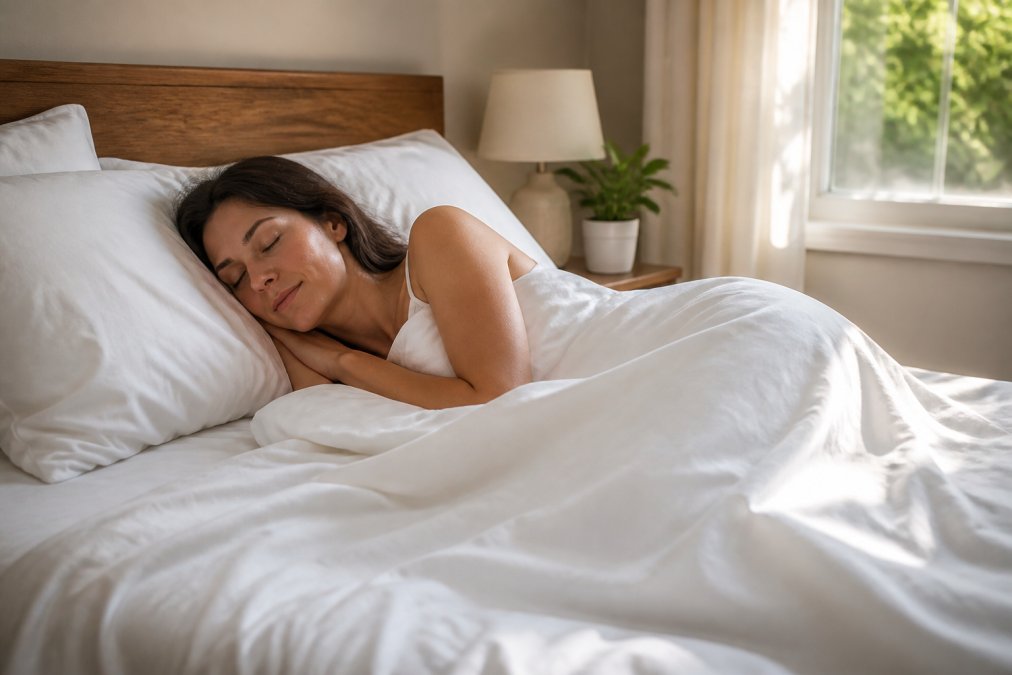
Bamboo sheets help hot sleepers because the fiber wicks moisture and releases heat rather than trapping it. For sensitive skin, the smooth, low-friction surface reduces the rubbing that triggers irritation, and bamboo fiber naturally repels bacteria that can build up in damp bedding.
Non-Toxic Bedding Certifications That Actually Matter
A certification is only useful if you know what it tests, what it ignores, and who audits the result. Most bedding labels stack three or four logos; only some of them say anything about chemical safety against your skin.
Here is what each one actually covers.
| Certification | What it verifies | What it does not cover |
|---|---|---|
| GOTS (Global Organic Textile Standard) | Organic fiber content plus restricted chemical use across the entire supply chain, from harvest through finished textile | Non-organic fibers blended in; it applies only to products meeting the organic threshold |
| OEKO-TEX Standard 100 | Finished textile tested for harmful substances, formaldehyde, heavy metals, azo dyes, pesticide residues, against limit values set for skin-contact products | Fiber origin; a synthetic can pass Standard 100 |
| OEKO-TEX Made in Green | Everything Standard 100 tests, plus traceability and verified factory working conditions | Nothing chemical beyond Standard 100 |
| GREENGUARD Gold | Low chemical emissions for indoor products, with stricter VOC limits than the base GREENGUARD tier | Fiber content or organic status |
Reading the Label Like an Auditor
Three practical checks separate a real certification from decoration:
- Find the certificate number. Certifications are issued per facility and expire, so a valid number confirms the specific mill that made your sheets was audited, not just the brand's marketing department.
- Match the scope. A GOTS logo on a pillowcase does not certify the fitted sheet in the same box. Check that the claim covers the item you are buying.
- Watch for tier confusion. GREENGUARD and GREENGUARD Gold are different standards; Standard 100 and Made in Green are different standards. Brands sometimes display the weaker logo next to copy describing the stronger one.
What Certifications Do Not Tell You
A certification confirms a chemical threshold was met at the time of testing. It does not tell you how the fabric performs after fifty washes, whether the dye will migrate onto damp skin, or how the fiber feels at hour four of sleep. Those are performance questions, and they are answered by fiber choice and weave, not by a logo.
How to Wash Bamboo Sheets So They Last
Wash bamboo sheets in cold water on a gentle cycle, then tumble dry on low heat. Skip bleach and fabric softener entirely; both break down the fiber and leave residue that dulls the sateen sheen.
- Separate sheets from towels and anything with zippers
- Use a mild, bleach-free detergent
- Choose cold water and a gentle cycle
- Tumble dry low, or line dry away from direct sun
- Remove promptly and fold while slightly warm
Choosing Healthy Bedding for Skin, Sleep, and the Planet
Healthy bedding for skin means smooth fibers, no wrinkle-resin finishes, and certifications that confirm low chemical content. For sleep, it means breathability and moisture-wicking so your temperature stays stable.
Conclusion: Building a Healthier Bed
Start with fiber, then verify certification, then commit to a cold-water wash routine. That sequence solves most sleep complaints that get blamed on mattresses.
Frequently Asked Questions
What are the safest materials for non-toxic bedding?
The safest options are natural fibers grown and finished without harsh chemicals: GOTS-certified organic cotton, French flax linen, and bamboo viscose or Tencel lyocell made in a closed-loop system. Look for Oeko-Tex Standard 100 or GOTS labels, which confirm the fabric has been tested for harmful substances like formaldehyde and heavy metals. Avoid polyester and microfiber if you want to reduce chemical exposure and night sweats.
Does thread count matter for healthy bedding?
Less than most shoppers think. Thread count only measures the number of threads woven per square inch, and manufacturers can inflate it with thin, multi-ply yarns. Fiber quality, staple length, and weave matter more. A long-staple bamboo viscose or organic cotton sheet with a sateen weave at a moderate thread count often feels softer and lasts longer than a high-count sheet made from short, weak fibers.
How does hypoallergenic bedding improve sleep quality?
Hypoallergenic bedding reduces exposure to common irritants like dust mites, chemical residues, and synthetic fibers that trap heat and moisture. Bamboo viscose is naturally breathable and moisture-wicking, so it pulls sweat away from your skin and dries quickly, which makes it harder for bacteria and dust mites to thrive. Less irritation and overheating means fewer wake-ups and more time in deep sleep.
How do I wash bamboo sheets without ruining them?
Wash bamboo sheets in cold water on a gentle cycle with a mild detergent, then tumble dry on low heat or air dry. Skip bleach, fabric softener, and high heat, since all three break down the long fibers and cause pilling. Washing a full 7-piece set separately from heavy items like towels keeps the fabric from getting abraded, and storing the set in its bag between washes keeps it fresh.
Your bed is the one purchase you use every single night, which makes getting the fiber right worth the effort. Bambusasheets pairs cooling bamboo viscose with hypoallergenic construction, a soft sateen weave, and size indicators that end the fitted-sheet guessing game. Get started with Bambusasheets and build a bed that keeps you cool, calm, and comfortable until morning.